CoxHealth’s Public Safety and Security team has added K-9 officers Hugo and Ackley, both registered German Shepherds, who will begin making patrols at Cox South and Cox North in the coming weeks.
Healthcare is a vitally important industry, especially today. Sadly, healthcare organizations are frequently the targets of cyberattacks. This is especially important today because many of these attacks impede the ability of the organizations to offer care to their patients. The most severe attacks can even cause life-threatening situations.
During a time where hospitals are already strapped for resources, Mercy Iowa City hospital reported that an internal email compromise and phishing email incident led to the exposure of personal information of some 60,473 individuals.
As increasingly sophisticated cyberattacks continue to target healthcare’s essential systems - including networks, IoT medical instruments, and mobile devices - the need for advanced security protections continues to grow. Healthcare leaders are beginning to embrace the truth: cybersecurity is now an indispensable part of patient care.
Yet even as this move toward secure connected technologies expands, a favorite target of malicious actors continues to be the healthcare organization’s website - especially if the site is powered by WordPress.
During the week of October 25, 2020, the UVM Health Network experienced a confirmed cyberattack affecting some systems. Despite standby procedures in place to continue providing safe care, the attack caused variable impacts on services at affiliate organizations.
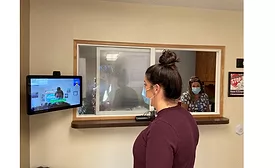
Willapa Medical Clinic in South Bend, Wash., was looking for a solution to speed up registration and smooth out the check-in process at the office, helping to limit COVID-19 exposure as much as possible. Before implementing the touchless solution, the Clinic's staff was reaching through the registration window to take everyone's temperature with a tympanic thermometer.
Healthcare providers remain firmly focused on dealing with the global pandemic, juggling the often-conflicting demands of providing care while keeping patients and staff safe. The financial impact of the pandemic has left many providers on the brink of bankruptcy amid falling patient visits deferred elective surgeries, and insufficient government aid to “fill the gap.”
With the healthcare industry expected to spend $125 billion on cybersecurity from 2020 to 2025, dollars must be spent for maximum efficiency. The question is, how to allocate those funds most effectively at a time when cybercriminals have placed a huge target on hospitals, research labs, pharmaceuticals and insurance carriers.
Organizations need to take a layered approach to security to protect their organizations and sensitive patient data. The smartest approach is to start at the perimeter and work back toward existing enterprise protections – here’s how to do that.
A company that offers psychotherapy to thousands of patients across Finland says it’s been the victim of a data breach, with the personal information of customers held for ransom. Vastaamo, which sees patients in 20 cities including Helsinki, Joensuu, Jyväskylä, Pori, Turku and Tampere, says “an unknown hostile party” got in touch with them saying they had obtained customer details.
Amidst this flurry of high-profile attacks comes National Cyber Security Awareness Month; a poignant reminder that, for hospitals and healthcare providers, cyberattack prevention and business continuity is truly a matter of life and death. Over the course of the pandemic, we have seen ransomware and phishing attacks against healthcare institutions — viewed by cybercriminals as vulnerable and profitable targets — dramatically skyrocket. But where, in an ever-evolving threat landscape, should healthcare organizations focus their attention?