Sgt. Lauren L. Misale, a 12-year veteran of the Clark University Police Department (CUPD) and Clark alumnus, has been appointed the University’s chief of police, effective November 2. President David Fithian said Misale was selected for her stellar record, strong relationships on campus and in the community, and deep commitment to students. She replaces Chief of Police Stephen Goulet who announced his retirement earlier this year.
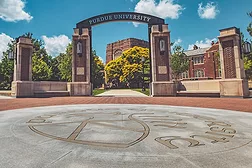
Purdue University is offering new cybersecurity short courses in social engineering and digital forensics as part of a growing suite of offerings through the Purdue Polytechnic Institute’s Cyber Education Network Training Resources (CENTR).
Baylor University in Texas will implement a surge testing program for off-campus students due to the number of surrounding community members the student population interacts with.
The University of Florida Police Department is installing license plate recognition technology on campus and will partner with the Gainesville Police Department and Alachua County Sheriff’s Office that is currently using the technology to share information for aiding in investigations, responding to incidents, etc.
The National Security Agency (NSA) has chosen Cal State San Bernardino to be a leader of its core workforce development initiative, selecting it for a $10.5 million grant and naming the university’s Cybersecurity Center as the Community National Center for Cybersecurity Education.
This prestigious designation illustrates CSUSB’s continued prominence as the premier institution of higher education for cybersecurity education and took effect Sept. 18, 2020.
Brigham Young University (BYU) announced the formation of the new BYU Security Department, which will function separately from and alongside the BYU Police Department. The BYU Security Department will oversee on-campus security for buildings, such as the Museum of Art and the Harold B. Lee Library, as well as campus properties, such as the Motion Picture Studio and West Campus (former Provo High School). The department will also have responsibility for campus parking.
For the third consecutive year, the estimated number of violent crimes in the nation decreased when compared with the previous year’s statistics, according to FBI figures released today. In 2019, violent crime was down 0.5% from the 2018 number. Property crimes also dropped 4.1%, marking the 17th consecutive year the collective estimates for these offenses declined.
A ransomware attack last spring at Simon Fraser University (SFU) reportedly compromised the personal information of about 250,000 students, faculty and alumni. Information included student and employee identification numbers, full names, birthdays, course enrolments and encrypted passwords.
Many higher education institutions have seen a decline in on-campus residency, dining, and parking along with deferred enrollment which has resulted in reduced revenue. At the same time, they have had to decrease class sizes, transform non-academic spaces into classrooms, and improve ventilation systems. All of which come with mounting expenses.