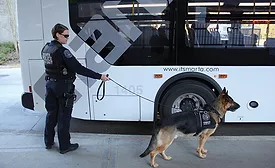
Rapid transit agencies across the U.S. are installing information management systems, video analytics and more to deter and combat crime and terror attacks that can impact millions of riders each day.
Pennsylvannia state and county officials attended a cybersecurity training session hosted by the Department of Homeland Security (DHS) Cybersecurity and Infrastructure Security Agency, says a news report.
The International Association for Healthcare Security & Safety (IAHSS) released a new industry guideline titled “Duress and Panic Alarms and Response” under the category of “Systems”.
Baltimore has created a Committee on Cybersecurity and Emergency Preparedness, as City Hall struggles to recover from a hack that crippled the government’s email and other computer systems.
U.S. Representatives Norma J. Torres (CA-35) and Brian Fitzpatrick (PA-1) introduced H.R. 1629, the 911 Supporting Accurate Views of Emergency Services (SAVES) Act to reclassify 9-1-1 call-takers and dispatchers.
The single most important thought when securing our schools is maintaining an open, supportive environment that is conducive to learning. School security directors all too often worry that their campuses will become “prisons” if a well-thought-out design or renovation does not take into account the purpose of the facility. As security professionals, this is our primary concern and at the forefront of any security solution we would recommend.
Duty of Care is gaining momentum. The idea is simple: employers have a duty to keep their people safe. Whether your employees are on-site or travelling, in a cubicle or on a construction site, in the States or abroad, that duty remains – to protect your employees from unnecessary risk of harm.