Physical access control: Survey reveals new deployment trends
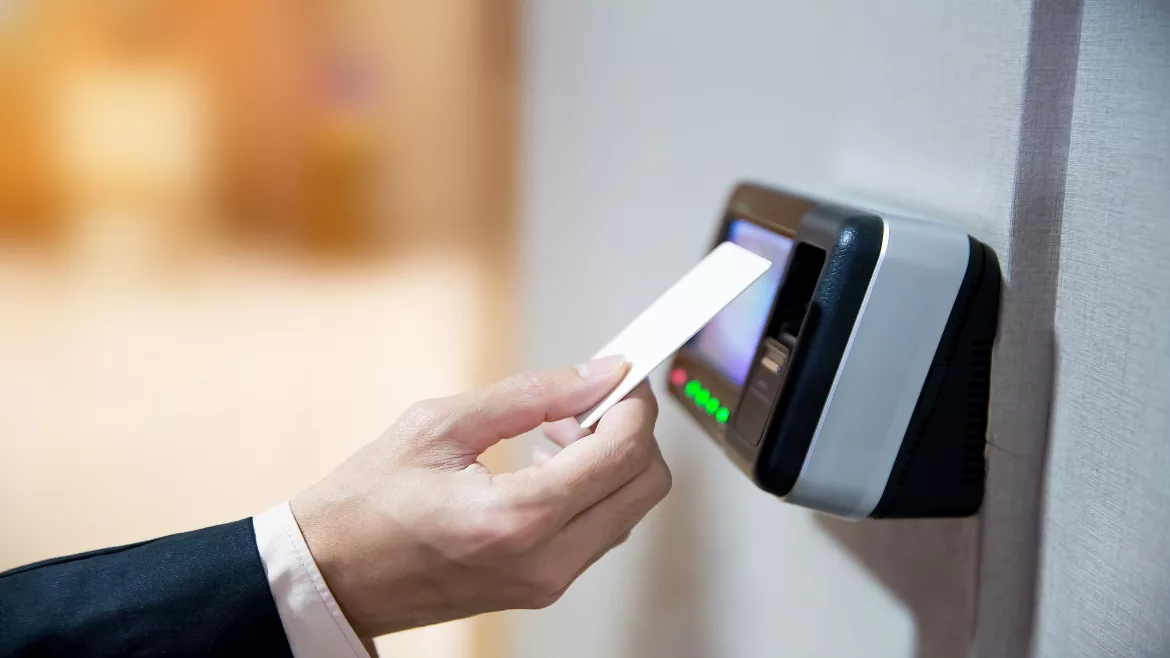
Image via Freepik
As HID Global’s most recent survey shows, users’ perceptions about Physical Access Control Systems (PACS) have undergone a significant transformation from 2020 to the present. The pandemic paused our annual glimpse into user opinions about their daily PACS experiences before revealing a key new trend in 2022: a declining belief that current systems either meet or exceed requirements. More than half thought this was true in 2020, but in 2022, after more than a year of pandemic challenges and learnings, this figure dropped to 41%. Organizational practices have been fundamentally altered, and this has had big implications for how PACS solutions are specified and deployed.
Mobile Access Joins the Mix
As much as things have changed, they also have stayed the same. Mobile access has moved to the forefront but without diminishing the continuing relevance of traditional credentials and physical badges, despite their vulnerabilities.
Yes, these physical cards and badges are unencrypted and much easier to clone than modern options. Our 2020 study showed that almost one-third of respondents use 125 kHz low-frequency (also known as proximity) cards, and 35% said they still use magnetic stripe cards. At the same time, though, 32% of respondents said they were actively using mobile IDs, and 30% said the same about biometric technology, including fingerprint, facial or iris solutions. Many who have not already adopted these modern technologies intend to do so: 17% said they planned to upgrade, or are in the process of upgrading, to biometric access control, and 19% said the same about mobile technology upgrades.
One of the most valuable attributes of mobile technology during the pandemic has been its ability to reduce or eliminate physical touchpoints. But there is more to consider: reorienting processes to touchless experiences also drove the adoption of new applications that also benefitted from these contact-free interactions. Mobile access solutions not only improved safety and security but also convenience and efficiency in both the physical and digital worlds.
A growing interest in mobile access is expected to continue in a world that is likely forever changed, in many ways, by the pandemic. At the same time, these solutions have moved to trusted ecosystems of cloud-connected access control devices, applications and mobile identities that are consolidated into a single place and much easier to adopt. With this model, a variety of new building services can now be securely accessed through a person’s mobile phone and other devices that are part of these trusted ecosystems. In addition to improving user convenience, mobile access helps future-proof solutions and gives users more credential technology choices.
Logical access technology that is used for secure computer/network login is also of growing interest to the respondents that participated in HID Global’s survey: 55% of respondents are now using this technology to access the cloud and web resources. One reason may be that security and IT teams must ensure that employees working remotely from home or elsewhere can securely access the systems, applications and other resources they need to do their jobs.
Ranking Industry Challenges
Among the challenges that survey respondents were asked to rank in importance to them, improving user convenience was at the top, with 43% saying that PACS administration was not easy enough. Moving down the list, 27% of survey respondents said ‘integrating with other enterprise systems’ was one of their top three challenges. The integration challenge has become easier as users have moved away from proprietary technology to OSDP and other open platforms. This enables connected devices to relay information to each other, which is a prerequisite for determining and implementing automated actions.
Respondents also ranked upgrades among their top concerns. Today’s installers, integrators, consultants, and vendors have multiple demands and departmental influences to balance as they work with their end-users to upgrade solutions and deploy new features. While C-suite leadership often decides what upgrades to implement, a majority of respondents also said that physical security, IT and information security, and facilities teams at least make recommendations, and some make the final decision.
The survey also showed how physical security and cyber/IT security departments are now expected to work more closely together on upgrades. One reason for this is that many of today’s IP-based physical security systems and devices are now directly attached to the organizational network. While this has benefits, it also creates vulnerabilities. IT professionals can’t simply rely on vendors to give their systems ISO 27001 compliance and other ‘built-in’ protection. They also must ensure that their access control readers or other parts of the PACS infrastructure that are attached to their network don’t introduce threats.
Respondents also weighed in on the obstacles they encountered when planning and implementing access control upgrades. One obstacle is the cost of upgrading — 38% of respondents said this was their biggest barrier to green-lighting a project. Other obstacles included inadequate ROI or the lack of budget prioritization (15% of respondents). No matter the obstacle they faced, 38% said they will either update or upgrade some portion of their access control system by the end of 2022.
Organizations also know that some upgrade benefits are more compelling than others for getting an upgrade project off the ground. One of these benefits is the long-term convenience of moving beyond proprietary access control models to open standards and solutions that have greater longevity and adaptability.
On this subject, 49% of respondents said they wanted their access control system to provide ‘the ability to add or support new tech in the future, and 28% stated their desire for ‘open-standards-based tech.’ Similarly, 33% said that whatever solution they adopted should enable ‘integration with existing security platforms.’
Pandemic-Related Changes
Among the pandemic’s many impacts, changes in work patterns may have impacted access control the most. For instance, when responding to survey questions about upgrading to new technology — 43% singled out ‘touchless/contactless capabilities.’ They may have used these touchless capabilities to deploy pandemic-related workplace health and safety measures — 41% said they want to use mobile in any new access control systems, and when asked in a separate question about the single most impactful technology for improving PACS, touchless technologies were mentioned by 20% of respondents and mobile access by 18%.
Organizations now operating a hybrid (remote and in-person) workplace model have also seen building occupancy monitoring become increasingly critical for sustaining efficiency and enabling organizations to make informed decisions about building usage and operation. This requires access to much more data than was previously available. Yes, decision-makers need to know how many people are inside a building or otherwise on-site to support safety and emergency evacuation measures. But equally important is data derived from Real-Time Location Systems (RTLS). 39% of survey respondents said their organizations know how many employees and visitors are on site, and where. Only 21% said they cannot monitor either, or at least have not yet chosen to do so; and, 34% of respondents only know how many employees and visitors are on the premises. They do not know each person’s location.
These types of occupancy data will have additional uses in the future. For example, those businesses that had real-time occupancy data over the past two years could better assess their office space requirements and streamline operations and associated costs. They had much better visibility into how much of their office space was being used. Other organizations used real-time occupancy data to ease the shift to a hybrid work model. They were able to improve planning and know that the necessary desk space was available when and where it was needed.
Survey respondents shed light on the growing use of access control systems to monitor this occupancy data — 42% said they used access control systems in this way; and, 34% of respondents said they used access control systems to monitor visitor occupancy. Some respondents also used access control systems for time and attendance tracking: 24% of respondents said they used these systems to track employee time and attendance, while 15% did the same with visitors.
The increased use of PACS technologies like mobile access for creating touchless building experiences and RTLS for monitoring building occupancy data are just two unexpected outcomes of the global pandemic. These outcomes may have been spurred by pandemic-related requirements such as facilitating touchless hygiene and safety practices or enabling millions of workers to switch to various remote and hybrid workplace models. But as the world moves through and beyond many of those requirements, demand for these PACS technologies is not waning. In addition to improving health, safety and building efficiency, these technologies also increase security and convenience while delivering a superior workplace experience.
Looking for a reprint of this article?
From high-res PDFs to custom plaques, order your copy today!