Security Magazine logo
search
cart
facebook twitter linkedin youtube
  • Sign In
  • Create Account
  • Sign Out
  • My Account
Security Magazine logo
  • NEWS
    • Security Newswire
    • Technologies & Solutions
  • MANAGEMENT
    • Leadership Management
    • Enterprise Services
    • Security Education & Training
    • Logical Security
    • Security & Business Resilience
    • Profiles in Excellence
  • PHYSICAL
    • Access Management
    • Fire & Life Safety
    • Identity Management
    • Physical Security
    • Video Surveillance
    • Case Studies (Physical)
  • CYBER
    • Cybersecurity News
    • More
  • BLOG
  • COLUMNS
    • Career Intelligence
    • Cyber Tactics
    • Cybersecurity Education & Training
    • Leadership & Management
    • Security Talk
  • EXCLUSIVES
    • Annual Guarding Report
    • Most Influential People in Security
    • The Security Benchmark Report
    • Top Guard and Security Officer Companies
    • Top Cybersecurity Leaders
    • Women in Security
  • SECTORS
    • Arenas / Stadiums / Leagues / Entertainment
    • Banking/Finance/Insurance
    • Construction, Real Estate, Property Management
    • Education: K-12
    • Education: University
    • Government: Federal, State and Local
    • Hospitality & Casinos
    • Hospitals & Medical Centers
    • Infrastructure:Electric,Gas & Water
    • Ports: Sea, Land, & Air
    • Retail/Restaurants/Convenience
    • Transportation/Logistics/Supply Chain/Distribution/ Warehousing
  • EVENTS
    • Industry Events
    • Webinars
    • Solutions by Sector
    • Security 500 Conference
  • MEDIA
    • Interactive Spotlight
    • Photo Galleries
    • Podcasts
    • Polls
    • Videos
      • Cybersecurity & Geopolitical Discussion
      • Ask Me Anything (AMA) Series
  • MORE
    • Call for Entries
    • Classifieds & Job Listings
    • Newsletter
    • Sponsor Insights
    • Store
    • White Papers
  • EMAG
    • eMagazine
    • This Month's Content
    • Advertise
  • SIGN UP!
CybersecurityManagementSecurity Enterprise ServicesSecurity Leadership and ManagementLogical SecuritySecurity & Business ResilienceSecurity Education & TrainingCybersecurity News

Considering the consumer privacy conundrum in a data-filled digital world

By Garient Evans
privacy-access-freepik
June 25, 2021

New consumer privacy laws and innovative fraudsters have given security professionals much to do in a supercharged digital economy. As our digital footprints widen, bad actors are finding increasingly sophisticated ways to access troves of personal information and sensitive data.

Globally, lawmakers are introducing privacy laws with the intention of empowering consumers to know which companies have collected their data and for what purposes. However, regulations meant to protect consumers can be exploited by bad actors to commit identity theft and other types of fraud.

The compliance challenge

An example of privacy legislation in the United States is the California Consumer Privacy Act (CCPA). The CCPA was passed in June 2018 and in a nutshell it allows any consumer to demand to see all the information a company has saved on them, including third parties that may have access to their data.

Companies are supposed to support consumer-initiated data subject requests (DSRs), which when managed properly, adhere to the original principles of the legislation, which is to put the consumer back in control of their information. The legislation is based on a principle of "data minimization" which is avoiding the collection of extraneous information on customers and only using data for its intended purpose.

CCPA is patterned off of the European Union’s General Data Protection Regulation (GDPR) legislation that requires businesses to secure personal data and privacy of European citizens for any transaction that takes place within its member states.

As expected, other regions are following suit and passing similar legislation. Colorado has become the third state to enact data privacy rules, the Colorado Protection Act (CPA), which will come into effect in 2023. 

Soon, it will be a core-business-practice to allow consumers to access, amend and request deletion of their data around the world. Security leaders preparing to comply with these privacy laws must also consider some corresponding threats.

When poorly administered, processing DSRs can become a vector for fraud, specifically identity theft. Imagine a fraudster goes online to a large eCommerce site or bank and submits a DSR purporting to be Johnathon Doe, a genuine resident of 1234 Main Street, Los Angeles, CA. In processing the request, the unsuspecting retailer or bank might not verify or authenticate the identity before releasing Jonathon’s data, therefore providing the fraudster with sensitive information that could be used to commit other crimes.

The identity challenge

It is complex to become CCPA-compliant. A company must provide a consumer-facing portal to submit DSRs. The request generates a search for all personal data corresponding to the subject of the request. The data is compiled into a report that is provided to the consumer who may then ask the organization to correct or delete certain data. The enterprise must then confirm that the follow-up request has been completed. The entire process must be secure and must generate an audit trail to demonstrate compliance.

 Most companies have turned to third-party platforms to meet each of these requirements. In fact, companies must pair their CCPA-compliance procedures with the proper identity verification steps to prevent the unauthorized access of a consumer's personal information. Meanwhile, there are several new, powerful technologies focused on helping companies meet these needs in a manner that is both safe and convenient for consumers.

Security professionals have allies in their compliance and risk-management objectives. Instead of homegrown solutions, risk managers can turn to industry specialists offering technologies built to meet challenging privacy requirements and identity-related threats.

Another growing threat troubling security departments is the emergence of synthetic identity fraud, which is the creation of a fictitious identity. Fraudsters build synthetic identities, sometimes using entirely fake data, and other times borrowing an element or two from a legitimate person. For example, there are many individuals legitimately named Michael Jordan as well as hundreds of fictitious identities with that name and fake Social Security Numbers, email addresses, phone numbers and date-of-birth.

Committing identity theft is inconvenient for fraudsters because victims will complain about a fraudulent credit card charge or a new account opened using their legitimate, personal information. When a synthetic identity is used to take out a loan or to rent a car, there is typically no victim affected and the defrauded lender is none the wiser.

Identity verification providers can mitigate the growing threat of synthetic identity fraud around the world. Risk managers can avoid the challenge of finding disparate data sources in every jurisdiction where their company operates.


Solutions can be easy

While regulators continue to tip control of personal data into the hands of consumers, fraudsters will create more ingenious schemes to exploit vulnerabilities, hence investing in technology tools to keep them away is mandatory. Rolling out a strategic identity verification program can help companies comply with consumer privacy regulations and responsibly and securely collect and handle sensitive data.

The repercussions of subpar data collection and identity verification processes are grave: not only are there steep fines for non-compliance, security breaches or lapses in protecting identities erode consumer trust and loyalty.

The reality is that technology is evolving at a fast pace and fraudsters are keeping up. Those who don’t prepare now and partner with the right solutions provider will certainly face even bigger challenges in the near future as the world increasingly becomes more digital.

KEYWORDS: compliance consumer protection cyber security identity verification privacy laws risk management

Share This Story

Looking for a reprint of this article?
From high-res PDFs to custom plaques, order your copy today!

Garient Evans is SVP of Identity Solutions at Trulioo.

Recommended Content

JOIN TODAY
To unlock your recommendations.

Already have an account? Sign In

  • Cyber tech background

    Security’s Top Cybersecurity Leaders 2026

    Security magazine’s Top Cybersecurity Leaders 2026 award...
    Security Leadership and Management
  • Iintegration and use of emerging tools

    Future Proof Your Security Career with AI Skills

    AI’s evolution demands security leaders master...
    Security Education & Training
    By: Jerry J. Brennan and Joanne R. Pollock
  • The 2025 Security Benchmark Report

    The 2025 Security Benchmark Report

    The 2025 Security Benchmark Report surveys enterprise...
    The Security Benchmark Report
    By: Rachelle Blair-Frasier
Manage My Account
  • Security Newsletter
  • eMagazine Subscriptions
  • Manage My Preferences
  • Online Registration
  • Mobile App
  • Subscription Customer Service

More Videos

Popular Stories

Opened padlock on computer keyboard

10 Data Breaches to Know About (April 2026)

Laptop with desktop screen showing

Research: Microsoft Edge Loads Stored Passwords in Cleartext

Diverse Team Collaborating on Business Analysis

12 Tips for Building an Effective Security Budget

Security guard

Connected Security: How Proactive Real-Time Tech Keeps Security Workers Safe

Laptop in darkness

Reframing MFA Bypass: Four Identity Gaps Attackers Exploit

SEC 2026 Benchmark Banner

Events

June 3, 2026

The Role of AI and Video in Measuring Health, Safety, and Security Standards

OSHA fines grab headlines, but most compliance issues start with everyday operational gaps: missed protocols, unsecured areas, or slow response. Learn how emerging technologies & AI can be leveraged towards a more proactive model of compliance.

June 10, 2026

Applying Agentic AI in Security Operations for Faster Decisions & Better Outcomes

Security teams have never had more visibility. We’ll explore how a new decision layer is helping security teams move from detection to decision. Turn alerts into decision-ready context, reducing reliance on manual triage and enabling faster action.

View All Submit An Event

Products

Security Culture: A How-to Guide for Improving Security Culture and Dealing with People Risk in Your Organisation

Security Culture: A How-to Guide for Improving Security Culture and Dealing with People Risk in Your Organisation

See More Products


The Role of AI and Video - Free Webinar - June 3, 2026

Related Articles

  • data privacy

    The California Consumer Privacy Act Has Data Security at its Core

    See More
  • CCPA

    The California Consumer Privacy Act: Everything We Know with Six Months to Go

    See More
  • CCPA

    Cybersecurity Response to the California Consumer Privacy Act

    See More

Related Products

See More Products
  • 9780367030407.jpg

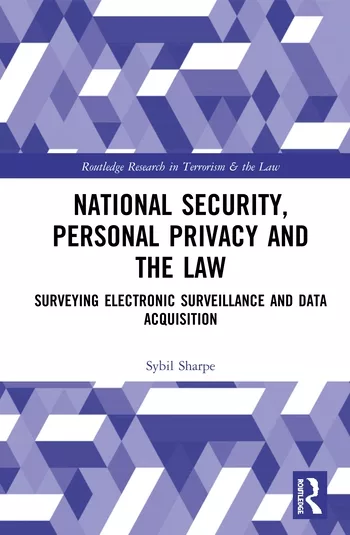
    National Security, Personal Privacy and the Law

  • s and the law.jpg

    Surveillance and the Law: Language, Power and Privacy

  • 150952519X.jpg

    Intelligence in An Insecure World, 3rd Edition

See More Products
×

Sign-up to receive top management & result-driven techniques in the industry.

Join over 20,000+ industry leaders who receive our premium content.

SIGN UP TODAY!
  • RESOURCES
    • Advertise
    • Contact Us
    • Store
    • Want More
  • SIGN UP TODAY
    • Create Account
    • eMagazine
    • Newsletter
    • Customer Service
    • Manage Preferences
  • SERVICES
    • Marketing Services
    • Reprints
    • Market Research
    • List Rental
    • Survey/Respondent Access
  • STAY CONNECTED
    • LinkedIn
    • Facebook
    • YouTube
    • X (Twitter)
  • PRIVACY
    • PRIVACY POLICY
    • TERMS & CONDITIONS
    • DO NOT SELL MY PERSONAL INFORMATION
    • PRIVACY REQUEST
    • ACCESSIBILITY

Copyright ©2026. All Rights Reserved BNP Media, Inc. and BNP Media II, LLC.

Design, CMS, Hosting & Web Development :: ePublishing