Physical security for large venues in the time of COVID-19
As governments around the world are working to meet the challenges associated with the COVID-19 pandemic, businesses and other organizations are struggling. To control the spread of this highly contagious virus, many of us have stopped flying, stopped commuting to work, and stopped gathering in large groups.
On top of that, as scientists and the medical community learn more about the virus, governments and others are having to change their responses quickly. It turns out, adaptability is vital for managing the spread and mitigating the impact of COVID-19.
For any organization—struggling or not—meeting the evolving challenges, while at the same time continuing to function as best they can, is complicated. Dedicating more budget to tools that might only address concerns today is not the best option. Organizations everywhere are looking for proven solutions that can help meet current needs and add value to their operations in the future.
The challenges facing large venues
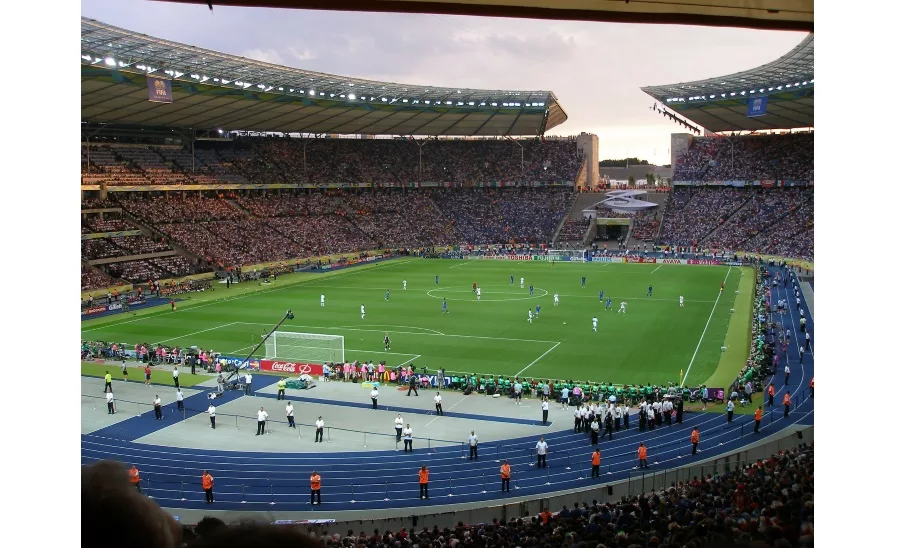
Today, securing large venues is a topic enterprise security professionals are grappling with in real-time. Consider an arena that isn’t currently hosting concerts or hockey games. Just because fans are staying away doesn’t mean that these spaces are, or can be, entirely empty.
Many employees—particularly security personnel—are still showing up to work, and some large venues are still holding sporting events, but without anyone in the stands. Securing these facilities, requires managing occupancy with great care, for the safety of future visitors and fans, but also for the safety and security of venue teams, players and staff.
More than people counting
Occupancy management, particularly for large venues, is far more complex than simply counting people coming in. Early on in our response to the pandemic, many facilities stationed security personnel at the entrances to their spaces who then clicked each person entering the building. For small environments with just one or two doors, this did not represent a significant concern.
For larger environments—high rises, convention centers, and shopping malls—with multiple entrances and exits, the challenges were significant. Counting people as they entered did not take people leaving these spaces into account. Nor did it combine the data being collected at the various entrances. This meant that no one knew exactly how many people were in the venue at any one time.
Initially, venues focused on aggregating data from all of their doors. But, as we return to work and other activities, organizations will now have to manage how many people are in the various spaces within their environments. If the maximum occupancy of a building is 100 people, having them spread out over 10 floors is very different and a lot safer than having them all on a single floor or in a single meeting room.
Improving occupancy management
Most organizations are not in a position to tear out existing systems and start anew. And, even if they are, this is not necessarily the best idea. Adding new devices or software to an existing security system can be a great way to improve occupancy management. These solutions can be invaluable for monitoring the flow of people through facilities and guiding operators on how to respond to incidents.
The ability to add these solutions is dependent on having a security platform that is both open and flexible. This type of platform would allow large venues to take advantage of new technology, adjust quickly to changing conditions, and repurpose and reuse many of these tools in the future.
Automating people counting
One exciting possibility is using LIDAR technology to count people and manage occupancy levels. LIDAR technology is currently being used in driverless cars to measure the distance from a car to an object. Today, physical security systems can ingest LIDAR metadata for people counting, providing highly accurate data about the number of people within a defined space. It can also measure the distance between them.
Having access to this type of information can be incredibly important for businesses and other organizations as they reopen. When an organization can accurately assess the physical distance between people in their spaces, they can take action to ensure that everyone can and is following health guidelines.
However, the ability to collect this data is just the first step. Security personnel need actionable information as well as standard operating procedures (SOPs) so that they can respond to incidents in the right way.
Unified security platforms that support collaborative decision management can help by enabling venues to establish pre-determined thresholds and automate responses. So, for example, if the software detects that occupancy levels are getting too high or that people are not maintaining the required physical distance, it could automatically alert security personnel or broadcast a message. This would ensure compliance with occupancy rates even as they change.
Venues can also automate operator responses by creating and customizing workflows directly in their decision management software. Based on the data being received, the software could automatically call up the appropriate SOP and then guide an operator through the required steps. It could also be set up to evaluate the operator’s actions and generate an after-event report for training purposes.
Getting the most from your data
Large venues can also improve occupancy management by deploying edge-based video analytics, which are downloaded directly onto existing compatible cameras, or server-based video analytics, which are downloaded onto the security platform itself. Video analytics algorithms transform the raw data being captured by a video management system (VMS) into actionable information.
One key benefit of video analytics is improved response times to incidents. For large venues, it is nearly impossible for security operators to watch every camera feed at all times. Instead, video analytics can be set up to look through all video footage and then send real-time notifications to operators when suspicious actions or objects are detected, including when someone is not wearing a mask. Once notified, security operators can then quickly take the appropriate steps to minimize the risk of exposure for those inside their facilities.
Supporting contact tracing
Increasingly, we’re seeing that occupancy management is more than just counting people coming in and out. During the time of COVID-19, we have come to recognize the importance of knowing who was where and when inside our facilities.
We know that, if a person tests positive for COVID-19, everyone who has come in close contact with that individual should be notified. This would allow those who have potentially been exposed to the virus to monitor their symptoms, get tested, and self-isolate as required. But this can be incredibly difficult, if not impossible, in the case of large buildings or venues, particularly if you’re only counting people at the main entrance.
A unified security platform combined with a flexible reporting module can help. By bringing together access control events with metadata from multiple sources, including LIDAR and video analytics, and then generating reports, this set-up can mitigate the spread of the virus by supporting contact tracing.
Maintaining personal privacy remains important
Of course, we cannot lose sight of the fact that many of these measures, including contact tracing, require seeing and sharing personal identifiable information, which has the potential to be an invasion of privacy. So, how do organizations keep people safe and informed without exposing personal information? The answer is deploying a video surveillance system that provides the ability to automatically blur faces or objects during both live and recorded video.
Then, organizations can enable authorized personnel to see those faces only when absolutely required. This means, for example, that security operators monitoring live feeds or reviewing stored footage see figures whereas supervisors or other authorized personnel see identifiable information.
The efforts already made to mitigate the risks and prevent the spread of COVID-19 have been extraordinary. Organizations, governments, and individuals have made tough choices to do what’s best. As we learn more about the virus, we see that understanding and controlling the movement of people through our spaces is crucial and these solutions can play a significant role in keeping our populations safe and healthy today and in the future.
Looking for a reprint of this article?
From high-res PDFs to custom plaques, order your copy today!