Security Magazine logo
search
cart
facebook twitter linkedin youtube
  • Sign In
  • Create Account
  • Sign Out
  • My Account
Security Magazine logo
  • NEWS
    • Security Newswire
    • Technologies & Solutions
  • MANAGEMENT
    • Leadership Management
    • Enterprise Services
    • Security Education & Training
    • Logical Security
    • Security & Business Resilience
    • Profiles in Excellence
  • PHYSICAL
    • Access Management
    • Fire & Life Safety
    • Identity Management
    • Physical Security
    • Video Surveillance
    • Case Studies (Physical)
  • CYBER
    • Cybersecurity News
    • More
  • BLOG
  • COLUMNS
    • Career Intelligence
    • Cyber Tactics
    • Cybersecurity Education & Training
    • Leadership & Management
    • Security Talk
  • EXCLUSIVES
    • Annual Guarding Report
    • Most Influential People in Security
    • The Security Benchmark Report
    • Top Guard and Security Officer Companies
    • Top Cybersecurity Leaders
    • Women in Security
  • SECTORS
    • Arenas / Stadiums / Leagues / Entertainment
    • Banking/Finance/Insurance
    • Construction, Real Estate, Property Management
    • Education: K-12
    • Education: University
    • Government: Federal, State and Local
    • Hospitality & Casinos
    • Hospitals & Medical Centers
    • Infrastructure:Electric,Gas & Water
    • Ports: Sea, Land, & Air
    • Retail/Restaurants/Convenience
    • Transportation/Logistics/Supply Chain/Distribution/ Warehousing
  • EVENTS
    • Industry Events
    • Webinars
    • Solutions by Sector
    • Security 500 Conference
  • MEDIA
    • Interactive Spotlight
    • Photo Galleries
    • Podcasts
    • Polls
    • Videos
      • Cybersecurity & Geopolitical Discussion
      • Ask Me Anything (AMA) Series
  • MORE
    • Call for Entries
    • Classifieds & Job Listings
    • Newsletter
    • Sponsor Insights
    • Store
    • White Papers
  • EMAG
    • eMagazine
    • This Month's Content
    • Advertise
  • SIGN UP!
Security Leadership and ManagementCybersecurity News

5 Steps to Turn the NIST Cybersecurity Framework into Reality
By Anupam Sahai
NIST-118-slide1
NIST-118-slide2
NIST-118-slide1
NIST-118-slide2
January 4, 2018

The first version of the National Institute of Standards and Technology’s Cybersecurity Framework (NIST CSF) was published in 2014 to provide guidance for organizations looking to bolster their cybersecurity defenses. It was created by cybersecurity professionals from government, academia and various industries at the behest of President Obama and later made into federal government policy by the Trump administration.   

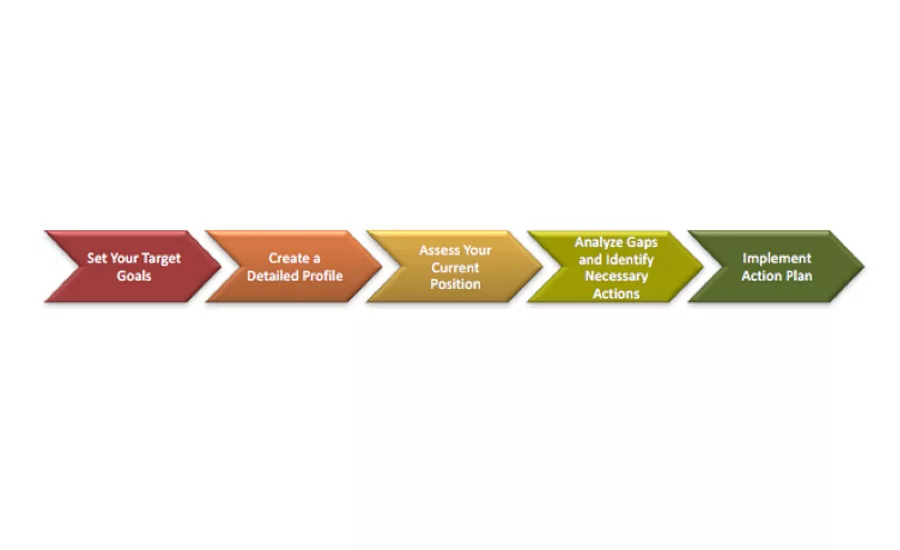
While the vast majority of organizations recognize the value in such a universally recommended, collaborative effort to improve cybersecurity in businesses of all sizes, adapting and implementing the framework is easier said than done. The content of the NIST CSF is freely available for all, so we’re not going to discuss it in great depth here. Instead, we’re going to set out five steps to help you turn the NIST CSF into a reality for your organization. (See image 1 above.)


Set Your Target Goals

Before you even think about how to implement the NIST CSF, you must take aim at setting up your target goals. The first hurdle that many organizations encounter is establishing agreement throughout the organization about risk tolerance levels. There is often a disconnect between upper management and IT about what constitutes an acceptable level of risk.

Draft a definitive agreement on governance for your organization to clarify precisely what level of risk is acceptable. Everybody must be on the same page before you proceed. It’s also important to work out your budget, set high level priorities for the implementation and establish which departments you want to focus on.

It makes a lot of sense to start with a single department or a subset of departments within your organization. Run a pilot program so that you can learn what does and doesn’t work and identify the right tools and best practices for wider deployment. This will help you to craft further implementations plans and accurately estimate the cost.
 

Create a Detailed Profile

The next step is to drill a bit deeper and tailor the framework for your specific business needs. The Framework Implementation Tiers will help you to understand your current position and where you need to be. They’re divided into three areas:

  • Risk Management Process
  • Integrated Risk Management Program
  • External Participation

Like most of the NIST CSF, these should not be taken as set-in-stone. They can be adapted for your organization. You may prefer to categorize them as people, process and tools, or to add your own categories to the framework.

Each one runs from tier one to tier four.

  • Tier 1 – Partial generally denotes an inconsistent and reactive cybersecurity stance.
  • Tier 2 – Risk Informed allows for some risk awareness, but planning is consistent.
  • Tier 3 – Repeatable indicates organization-wide CSF standards and consistent policy.
  • Tier 4 – Adaptive refers to proactive threat detection and prediction.

Higher levels are considered a more complete implementation of CSF standards, but it’s a good idea to customize these tiers to ensure they’re aligned with your goals. Use your customized tiers to set target scores and ensure all key stakeholders agree before you proceed. The most effective implementations will be closely tailored for specific businesses.
 

Assess Your Current Position

Now it’s time to conduct a detailed risk assessment, so that you can establish your status. It’s a good idea to conduct an independent risk assessment. Identify software tools capable of scoring your target areas and train up staff to use them, or hire a third-party to run your risk assessment. It’s crucial that the people performing the risk assessment have no knowledge of your target scores.

The final scores should be aggregated and validated before they’re presented to the key stakeholders. At the end of this process, your organization should have a clear understanding of the cybersecurity risk to organizational operations (including mission, functions, image or reputation), organizational assets and individuals. Vulnerabilities and threats should be identified and fully documented.
 

Analyze Gaps and Identify Necessary Actions

Armed with a deeper knowledge of cybersecurity risks and the potential business impacts for your organization, you can move on to a gap analysis. The idea is to compare your actual scores with your target scores. You may want to create a heat map to illustrate the results in an accessible and digestible way. Any significant differences immediately highlight areas that you’ll want to focus on. (See image 2 above.)

Work out what you need to do to close the gaps between your current scores and your target scores. Identify a series of actions that you can take to improve your scores and prioritize them through discussion with all key stakeholders.

Specific project requirements, budgetary considerations and staffing levels may all influence your plan.
 

Implement an Action Plan

With a clear picture of the current health of your cybersecurity defenses, a set of organizationally aligned target goals, a comprehensive gap analysis and a set of remediation actions, you are finally ready to implement the NIST CSF. Use your first implementation as an opportunity to document processes and create training materials for wider implementation down the line.

The implementation of your action plan is not the end. You need to set up metrics to test its efficacy and continuously reassess your cybersecurity framework to ensure that it’s meeting expectations.

There should be an ongoing continual process of iteration and validation. Keep up the dialogue about risk and ensure key decision-makers remain engaged. To get the maximum benefit for your organization, you should continue to hone the implementation process and further customize the NIST CSF to fit your business needs.

KEYWORDS: NIST cyber security framework risk analysis security budget security metrics

Share This Story

Looking for a reprint of this article?
From high-res PDFs to custom plaques, order your copy today!

Anupam Sahai is Vice President of Product Management at Cavirin Systems, a provider of continuous security assessment and remediation for hybrid clouds, containers and data centers. Most recently he was CEO of Aegify and held senior positions at HP and Microsoft. Anupam holds a Master’s degree in engineering and an MBA from Massachusetts Institute of Technology. Contact him at anupam@cavirin.com.

Recommended Content

JOIN TODAY
To unlock your recommendations.

Already have an account? Sign In

  • Cyber tech background

    Security’s Top Cybersecurity Leaders 2026

    Security magazine’s Top Cybersecurity Leaders 2026 award...
    Top Cybersecurity Leaders
  • Iintegration and use of emerging tools

    Future Proof Your Security Career with AI Skills

    AI’s evolution demands security leaders master...
    Security Leadership and Management
    By: Jerry J. Brennan and Joanne R. Pollock
  • The 2025 Security Benchmark Report

    The 2025 Security Benchmark Report

    The 2025 Security Benchmark Report surveys enterprise...
    The Security Benchmark Report
    By: Rachelle Blair-Frasier
Manage My Account
  • Security Newsletter
  • eMagazine Subscriptions
  • Manage My Preferences
  • Online Registration
  • Mobile App
  • Subscription Customer Service

More Videos

Sponsored Content

Sponsored Content is a special paid section where industry companies provide high quality, objective, non-commercial content around topics of interest to the Security audience. All Sponsored Content is supplied by the advertising company and any opinions expressed in this article are those of the author and not necessarily reflect the views of Security or its parent company, BNP Media. Interested in participating in our Sponsored Content section? Contact your local rep!

close
  • Northland Controls sponsored content
    Sponsored byNorthland Controls

    The Execution Gap: Why Great Security Design Doesn't Always Deliver Great Security

Popular Stories

security

6 Crisis Response Best Practices (That Actually Hold Up When Things go Sideways)

Photograph of apartment complex patios

Enhancing Residential Building Security

Man in suit looking out window at city

Why GSOCs and Protective Intelligence Are the Cornerstone of Executive Protection

5 Minutes with Johnson

Can Organizations Trust Their Own AI?

Patient in bed

When Cyberattacks Hit Medical Devices, Patients Pay the Price

Events

August 27, 2026

Leveraging AI & Mobility to Advance Your Security Domain

LIVE: August 27, 2026 at 2 PM EDT Explore how AI-driven cloud security solutions can elevate your security domain enhancing threat detection, streamlining operations, and delivering the resilience modern organizations demand.

September 10, 2026

So, You Have an Emergency Management Plan… Now What?

LIVE: September 10, 2026 at 2 PM EDT Turning an emergency management plan into an actionable program that prepares staff, students, and partners to respond effectively is a challenge. Learn to move beyond compliance and build a resilient school safety program.
View All Submit An Event

Products

Security Culture: A How-to Guide for Improving Security Culture and Dealing with People Risk in Your Organisation

Security Culture: A How-to Guide for Improving Security Culture and Dealing with People Risk in Your Organisation

See More Products


Alertmedia sponsored webinar

Related Articles

  • nist-cyber

    How to Use the NIST Cybersecurity Framework

    See More
  • Two people writing on whiteboard

    How the NIST Cybersecurity Framework 2.0 helps protect businesses

    See More
  • Revised NIST Cyber Security Framework - Security Magazine

    5 Things You Need to Know about the Revised NIST Cybersecurity Framework

    See More

Related Products

See More Products
  • facility manager.jpg

    The Facility Manager's Guide to Safety and Security

  • The Complete Guide to Physical Security

  • The Database Hacker's Handboo

See More Products
×

Sign-up to receive top management & result-driven techniques in the industry.

Join over 20,000+ industry leaders who receive our premium content.

SIGN UP TODAY!
  • RESOURCES
    • Advertise
    • Contact Us
    • Store
    • Want More
  • SIGN UP TODAY
    • Create Account
    • eMagazine
    • Newsletter
    • Customer Service
    • Manage Preferences
  • SERVICES
    • Marketing Services
    • Reprints
    • Market Research
    • List Rental
    • Survey/Respondent Access
  • STAY CONNECTED
    • LinkedIn
    • Facebook
    • YouTube
    • X (Twitter)
  • PRIVACY
    • PRIVACY POLICY
    • TERMS & CONDITIONS
    • DO NOT SELL MY PERSONAL INFORMATION
    • PRIVACY REQUEST
    • ACCESSIBILITY

Copyright ©2026. All Rights Reserved BNP Media, Inc. and BNP Media II, LLC.

Design, CMS, Hosting & Web Development :: ePublishing