Security Magazine logo
search
cart
facebook twitter linkedin youtube
  • Sign In
  • Create Account
  • Sign Out
  • My Account
Security Magazine logo
  • NEWS
    • Security Newswire
    • Technologies & Solutions
  • MANAGEMENT
    • Leadership Management
    • Enterprise Services
    • Security Education & Training
    • Logical Security
    • Security & Business Resilience
    • Profiles in Excellence
  • PHYSICAL
    • Access Management
    • Fire & Life Safety
    • Identity Management
    • Physical Security
    • Video Surveillance
    • Case Studies (Physical)
  • CYBER
    • Cybersecurity News
    • More
  • BLOG
  • COLUMNS
    • Career Intelligence
    • Cyber Tactics
    • Cybersecurity Education & Training
    • Leadership & Management
    • Security Talk
  • EXCLUSIVES
    • Annual Guarding Report
    • Most Influential People in Security
    • The Security Benchmark Report
    • Top Guard and Security Officer Companies
    • Top Cybersecurity Leaders
    • Women in Security
  • SECTORS
    • Arenas / Stadiums / Leagues / Entertainment
    • Banking/Finance/Insurance
    • Construction, Real Estate, Property Management
    • Education: K-12
    • Education: University
    • Government: Federal, State and Local
    • Hospitality & Casinos
    • Hospitals & Medical Centers
    • Infrastructure:Electric,Gas & Water
    • Ports: Sea, Land, & Air
    • Retail/Restaurants/Convenience
    • Transportation/Logistics/Supply Chain/Distribution/ Warehousing
  • EVENTS
    • Industry Events
    • Webinars
    • Solutions by Sector
    • Security 500 Conference
  • MEDIA
    • Interactive Spotlight
    • Photo Galleries
    • Podcasts
    • Polls
    • Videos
      • Cybersecurity & Geopolitical Discussion
      • Ask Me Anything (AMA) Series
  • MORE
    • Call for Entries
    • Classifieds & Job Listings
    • Newsletter
    • Sponsor Insights
    • Store
    • White Papers
  • EMAG
    • eMagazine
    • This Month's Content
    • Advertise
  • SIGN UP!
Hospitals & Medical Centers

Hospitals Using Stun-Guns for Workplace Violence Prevention See 41% Difference in Incidents

December 1, 2014

Approximately 11,370 healthcare and social assistance workers were the victims of workplace violence assaults in 2010 – a 13-percent increase over such assaults in 2009, and many more incidents likely go unreported, according to the Bureau of Labor Statistics.

In the past year, 89 percent of hospitals had at least one event of workplace violence, with an average of 123 events per hospital. This led researchers to ask: what are healthcare security departments doing to mitigate the risks of violence?

Of the 299 respondents in the Duke University Medical Center and International Healthcare Security and Safety Foundation (IHSSF) study, 99 percent of hospitals were employing at least one of the following workplace violence mitigation components:  employee involvement, management commitment, incident reporting and record keeping, training of security staff, hazard prevention and control, and worksite analysis. Fifty-five percent of hospitals employed all six.

However, the training component raised another question: How many healthcare facilities are also offering similar workplace violence prevention or security training to non-security employees? Ninety-eight percent of hospitals train security staff on workplace violence policies, but in terms of non-security staff, 64 percent of direct patient care staff, 28 percent of housekeeping, 27 percent of food service workers and just four percent of facilities workers are required to complete workplace violence training. Fourteen percent of all hospitals surveyed require all staff to be trained in workplace violence prevention.

Participants in the survey highlighted the need to continued efforts to enhance training availability, content and reach. A lack of education and training was a commonly mentioned source of difficulty between security and non-security personnel.

Perpetrators of hospital violence were most commonly patients (75 percent), but also visitors (nine percent) and outside individuals (six percent). While threats and verbal assaults are most common at 4 percent, 29 percent of incidents included a physical assault. The most commonly injured parties are security personnel (57 percent) and other hospital workers (38 percent). Security personnel in hospitals have a limited range of weaponry to defend themselves and their stakeholder, the report notes. Most are issued handcuffs, followed by batons, OC products, hand guns, TASERS and K9 units. Documented training in weapons use was required in approximately 90 percent of hospitals for nearly all types of weapons. A striking finding from the research showed a 41-percent-lower risk of physical assault among hospitals with security personnel armed with TASERS compared to those without.

KEYWORDS: healthcare security solutions by sector workplace violence

Share This Story

Looking for a reprint of this article?
From high-res PDFs to custom plaques, order your copy today!

Recommended Content

JOIN TODAY
To unlock your recommendations.

Already have an account? Sign In

  • Cyber tech background

    Security’s Top Cybersecurity Leaders 2026

    Security magazine’s Top Cybersecurity Leaders 2026 award...
    Top Cybersecurity Leaders
  • Iintegration and use of emerging tools

    Future Proof Your Security Career with AI Skills

    AI’s evolution demands security leaders master...
    Columns
    By: Jerry J. Brennan and Joanne R. Pollock
  • The 2025 Security Benchmark Report

    The 2025 Security Benchmark Report

    The 2025 Security Benchmark Report surveys enterprise...
    The Security Benchmark Report
    By: Rachelle Blair-Frasier
Manage My Account
  • Security Newsletter
  • eMagazine Subscriptions
  • Manage My Preferences
  • Online Registration
  • Mobile App
  • Subscription Customer Service

More Videos

Popular Stories

Man on laptop

Healthcare Executives Face a New Era of Personal Risk

Man walking with briefcase

The Rising Tide of Executive Protection: Corporations Ramp Up Security in an Era of Heightened Threats

Stadium

Physical Security in Global Arenas: How AI Improves Security at Scale

Four people in suits

Mexico Security Crisis: Never Waste a Crisis

Digital Information Protected Secured

Taming the Threat Beast: Building a Threat-Led Cybersecurity Program

SEC 2026 Benchmark Banner

Events

April 21, 2026

The Blind Spot in Enterprise Security: Managing Workforce Risk Post-Hire

Organizations continuously monitor their networks and systems for risk, yet the people with legitimate access are often the least monitored part of the model. Discover a Workforce Risk Intelligence Framework that adds a dedicated layer focused on workforce risk.

April 30, 2026

Building a Campus-Wide Culture of Security and Shared Responsibility

In today’s higher education environment, where institutions face evolving and multifaceted incidents, safety must be embedded into the fabric of campus culture. Learn strategies for generating collective buy-in from faculty, staff, students and senior leadership. 

View All Submit An Event

Products

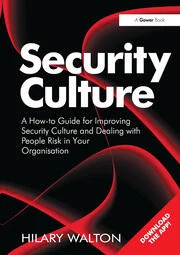
Security Culture: A How-to Guide for Improving Security Culture and Dealing with People Risk in Your Organisation

Security Culture: A How-to Guide for Improving Security Culture and Dealing with People Risk in Your Organisation

See More Products
SEC 2026 Top Cybersecurity Leaders

Related Articles

  • Stun-Gun-Armed Officers Result in Workplace Violence Drop in Hospitals

    See More
  • Workplace Violence Incidents at Two Hospitals as Security Seeks Prevention Strategies

    See More
  • Workplace Violence Prevention Plans Now Mandatory for California Hospitals and Skilled Nursing Facilities

    See More

Related Products

See More Products
  • security culture.webp

    Security Culture: A How-to Guide for Improving Security Culture and Dealing with People Risk in Your Organisation

  • Physical Security and Safety: A Field Guide for the Practitioner

  • 150 things.jpg

    The Handbook for School Safety and Security

See More Products

Events

View AllSubmit An Event
  • February 26, 2026

    Zero Incidents vs. Zero Tolerance – Workplace Violence Prevention Best Practices that Work

    ON DEMAND: Workplace violence remains one of the most complex challenges facing healthcare organizations today. Explore the real drivers of violence in healthcare and how proactive communication, de-escalation, access control, and documentation can reduce risk.
View AllSubmit An Event
×

Sign-up to receive top management & result-driven techniques in the industry.

Join over 20,000+ industry leaders who receive our premium content.

SIGN UP TODAY!
  • RESOURCES
    • Advertise
    • Contact Us
    • Store
    • Want More
  • SIGN UP TODAY
    • Create Account
    • eMagazine
    • Newsletter
    • Customer Service
    • Manage Preferences
  • SERVICES
    • Marketing Services
    • Reprints
    • Market Research
    • List Rental
    • Survey/Respondent Access
  • STAY CONNECTED
    • LinkedIn
    • Facebook
    • YouTube
    • X (Twitter)
  • PRIVACY
    • PRIVACY POLICY
    • TERMS & CONDITIONS
    • DO NOT SELL MY PERSONAL INFORMATION
    • PRIVACY REQUEST
    • ACCESSIBILITY

Copyright ©2026. All Rights Reserved BNP Media, Inc. and BNP Media II, LLC.

Design, CMS, Hosting & Web Development :: ePublishing