How Boston’s Hotels Maintained Security after the Marathon Bombings
When Trouble Came to Boston, Training and Partnerships Helped it Rally
|
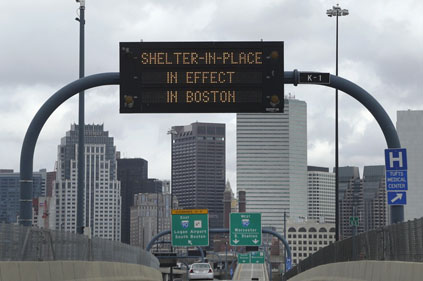
| Police issued a Shelter-in-Place order for the city of Boston following the April Marathon Bombings. Photo courtesy of Michael Soper and the Boston Chapter of the International Lodging Safety and Security Association. |
For many of Boston's hotel security directors, the day started like so many other Marathon Mondays, a calm morning full of excitement and anticipation for the events about to begin in the quaint New England town of Hopkinton, 26.2 miles from the Marathon's finish line in Boston's historic Copley Square. Hotel security departments across the city prepared for the event much like they have year after year, reviewing security plans, understanding road closures and generally being ready for the unexpected.
Boston's "Marathon Monday" coincides with the Massachusetts state holiday of Patriot’s Day. Schools are closed, state government offices are closed, and hundreds of thousands descend upon Boston to cheer on their friends and watch the scores of runners cross the finish line.
Long after the elite runners had crossed the finish line, and at a time when the masses of regular runners would be celebrating their own personal accomplishments, trouble came to Boston.
It was 2:50 p.m. when the first bomb went off just yards from the finish line, and 10 seconds later a second bomb, just a few hundred feet away, exploded.
The bombs would end lives and shatter others. And while it’s too soon to speculate on what security changes will result in the months and years to come, there will be many.
What is known is that within moments of the bombings, Boston's hotels went into high alert. Immediate email and text notifications were sent to each hotel alerting them to the incident. The notification came not from city or state officials, but from the Intelligence Network operated by Boston's Hotel Security Association, known as ILSSA Boston, a Public-Private Law Enforcement Partnership that was founded in 1972.
Three hotels immediately found themselves in the midst of chaos. The Charlesmark Hotel, The Lenox Hotel and the Mandarin Oriental Hotel were within feet of the blasts.
|
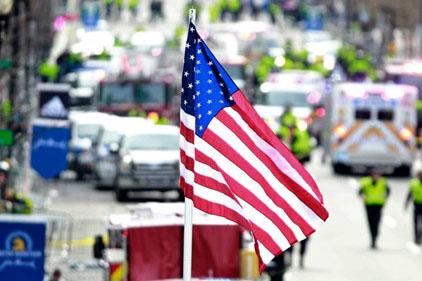
| The aftermath of the Marathon Bombings showed the merits of Boston's hospitality industry, as well as the merits of public-private partnerships and training. Photo courtesy of Michael Soper and the Boston Chapter of the International Lodging Safety and Security Association. |
Within 12 minutes of the bombing, a Boston Police Detective, who acts as liaison to the city's hotels, was on scene assessing the situation. One of the first orders from the Boston Police came directly from the scene..."institute your security protocols and immediately shelter in place."
The order was clear and direct. This was not a drill; this was not a precaution; the threat was real and imminent. They didn't know where the bombers were or if they had more devices. They were concerned with large groups of people gathering. Hotels by their very nature are soft targets.
Shelter-In-Place procedures had been created in the wake of 9/11 and rehearsed in the years since, but the hotels’ policies had never been implemented in a real-world situation. The Charlesmark Hotel was evacuated, the Mandarin Oriental Hotel was evacuated, and The Lenox Hotel was evacuated and taken over by the Boston Police and the FBI, and it would be used as a command post for evidence gathering and preservation. The Westin Copley Place became the headquarters for the many media briefings that would occur. When the dust settled, a 15 block area would be declared a crime scene, locked down and strictly controlled by the FBI.
Throughout the crisis, timely and accurate information was broadcast to the hotels, keeping them abreast of the situation, advising them of critical information and updates regarding official press conferences and additional orders from the city and state. Before the ordeal in Boston was over, they would halt all modes of public transit and suspend taxi cab service for a period of time.
Michael Soper, who serves as the chairman and the law enforcement liaison for ILSSA Boston, was responsible for keeping the hotels up to date. "From the moment the bombings occurred, I knew that our hotels would be expecting accurate information about what was happening and guidance as we moved forward," says Soper. "We were lucky to have one of our Boston Police partners on the scene almost immediately. I was literally getting direction from the scene amidst all of the chaos and getting that information out to our members as quickly as possible," he recalls.
ILSSA's Executive Director, Skip Brandt, was in route to a national hospitality security conference and was "in the air" as the events in Boston unfolded. With some assistance from the airline, Brandt was back on the ground in Boston and actively assisting in the coordination and dissemination of information, all while directing the activities of his own 1,000-room hotel, located just outside the secured bombing crime scene.
For the next four days, Soper monitored the evolving situation and subsequent regional manhunt for the bombing suspects from a temporary command center outside the city, closely monitoring police radio transmissions, Twitter feeds from local, state and federal law enforcement agencies, as well as monitoring updates from multiple local and national media outlets. It unfolded like the story line of a blockbuster action movie – a terrorist bombing, a police officer murdered, a carjacking, a police chase, gun fights and a region under lockdown as SWAT teams went door to door searching for the suspects. The trouble was this was no movie – this was real, and people's lives were in danger.
Brandt fielded calls from outside law enforcement agencies that were converging on the city to help, and they needed assistance with accommodations. "It was a massive effort to coordinate, but everyone was willing to help," says Brandt.
The security restrictions imposed around the city resulted in inconveniences to many, and while increased security measures in the hotels resulted in guests not being allowed to venture out into the city, and included the implementation of luggage and bag screening, most appreciated the diligence of the various hotel security departments and their efforts in keeping them safe. "I can't recall a time in the city's history that such a widespread lockdown was implemented," says Brandt. "But my colleagues throughout the city got the job done," Brandt continues.
We've heard story after story of people in the hotels going above and beyond to care for Boston's visitors. From checking on guests in person, going door-to-door to check on their well-being, to making sure they'd had something to eat, and feeding those who hadn't. At the evacuated Lenox Hotel, at the bombing site, we learned that the Managing Director Dan Donahue, even gave one guest the shoes off his own feet and another his jacket. Hospitality, and the spirit of Boston, really shined in the face of catastrophe.
"The overwhelming majority of guests who have written reviews about their hotel stays in Boston during the bombing, and its aftermath, have been 100-percent complimentary of the hotels and their efforts in keeping them not only safe, but well-informed about what was going on in the city," remarks Soper.
He continues, "We judge our successes and failures largely upon the opinions and the experiences of our guests while in our hotels. I can say with certainty, we were successful in our mission of keeping our hotels well informed with accurate and timely information. In turn, our guests were kept safe, well informed and more importantly, well cared for during the crisis."
"We have a system and it works," says Brandt. "We are proud to be part of one of the best Public-Private Law Enforcement Partnerships in the country," Brandt continues. "We will learn from this experience, and if faced again with evil in the future, we will be even better prepared."
Looking for a reprint of this article?
From high-res PDFs to custom plaques, order your copy today!