Security Magazine logo
search
cart
facebook twitter linkedin youtube
  • Sign In
  • Create Account
  • Sign Out
  • My Account
Security Magazine logo
  • NEWS
    • Security Newswire
    • Technologies & Solutions
  • MANAGEMENT
    • Leadership Management
    • Enterprise Services
    • Security Education & Training
    • Logical Security
    • Security & Business Resilience
    • Profiles in Excellence
  • PHYSICAL
    • Access Management
    • Fire & Life Safety
    • Identity Management
    • Physical Security
    • Video Surveillance
    • Case Studies (Physical)
  • CYBER
    • Cybersecurity News
    • More
  • BLOG
  • COLUMNS
    • Career Intelligence
    • Cyber Tactics
    • Cybersecurity Education & Training
    • Leadership & Management
    • Security Talk
  • EXCLUSIVES
    • Annual Guarding Report
    • Most Influential People in Security
    • The Security Benchmark Report
    • Top Guard and Security Officer Companies
    • Top Cybersecurity Leaders
    • Women in Security
  • SECTORS
    • Arenas / Stadiums / Leagues / Entertainment
    • Banking/Finance/Insurance
    • Construction, Real Estate, Property Management
    • Education: K-12
    • Education: University
    • Government: Federal, State and Local
    • Hospitality & Casinos
    • Hospitals & Medical Centers
    • Infrastructure:Electric,Gas & Water
    • Ports: Sea, Land, & Air
    • Retail/Restaurants/Convenience
    • Transportation/Logistics/Supply Chain/Distribution/ Warehousing
  • EVENTS
    • Industry Events
    • Webinars
    • Solutions by Sector
    • Security 500 Conference
  • MEDIA
    • Interactive Spotlight
    • Photo Galleries
    • Podcasts
    • Polls
    • Videos
      • Cybersecurity & Geopolitical Discussion
      • Ask Me Anything (AMA) Series
  • MORE
    • Call for Entries
    • Classifieds & Job Listings
    • Continuing Education
    • Newsletter
    • Sponsor Insights
    • Store
    • White Papers
  • EMAG
    • eMagazine
    • This Month's Content
    • Advertise
  • SIGN UP!
Leadership & ManagementSecurity Leadership and Management

Founding Security on Enterprise Risk Management

By Lynn Mattice
February 28, 2013

Utilizing the principles, standards and methodologies of ERM and/or ISO 31000 as the foundation of security programs is vital in order to transform your security program to holistically address the full scope of the risk, threat and hazard landscape that your organization faces today and into the future. Going forward, we will provide some insight into the concepts of ERM and why it is so important to utilize ERM as the foundation of your security program.

The Committee of Sponsoring Organizations of the Treadway Commission (COSO) established ERM as a process to deal with risks and opportunities affecting value creation or preservation and defined ERM as follows:  

“Enterprise risk management is a process, effected by an entity’s board of directors, management and other personnel, applied in strategy setting and across the enterprise, designed to identify potential events that may affect the entity, and manage risk to be within its risk appetite, to provide reasonable assurance regarding the achievement of entity objectives”.

The primary driver of the establishment of ERM and eventually ISO 31000 was the deceptive and fraudulent practices of senior management at organizations like Enron and WorldCom. The goals of ERM and ISO 31000 are to enhance internal controls and processes to ensure that, from the board of directors down through the organization, an understanding is established on how to identify, analyze and manage the organization’s risk exposure, as well as the process for approval for the acceptance of risk. 

The COSO framework established four key areas of risk in its ERM structure: Strategic, Operations, Reporting and Compliance.  Most organizations have overlaid “Reputation” as an overarching core element of their ERM program.

•  Strategic– addresses the establishment of high-level goals, aligned with and supporting an organization’s mission. 

•  Operations– addresses an organization’s ongoing management processes (as well as the effective and efficient use of its resources).

•  Reporting– addresses the reliability and accuracy of reporting (as previously mentioned, this element of ERM is primarily focused at financial reporting and most organizations now refer to this area as Financial rather than Reporting).

•  Compliance– addresses an organization’s compliance with applicable laws and regulations.

•  Reputation– addresses an organization’s level of respect and credibility held by its full range of stakeholders, including: customers, channel partners, supply chain partners, employees, shareholders and the financial markets. In addition, how an organization is viewed by regulators and other bodies responsible for oversight is vital, especially when issues arise. 

Another key step in establishing an ERM/ISO-based program is gaining a clear understanding of the Risk Culture of an organization. The organization may range from having a very liberal culture, to a highly entrepreneurial culture, to an extremely conservative culture, or may ultimately be a somewhat schizophrenic culture  . . . not being really sure of what type of culture it wants to establish when it grows up. One thing to keep in mind is that an organization’s risk culture often changes or evolves over time. Changes to an organizations risk culture are most evident when new executive leadership is brought in from the outside.

An essential step is developing a well documented risk appetite statement that is frequently and effectively communicated across the organization. This statement defines the level of risk taking that is acceptable to the organization. The statement should also establish guidelines relative to who is empowered within the organization, from a hierarchical standpoint, to make risk decisions. This portion of the statement typically defines an approval process with escalation requirements based on the type of risk and/or the potential impact to the organization. Ensuring that you have a deep understanding of the current risk culture the organization (and/or the new risk culture that the senior leadership and the board wants to establish) is extremely important as you work to develop and define a Risk Appetite statement for the organization. Ensuring that the statement is communicated on a regular basis across the organization cannot be over-emphasized. It is vital that the risk appetite statement is thoroughly understood and complied with to ensure the success and stability of the organization.

Organizations face an ever evolving and complex risk environment in today’s global economy as well as the extreme risks that are manifested around the world from both human and natural caused events. It is imperative that security practitioners gain a deep understanding of the COSO ERM and ISO 31000 philosophies and methodologies in order to assist their organizations in dealing with the global risk environment.  This article was previously published in the print magazine as "Enterprise Risk Management as a Foundation."

KEYWORDS: reputation management risk appetite security compliance security risk management

Share This Story

Looking for a reprint of this article?
From high-res PDFs to custom plaques, order your copy today!


Mattice 2016 200px

Lynn Mattice is Managing Director of Mattice & Associates, a top-tier management consulting firm focused primarily at assisting enterprises with ERM, cyber, intelligence, security and information asset protection programs. He can be reached at: matticeandassociates@gmail.com

Recommended Content

JOIN TODAY
To unlock your recommendations.

Already have an account? Sign In

  • Iintegration and use of emerging tools

    Future Proof Your Security Career with AI Skills

    AI’s evolution demands security leaders master...
    Security Education & Training
    By: Jerry J. Brennan and Joanne R. Pollock
  • The 2025 Security Benchmark Report

    The 2025 Security Benchmark Report

    The 2025 Security Benchmark Report surveys enterprise...
    The Security Benchmark Report
    By: Rachelle Blair-Frasier
  • The Most Influential People in Security 2025

    Security’s Most Influential People in Security 2025

    Security Magazine’s 2025 Most Influential People in...
    Most Influential People in Security
    By: Security Staff
Manage My Account
  • Security Newsletter
  • eMagazine Subscriptions
  • Manage My Preferences
  • Online Registration
  • Mobile App
  • Subscription Customer Service

More Videos

Sponsored Content

Sponsored Content is a special paid section where industry companies provide high quality, objective, non-commercial content around topics of interest to the Security audience. All Sponsored Content is supplied by the advertising company and any opinions expressed in this article are those of the author and not necessarily reflect the views of Security or its parent company, BNP Media. Interested in participating in our Sponsored Content section? Contact your local rep!

close
  • critical event management
    Sponsored byEverbridge

    Why a Unified View Across IT, Continuity, and Security Makes or Breaks Crisis Response

  • Charlotte Star Room
    Sponsored byAMAROK

    In an Uncertain Economy, Security Is a Necessity - Not an Afterthought

  • Sureview screen
    Sponsored bySureView Systems

    The Evolution of Automation in the Command Center

Popular Stories

Cybersecurity trends of 2025

3 Top Cybersecurity Trends from 2025

Red laptop

Security Leaders Discuss SitusAMC Cyberattack

Green code

Logitech Confirms Data Breach, Security Leaders Respond

Neon human and android hands

65% of the Forbes AI 50 List Leaked Sensitive Information

The Louvre

After the Theft: Why Camera Upgrades Should Begin With a Risk Assessment

Top Cybersecurity Leaders

Events

September 18, 2025

Security Under Fire: Insights on Active Shooter Preparedness and Recovery

ON DEMAND: In today’s complex threat environment, active shooter incidents demand swift, coordinated and well-informed responses.

December 11, 2025

Responding to Evolving Threats in Retail Environments

Retail security professionals are facing an increasingly complex array of security challenges — everything from organized retail crime to evolving cyber-physical threats and public safety concerns.

View All Submit An Event

Products

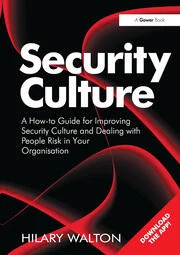
Security Culture: A How-to Guide for Improving Security Culture and Dealing with People Risk in Your Organisation

Security Culture: A How-to Guide for Improving Security Culture and Dealing with People Risk in Your Organisation

See More Products

Related Articles

  • Managing Risk Across the Enterprise

    See More
  • How to Add Resiliency to Your Risk Management Strategy

    See More
  • Why Risk Intelligence is the Key to Successful Security

    See More

Related Products

See More Products
  • security culture.webp

    Security Culture: A How-to Guide for Improving Security Culture and Dealing with People Risk in Your Organisation

  • Risk Analysis and the Security Survey, 4th Edition

  • contemporary.jpg

    Contemporary Security Management, 4th Edition

See More Products
×

Sign-up to receive top management & result-driven techniques in the industry.

Join over 20,000+ industry leaders who receive our premium content.

SIGN UP TODAY!
  • RESOURCES
    • Advertise
    • Contact Us
    • Store
    • Want More
  • SIGN UP TODAY
    • Create Account
    • eMagazine
    • Newsletter
    • Customer Service
    • Manage Preferences
  • SERVICES
    • Marketing Services
    • Reprints
    • Market Research
    • List Rental
    • Survey/Respondent Access
  • STAY CONNECTED
    • LinkedIn
    • Facebook
    • YouTube
    • X (Twitter)
  • PRIVACY
    • PRIVACY POLICY
    • TERMS & CONDITIONS
    • DO NOT SELL MY PERSONAL INFORMATION
    • PRIVACY REQUEST
    • ACCESSIBILITY

Copyright ©2025. All Rights Reserved BNP Media.

Design, CMS, Hosting & Web Development :: ePublishing