Security Magazine logo
search
cart
facebook twitter linkedin youtube
  • Sign In
  • Create Account
  • Sign Out
  • My Account
Security Magazine logo
  • NEWS
    • Security Newswire
    • Technologies & Solutions
  • MANAGEMENT
    • Leadership Management
    • Enterprise Services
    • Security Education & Training
    • Logical Security
    • Security & Business Resilience
    • Profiles in Excellence
  • PHYSICAL
    • Access Management
    • Fire & Life Safety
    • Identity Management
    • Physical Security
    • Video Surveillance
    • Case Studies (Physical)
  • CYBER
    • Cybersecurity News
    • More
  • BLOG
  • COLUMNS
    • Career Intelligence
    • Cyber Tactics
    • Cybersecurity Education & Training
    • Leadership & Management
    • Security Talk
  • EXCLUSIVES
    • Annual Guarding Report
    • Most Influential People in Security
    • The Security Benchmark Report
    • Top Guard and Security Officer Companies
    • Top Cybersecurity Leaders
    • Women in Security
  • SECTORS
    • Arenas / Stadiums / Leagues / Entertainment
    • Banking/Finance/Insurance
    • Construction, Real Estate, Property Management
    • Education: K-12
    • Education: University
    • Government: Federal, State and Local
    • Hospitality & Casinos
    • Hospitals & Medical Centers
    • Infrastructure:Electric,Gas & Water
    • Ports: Sea, Land, & Air
    • Retail/Restaurants/Convenience
    • Transportation/Logistics/Supply Chain/Distribution/ Warehousing
  • EVENTS
    • Industry Events
    • Webinars
    • Solutions by Sector
    • Security 500 Conference
  • MEDIA
    • Interactive Spotlight
    • Photo Galleries
    • Podcasts
    • Polls
    • Videos
      • Cybersecurity & Geopolitical Discussion
      • Ask Me Anything (AMA) Series
  • MORE
    • Call for Entries
    • Classifieds & Job Listings
    • Newsletter
    • Sponsor Insights
    • Store
    • White Papers
  • EMAG
    • eMagazine
    • This Month's Content
    • Advertise
  • SIGN UP!
Security Leadership and Management

A Roadmap to the Next Generation

By Bob Hayes, Kathleen Kotwica Ph.D.
August 2, 2011

Last month we talked about the knowledge transfer gap that exists in the security profession. We posited that the best of the best of security practitioners don’t have the time to teach their successors how to become future-oriented, business-aligned organizational influencers, and that the business-focused training programs available for security professionals do a great job of talking business, but they fail to marry business processes with the job of risk mitigation.

So what is our industry to do? If we can’t address this gap, the practice of security can never move forward. Without the right training in place, every time a visionary security leader retires, his or her replacement has to start anew instead of building from the level of his predecessor.

Successful security executives are not going to be able to individually mentor every security and risk practitioner who wants to learn their secrets. We need a new breed of training program that can pass this knowledge along. We believe there are seven criteria this new type of training must meet.

1. It has to have the right teachers.Business professionals do an expert job of teaching business theory and practice, but a course cannot adequately address how risk mitigation should work within the business unless it offers equal instruction from individuals with personal experience in the security and risk fields. Our industry needs a program that is taught by business and security professionals, not business or security professionals.

2. It has to be developed with input from practitioners.It’s true that sometimes we don’t know what we don’t know. But many security practitioners are very clear on the type of knowledge they need and the type of training they’re not finding. An effective program will solicit input from the people on the front lines to inform the curriculum.

3. It has to cover the subjects Next Generation Leaders must master.As we explained in our last column, Next Generation Leaders are those rare individuals, working at an industry or national level, who are future oriented, who work across many domains, who are aligned with the business and who are influencers in their organizations. While input from practitioners is one important aspect of curriculum development, it’s also crucial that this new breed of program offer a curriculum that is built from a distinct and intimate understanding of the skills, characteristics and processes that help make our most successful colleagues so successful.

4. It has to begin by assessing each participant’s leadership development and needs.A course can’t teach you how to move forward if neither you nor the instructors know where you are now. In last month’s column we described seven personas into which most security leaders generally fall. An effective course curriculum will begin by asking participants to think about and try to understand where they are in their organization, in their career path and in their leadership development so that they can better understand what they need to learn.

5. It has to guarantee that it will provide actionable information. It’s great to know how to talk the business talk. Now what are you supposed to do with that? That’s the problem many existing programs have. A program that truly and effectively teaches “the business of security” will be one that gives participants tangible take-aways they can immediately begin to use in their organizations.

6. It has to allow participants to continue to connect after the coursework is over.Schoolteachers joke (some more seriously than others) that their participants always come back from summer vacation having forgotten everything they learned the year before. Once a class is over, it can be easy to go back to the grind and forget what you’ve been taught. An effective program will offer ways for participants to stay connected to the coursework after it’s over by continuing to communicate with instructors or fellow participants.

7. It has to be affordable.The tuition for business school offerings can run into the tens of thousands, and in this economy even profitable multinational companies are balking at those prices. If a new training program is going to change our industry, it has to reach a lot of people, and the only way to do that is to make the program extremely affordable.

At the Security Executive Council, we want to see our industry transformed. We want to see a program that offers everything we’ve described here, because we think this type of training could help to elevate security to an executive concern across the board.

What do you think? What kind of training do you need to become a Next Generation Leader? What subjects or skills are unaddressed in currently available security and business training programs? We want to hear from you. E-mail us at contact@secleader.com.

KEYWORDS: Security security leaders

Share This Story

Looking for a reprint of this article?
From high-res PDFs to custom plaques, order your copy today!

 Bob Hayes is managing director of the Security Executive Council. He has more than 25 years of experience in security, including eight years as the CSO at Georgia Pacific and nine years as security operations manager at 3M.  

Kathleen Kotwica, Ph.D., is EVP and chief knowledge strategist for the Security Executive Council (SEC). She develops strategies and processes to identify, store, understand, build upon, and disseminate the Council’s Collective Knowledge™ and insights.. To learn about becoming involved, or to offer comments or questions about Next Generation Security leadership, e-mail contact@secleader.com or visit https://www.securityexecutivecouncil.com/sm.

Recommended Content

JOIN TODAY
To unlock your recommendations.

Already have an account? Sign In

  • Cyber tech background

    Security’s Top Cybersecurity Leaders 2026

    Security magazine’s Top Cybersecurity Leaders 2026 award...
    Security Leadership and Management
  • Iintegration and use of emerging tools

    Future Proof Your Security Career with AI Skills

    AI’s evolution demands security leaders master...
    Security Education & Training
    By: Jerry J. Brennan and Joanne R. Pollock
  • The 2025 Security Benchmark Report

    The 2025 Security Benchmark Report

    The 2025 Security Benchmark Report surveys enterprise...
    The Security Benchmark Report
    By: Rachelle Blair-Frasier
Manage My Account
  • Security Newsletter
  • eMagazine Subscriptions
  • Manage My Preferences
  • Online Registration
  • Mobile App
  • Subscription Customer Service

More Videos

Popular Stories

Opened padlock on computer keyboard

10 Data Breaches to Know About (April 2026)

Laptop with desktop screen showing

Research: Microsoft Edge Loads Stored Passwords in Cleartext

Diverse Team Collaborating on Business Analysis

12 Tips for Building an Effective Security Budget

Laptop in darkness

Reframing MFA Bypass: Four Identity Gaps Attackers Exploit

Nurse

Why De-Escalation Must Be Part of a Layered Safety Strategy in Healthcare

SEC 2026 Benchmark Banner

Events

June 3, 2026

The Role of AI and Video in Measuring Health, Safety, and Security Standards

OSHA fines grab headlines, but most compliance issues start with everyday operational gaps: missed protocols, unsecured areas, or slow response. Learn how emerging technologies & AI can be leveraged towards a more proactive model of compliance.

June 10, 2026

Applying Agentic AI in Security Operations for Faster Decisions & Better Outcomes

Security teams have never had more visibility. We’ll explore how a new decision layer is helping security teams move from detection to decision. Turn alerts into decision-ready context, reducing reliance on manual triage and enabling faster action.

View All Submit An Event

Products

Security Culture: A How-to Guide for Improving Security Culture and Dealing with People Risk in Your Organisation

Security Culture: A How-to Guide for Improving Security Culture and Dealing with People Risk in Your Organisation

See More Products
Solutions by Sector webinar promo


The Role of AI and Video - Free Webinar - June 3, 2026

Related Articles

  • Is the Knowledge Transfer Gap Hurting Security?

    See More
  • Eleven Areas for Improvement

    See More
  • Security’s 2012 Accomplishments and 2013 To-Do List

    See More

Related Products

See More Products
  • security culture.webp

    Security Culture: A How-to Guide for Improving Security Culture and Dealing with People Risk in Your Organisation

  • physical security.webp

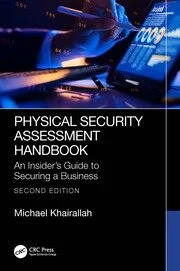
    Physical Security Assessment Handbook An Insider’s Guide to Securing a Business

  • A Leaders Guide Book Cover_Nicholson_29Sept2023.jpg

    A Leader’s Guide to Evaluating an Executive Protection Program

See More Products
×

Sign-up to receive top management & result-driven techniques in the industry.

Join over 20,000+ industry leaders who receive our premium content.

SIGN UP TODAY!
  • RESOURCES
    • Advertise
    • Contact Us
    • Store
    • Want More
  • SIGN UP TODAY
    • Create Account
    • eMagazine
    • Newsletter
    • Customer Service
    • Manage Preferences
  • SERVICES
    • Marketing Services
    • Reprints
    • Market Research
    • List Rental
    • Survey/Respondent Access
  • STAY CONNECTED
    • LinkedIn
    • Facebook
    • YouTube
    • X (Twitter)
  • PRIVACY
    • PRIVACY POLICY
    • TERMS & CONDITIONS
    • DO NOT SELL MY PERSONAL INFORMATION
    • PRIVACY REQUEST
    • ACCESSIBILITY

Copyright ©2026. All Rights Reserved BNP Media, Inc. and BNP Media II, LLC.

Design, CMS, Hosting & Web Development :: ePublishing