Security Magazine logo
search
cart
facebook twitter linkedin youtube
  • Sign In
  • Create Account
  • Sign Out
  • My Account
Security Magazine logo
  • NEWS
    • Security Newswire
    • Technologies & Solutions
  • MANAGEMENT
    • Leadership Management
    • Enterprise Services
    • Security Education & Training
    • Logical Security
    • Security & Business Resilience
    • Profiles in Excellence
  • PHYSICAL
    • Access Management
    • Fire & Life Safety
    • Identity Management
    • Physical Security
    • Video Surveillance
    • Case Studies (Physical)
  • CYBER
    • Cybersecurity News
    • More
  • BLOG
  • COLUMNS
    • Career Intelligence
    • Cyber Tactics
    • Cybersecurity Education & Training
    • Leadership & Management
    • Security Talk
  • EXCLUSIVES
    • Annual Guarding Report
    • Most Influential People in Security
    • The Security Benchmark Report
    • Top Guard and Security Officer Companies
    • Top Cybersecurity Leaders
    • Women in Security
  • SECTORS
    • Arenas / Stadiums / Leagues / Entertainment
    • Banking/Finance/Insurance
    • Construction, Real Estate, Property Management
    • Education: K-12
    • Education: University
    • Government: Federal, State and Local
    • Hospitality & Casinos
    • Hospitals & Medical Centers
    • Infrastructure:Electric,Gas & Water
    • Ports: Sea, Land, & Air
    • Retail/Restaurants/Convenience
    • Transportation/Logistics/Supply Chain/Distribution/ Warehousing
  • EVENTS
    • Industry Events
    • Webinars
    • Solutions by Sector
    • Security 500 Conference
  • MEDIA
    • Interactive Spotlight
    • Photo Galleries
    • Podcasts
    • Polls
    • Videos
      • Cybersecurity & Geopolitical Discussion
      • Ask Me Anything (AMA) Series
  • MORE
    • Call for Entries
    • Classifieds & Job Listings
    • Continuing Education
    • Newsletter
    • Sponsor Insights
    • Store
    • White Papers
  • EMAG
    • eMagazine
    • This Month's Content
    • Advertise
  • SIGN UP!

From Lossy to Transceivers to Hubs
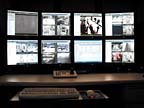
October 1, 2005
IP Transmission

IP-based security video, a major technology trend seen at this year’s International Security Conferences and on the exhibit floor at the American Society for Industrial Security event, calls for new types of transceivers, often with the ability to select data rates. One example: Ethernet transceivers from such sources as International Fiber Systems IFS of Newtown, Conn. One of the IFS devices can transmit either 10Mps or 100Mbps Ethernet data 2 over multimode or single mode optical fiber ports or electrical via a RJ45 Ethernet cable port. The approach also plays to the convergence of security and IT.

It takes more to do the transmission tango. No matter if security video goes 50 feet to a DVR or 5,000 miles for remote monitoring, compression types determine image quality and cost and should match recording situations and needs.

Then there are the transceivers, switches and hubs that control and move security video over fiber optic, coax and unshielded telephone wires.

Update on compression

Compression plays a huge role in the quality, cost and effectiveness of a digital video security system. With the cost of digital storage still relatively high, compressing video can save an end user money on storage. But does it affect video quality?

There are two types of compression in the digital video world. Lossless compression allows the original data to be reconstructed exactly from the compressed data, while lossy compression loses certain elements of the original product.

Lossy compression is what the video surveillance world uses, as lossless compression tends to require huge amounts of storage space and a lot higher resolution not required for most surveillance applications.

  • Joint Photographic Experts Group (JPEG)

Motion JPEG (M-JPEG) records every frame. This compression comes from combining groups of pixels into larger blocks. As a consequence, fine detail is lost within an image while larger, less defined areas are retained, creating a pixilated look. JPEG is best used when the image being captured is larger and further away.

  • Wavelet

Wavelet is one of the most popular forms of compression, due to how easy it is to work with and how easily it is altered to fit individual needs. Similar to M-JPEG, Wavelet drops fine details but creates a slightly out-of-focus look instead of the pixilated M-JPEG look. Wavelet compression is best used when the picture being captured is closer and very fine detail is not necessary.

  • Motion Picture Experts Group (MPEG)

There are different types of MPEG compression, from MPEG1 to MPEG4. The idea behind MPEG is to retain as much of the detail of an image as possible. This is accomplished by recording one image in full resolution with high detail and then in the following frames, only recording what has changed in the image. This process is accomplished by using three frame types:

  • Intra Frame (I Frame): The I frame is the only full frame of uncompressed information.

  • Bi-linear frame (B Frame): The B frames look back and compare the current position of objects with the present position and then holds the information that has changed.

  • Preceding Frame (P Frame): The P frames look back to tie the whole sequence together.

A video clip starts with an I frame, then a B frame is taken containing any info that has changed since the I frame was taken, and a P frame is constructed to put the I frame and the B frame together.

H-261, H-263

Originally designed for video telephony and conferencing over the Internet to give excellent frame rates over narrow bandwidth, H-26x uses JPEG-like compression with motion compensating prediction. Once an object is established as moving, the compression factor recreates the object in future positions where it predicts it’s going to be. It does not record the differences; rather, it moves the object forward and refreshes the background.

The advantage: it produces very small file sizes – in the range of 0.5 to 9kb. The downside: it doesn’t handle sudden or fast movements very well, as they throw off the prediction process.

Conclusion

Which one is better? Each has strengths and weaknesses but, in general, MPEG and H-26x are far better all-around compression types than their counterparts. Both MPEG and H-26x provide excellent transmission over the Internet due to their smaller file sizes, yet still retain excellent picture quality.

About the Source

This material is from a Tips report from Sentry Security Systems Inc., Kingston, Ontario. Visit www.sentry-resellers.com.<
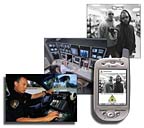
Sidebar: Open Remote Monitoring

Now there’s a unique remote monitoring and control solution that allows security professionals, law enforcement personnel and first responders to remotely access, monitor and control security systems from virtually any manufacturer using any computer or handheld device such as a cellular phone, PDA or tablet. From AirVisual, the open and secure platform offers full telemetry enabling control over internal functions such as PTZ control, DVR set-up and programming and access control with advanced notification features – including the ability to send bookmarks with specific information related to alarm events.

AirVisual’s product suite is comprised of three remote applications: IntelliViewer – a wireless video monitoring platform; TransViewer – a mobile vehicle surveillance solution; and RoadViewer – a wireless traffic information system. IntelliViewer is a hosted software application that enables video surveillance (live and achieved video in real-time), access control and security systems to be accessed, monitored and controlled using any networked or mobile device. The remote solution delivers full telemetry to control internal functions such as PTZ operation or DVR programming via a secure network connection.

TransViewer is wireless and delivers real-time images from the inside of a vehicle, multiplexes and records up to eight video cameras and two channels of audio. The system can also respond to panic alarms and processes GPS information. RoadViewer alleviates many of the problems first responders experience due to everyday traffic by providing them a realtime view of traffic conditions. The system captures live video images from traffic camera networks and sends them along with alerts or other text-based information to wireless devices.

Sidebar: Untwisting Twisted Pair

In the arena of security video transmission, there’s coaxial cable, of course. But advances in technology have recently made transmission of unshielded twisted pair (UTP) more attractive.

Providence Alaska Medical Center, for example, uses Network Video Technologies NVT (Menlo Park, Calif.) equipment to transmit security video signals from cameras to monitors via UTP. As the state’s largest medical facility, with more than 340 beds, Providence needed a cost-effective method to transmit video. “Primarily, the hospital wanted to be able to view the garage cameras from the main building control room,” said Bobby Alston, electronics design manager for Simplex Grinnell, which performed the installation. “The project cost a lot less by using UTP as opposed to coax.

“We installed a 100-pair Category 3 cable from the garage to the main building,” Alston explains. “Once in the building, we punched down the cable and ran the video signals to the NVT NV-1662R active receiver hubs, and then into Vicon DVRs.”

Share This Story

Looking for a reprint of this article?
From high-res PDFs to custom plaques, order your copy today!

Recommended Content

JOIN TODAY
To unlock your recommendations.

Already have an account? Sign In

  • Iintegration and use of emerging tools

    Future Proof Your Security Career with AI Skills

    AI’s evolution demands security leaders master...
    Columns
    By: Jerry J. Brennan and Joanne R. Pollock
  • The 2025 Security Benchmark Report

    The 2025 Security Benchmark Report

    The 2025 Security Benchmark Report surveys enterprise...
    The Security Benchmark Report
    By: Rachelle Blair-Frasier
  • The Most Influential People in Security 2025

    Security’s Most Influential People in Security 2025

    Security Magazine’s 2025 Most Influential People in...
    Most Influential People in Security
    By: Security Staff
Manage My Account
  • Security Newsletter
  • eMagazine Subscriptions
  • Manage My Preferences
  • Online Registration
  • Mobile App
  • Subscription Customer Service

More Videos

Sponsored Content

Sponsored Content is a special paid section where industry companies provide high quality, objective, non-commercial content around topics of interest to the Security audience. All Sponsored Content is supplied by the advertising company and any opinions expressed in this article are those of the author and not necessarily reflect the views of Security or its parent company, BNP Media. Interested in participating in our Sponsored Content section? Contact your local rep!

close
  • critical event management
    Sponsored byEverbridge

    Why a Unified View Across IT, Continuity, and Security Makes or Breaks Crisis Response

  • Charlotte Star Room
    Sponsored byAMAROK

    In an Uncertain Economy, Security Is a Necessity - Not an Afterthought

  • Sureview screen
    Sponsored bySureView Systems

    The Evolution of Automation in the Command Center

Popular Stories

Red laptop

Security Leaders Discuss SitusAMC Cyberattack

Cybersecurity trends of 2025

3 Top Cybersecurity Trends from 2025

Cybersecurity predictions of 2026

5 Cybersecurity Predictions for 2026

Green code

Logitech Confirms Data Breach, Security Leaders Respond

Water faucet and cup

High Water Mark: CISA Shares Foundations for Effective Cybersecurity and Risk Management

Top Cybersecurity Leaders

Events

September 18, 2025

Security Under Fire: Insights on Active Shooter Preparedness and Recovery

ON DEMAND: In today’s complex threat environment, active shooter incidents demand swift, coordinated and well-informed responses.

January 14, 2026

Is Your Organization Prepared to Navigate Interconnected Threats in 2026?

The 2026 threat environment will be louder, faster, and more interconnected. The most pressing risks, from global political volatility to emerging tech disruptions, will challenge organizations to act amid ambiguity and protect credibility in an era of accelerating uncertainty.

View All Submit An Event

Products

Security Culture: A How-to Guide for Improving Security Culture and Dealing with People Risk in Your Organisation

Security Culture: A How-to Guide for Improving Security Culture and Dealing with People Risk in Your Organisation

See More Products

Related Articles

  • airport

    Enhance security at mass transit hubs with radio frequency technology

    See More
  • From City Hall to the Courthouse to Postal Stations — White Powder Threat Continues to Gain Steam

    See More
  • Ethernet Transceivers

    See More

Related Products

See More Products
  • 9780367221942.jpg

    From Visual Surveillance to Internet of Things: Technology and Applications

  • security culture.webp

    Security Culture: A How-to Guide for Improving Security Culture and Dealing with People Risk in Your Organisation

  • A Leaders Guide Book Cover_Nicholson_29Sept2023.jpg

    A Leader’s Guide to Evaluating an Executive Protection Program

See More Products
×

Sign-up to receive top management & result-driven techniques in the industry.

Join over 20,000+ industry leaders who receive our premium content.

SIGN UP TODAY!
  • RESOURCES
    • Advertise
    • Contact Us
    • Store
    • Want More
  • SIGN UP TODAY
    • Create Account
    • eMagazine
    • Newsletter
    • Customer Service
    • Manage Preferences
  • SERVICES
    • Marketing Services
    • Reprints
    • Market Research
    • List Rental
    • Survey/Respondent Access
  • STAY CONNECTED
    • LinkedIn
    • Facebook
    • YouTube
    • X (Twitter)
  • PRIVACY
    • PRIVACY POLICY
    • TERMS & CONDITIONS
    • DO NOT SELL MY PERSONAL INFORMATION
    • PRIVACY REQUEST
    • ACCESSIBILITY

Copyright ©2025. All Rights Reserved BNP Media.

Design, CMS, Hosting & Web Development :: ePublishing