Profiles in Excellence
A Dive into the Royalmount Mall's Security
Taking a look at how a destination mall in Quebec handles security.
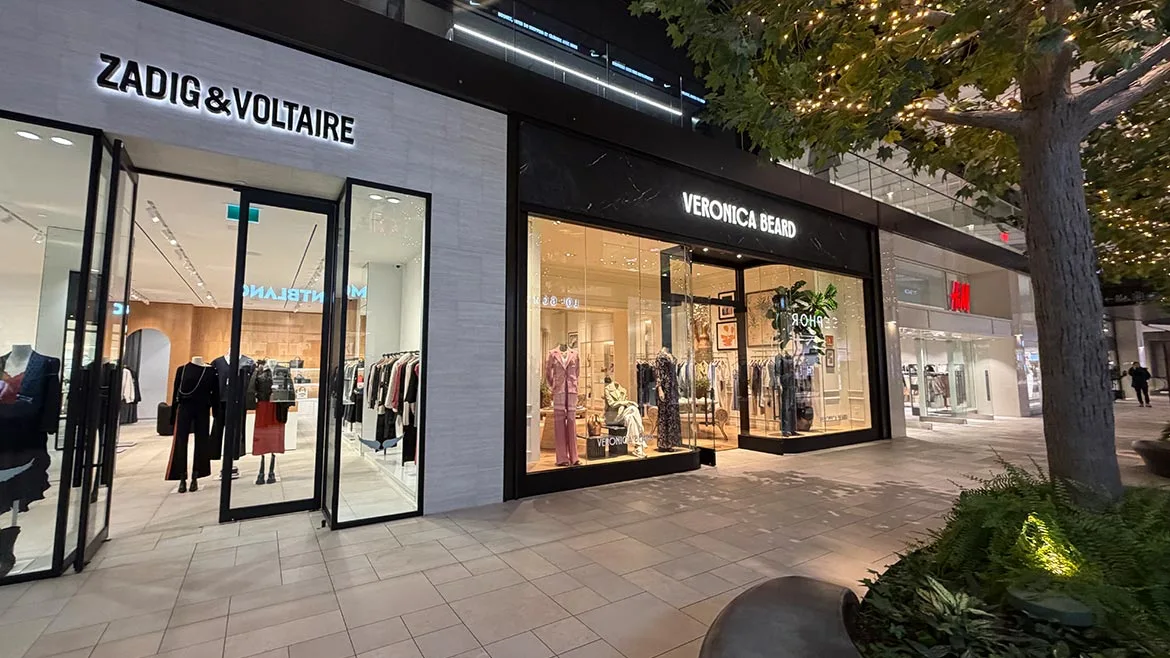
The Royalmount Mall in Montreal, Quebec is a destination for shopping, dining and entertainment, sprawling across 824,000 square feet. There are 550 cameras across the campus, all with an average of 3-4 lenses each, providing approximately 1,600 perspectives.
In the mall’s opening weekend, it drew in more than 200,000 visitors. More than half of those visitors traveled across the site’s skybridge, connecting the mall to the Montreal metro. Needless to say, the mall drives significant traffic, and with that comes the need for heightened security.
“Shopping malls like Royalmount face a combination of challenges related to high foot traffic, diverse uses, and their physical layout,” says Luc Périard, Senior Director of Security at the mall. “Unlike more controlled environments, we must manage a large volume of visitors, occasional events, and highly variable peak periods.”
Not only does the mall face traditional challenges that large shopping centers may experience, but it also experiences some unique to its location.
“Royalmount stands out for its experiential positioning, with open spaces, terraces, and strong urban integration, which increases the complexity of surveillance and crowd flow management. As a result, we must strike a balance between effective security and a seamless, enjoyable customer experience.”
Périard explains, “Royalmount stands out for its experiential positioning, with open spaces, terraces, and strong urban integration, which increases the complexity of surveillance and crowd flow management. As a result, we must strike a balance between effective security and a seamless, enjoyable customer experience.”
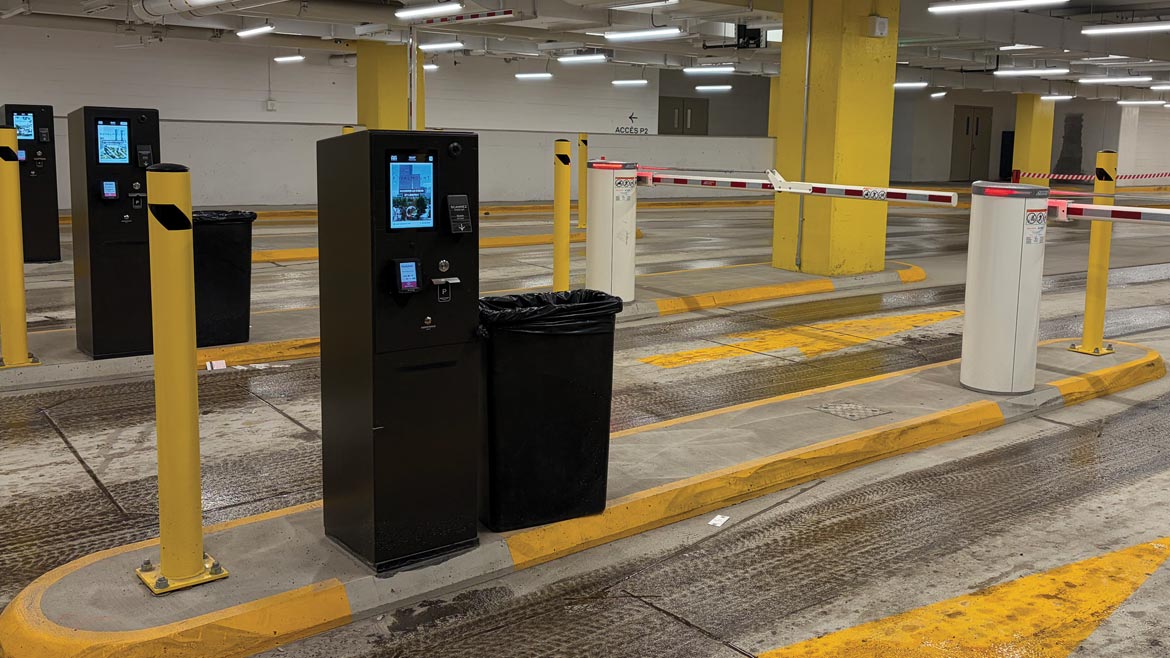
Photo by J. Alger for Security Magazine
Another distinct challenge the mall faces is its inability to implement its own security measures inside of tenant stores.
“Each tenant is responsible for their own internal security, which can result in varying levels of protection from one store to another,” Périard states. “To address this, we rely on a collaborative approach. We work closely with tenants to share best practices, provide recommendations, and ensure rapid communication in the event of an incident.”
This limitation is also supplemented by increased security focus in other areas.
“We focus our efforts on common areas — entrances, corridors, and parking facilities — where we can deploy advanced technological measures and ensure optimal coverage. This allows us to quickly detect potential risks and respond effectively,” says Périard. “Finally, the integration of intelligent systems gives us a real-time overall view, which helps offset the lack of direct control in individual stores.”
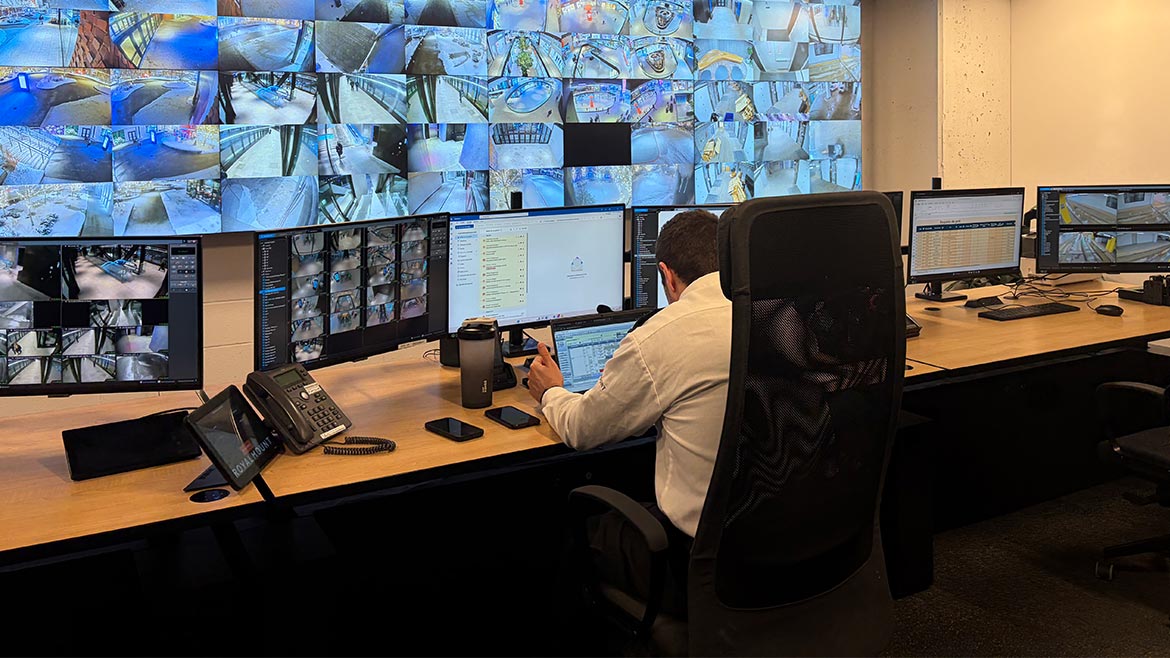
Photo by J. Alger for Security Magazine
In order to best secure the mall, it was essential to design and deploy security technologies strategically. As a result, the security department designed the technology layout as one might design critical infrastructure security, emphasizing openness, scalability, and interoperability. In sum, the mall wanted to avoid being “locked” in with a single vendor or integrator, thus allowing the mall to evolve as necessary.
The ability to change is essential, Périard asserts, as security “challenges are constantly evolving — whether in terms of theft prevention, behavior management, or emergency preparedness — which requires a proactive and technology-driven approach.”
Looking for a reprint of this article?
From high-res PDFs to custom plaques, order your copy today!