Enterprise Services
The State of National Security
Former FBI Deputy Director Paul Abbate discusses the state of National Security today.
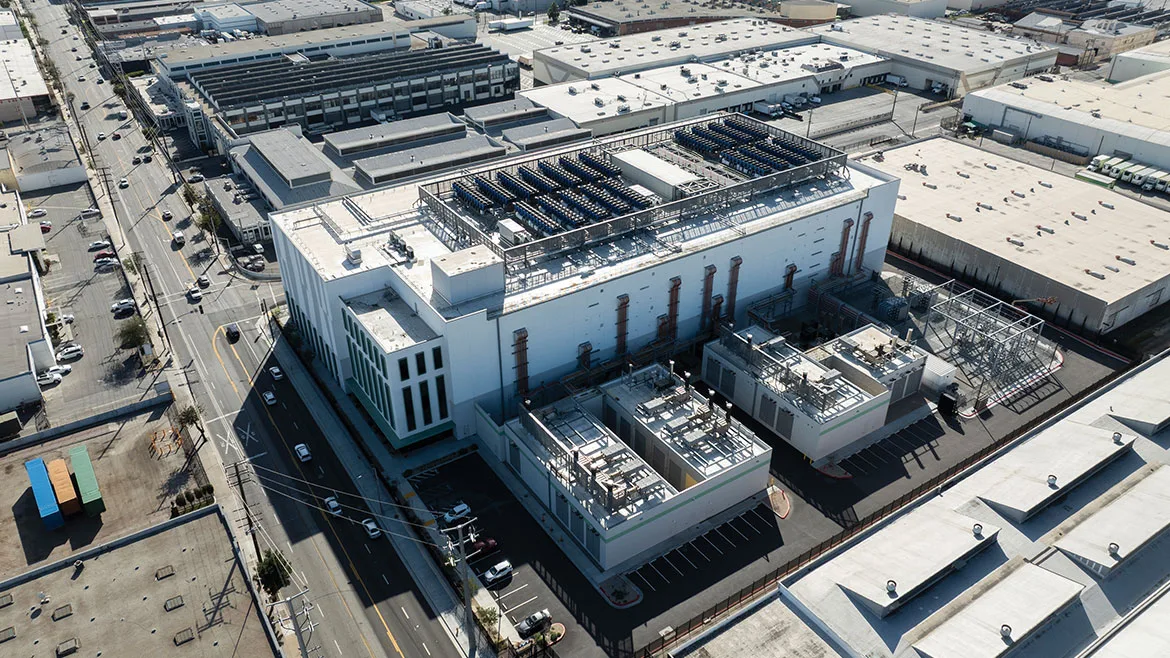
Data center facility in Vernon, California, USA.
A constantly shifting geopolitical landscape underscores the importance of protecting U.S. national security, especially as the private sector has been elevated and increasingly relied upon to combat threats to U.S. interests in partnership with government.
For more than 28 years, Paul Abbate worked at the Federal Bureau of Investigation in a variety of roles, most recently as Deputy Director where he oversaw domestic and international investigative and intelligence operations across the entire organization. He currently serves as Senior Managing Director at FTI Consulting.
In many ways, the mission remains the same: protecting national security, safeguarding the economy, and ensuring public safety.
Here, Abbate discusses the role of the private sector, present-day threat trends, and the state of cybersecurity.
During your time in the FBI, how did you see national security change, including the role that the private sector plays in protecting U.S. interests?
“The relationship between the government and private sector is now thoroughly integrated and built on the unified goal of protecting the country and keeping people safe.”
The U.S. approach to national security, and the role of the private sector within it, has changed significantly. The overall approach has shifted from a primary focus on physical threats and a reactive mindset to a highly proactive and preventative model that fully encompasses the digital world as well.
This stance is underpinned by a focus on partnerships, information sharing, and action – a responsibility traditionally carried largely by the U.S. government. These duties have shifted in nearly equal measure to the private sector, significantly elevating its role on par with the government in protecting national security. As the majority owners of the nation’s critical infrastructure and the engines of our economy, the private sector is directly and inextricably linked to national security.
The relationship between the government and private sector is now thoroughly integrated and built on the unified goal of protecting the country and keeping people safe.
What are the biggest international trends impacting national security today?
The “great power competition” between the U.S. and other foreign powers is more relevant than ever. The current U.S. administration has taken a highly aggressive approach to protecting national security through offensive military action in and around Venezuela, Cuba, and Iran. The cascading geopolitical consequences affect the economy, trade, technology, and military partnerships with other countries. The environment is becoming more unpredictable and volatile, making it much more challenging for the private sector to develop strategies that effectively balance business and national security considerations.
Emerging technology, such as artificial intelligence, is advancing more rapidly than ever. The ability of the U.S. to lead and prevail in this arena is essential to our economic and national security and the very existence of our way of life. Nation-states are actively trying to undermine and steal American technology to leverage these capabilities. In response, the U.S. government is using a dual strategy: promoting domestic innovation while focusing on security and the defeat of adversaries.
How should international companies be thinking about national security?
International companies have to think deeply and broadly about what they own, the threats and vulnerabilities they face, and how to defend against them. This requires recognizing a widely expanded definition of national security, which today encompasses data, supply chains, technology, intellectual property, and cybersecurity, among other things. International companies should fully integrate national security considerations into their risk management frameworks and remain compliant with applicable laws and requirements.
It is essential that private sector companies build trusted relationships with the government and develop communication channels to constantly engage in information sharing, creating a proactive approach to protecting the organization, its people, assets, and data. International companies must be prepared for the fact that threats and attacks are more complex, faster moving, and more unpredictable than ever before.
What role does cybersecurity play in today’s national security landscape?
Every aspect of today’s national security landscape is intertwined with cybersecurity because of the critical role that data and technology play in underpinning the economy. Whoever innovates and evolves in advanced technologies will have the ultimate advantage. Adversaries face relatively low risk when launching remote, anonymous cyber attacks from safe havens, while the potential rewards – obtaining sensitive data or creating operational disruption – are significant. This imbalance reflects the importance of protecting critical infrastructure (energy, transportation, water, banking, etc.), which is essential to our survival. Cyber attacks against critical infrastructure have the potential to cause enormous harm to life, health, and safety, as well as dire economic consequences.
Nation-states can leverage digital means to attack instead of relying on physical options, obfuscating their involvement while creating immediate harm or positioning themselves in networks covertly in advance of conflicts. Strong cybersecurity requires a continuous focus on identifying vulnerabilities, closing gaps, and building enhanced and comprehensive defenses.
Looking for a reprint of this article?
From high-res PDFs to custom plaques, order your copy today!





.webp?height=200&t=1655819610&width=200 "handshake")