One thing has become clear; to abide by the “new normal” restrictions, organizations need to be constantly aware of their environments’ compliance, in real-time. To do that, they need to improve their security and situational awareness, so they can quickly assess evolving situations and respond when violations occur.
With the emergence and continuation of the pandemic, organizations are looking for viable answers to help mitigate the immersion of remote working structures by providing real solutions that will allow organizations to get their hospitals, workforce, manufacturing and educational environments back to some sense of normal.
Telos Corporation, provider of cyber, cloud and enterprise security solutions, unveiled new findings from a survey conducted by independent research firm Vanson Bourne that highlights organizations’ ongoing struggle to keep up with IT security and privacy compliance regulations.
It is well known that today we live in an unprecedented time with rampant cybercrime. And now that the COVID-19 pandemic has created unparalleled challenges including worldwide unemployment and a massive financial crisis, ironically one of the industries that has flourished is the $5.2 trillion economy of cybercrime.
State Superintendent of Education Molly Spearman announced at River Springs Elementary School that the South Carolina Department of Education (SCDE) will purchase and distribute over $33 million worth of personal protective equipment (PPE) and supplies to all eighty one public school districts to support efforts to maintain and return to face to face instruction.
A security researcher published a blog outlining the details of common misconfigurations in Salesforce that can result in guest users, or hackers leveraging guest user access, gaining access to sensitive data in Salesforce.
The New Jersey Office of Homeland Security and Preparedness (NJOHSP) reaffirmed its commitment to keep the State cyber safe after Governor Phil Murphy proclaimed October as Cybersecurity Awareness Month on October 2. NJOHSP and its cyber division, the New Jersey Cybersecurity and Communications Integration Cell (NJCCIC), are also participating in National Cybersecurity Awareness Month (NCSAM).
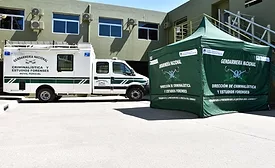
Protecting Argentina’s 9,300-kilometer border with Chile, Bolivia, Paraguay, Brazil and Uruguay requires significant attention from the Gendarmería Nacional Argentina (GNA), the country's 70,000-person border guard force located in the capital city of Buenos Aires. The GNA, as well as their border force colleagues in neighboring countries, must also grapple with cross-border crime that take advantage of the close ties among the region’s economies. According to Interpol, illicit markets in these border regions may be worth tens of billions of dollars.
Today, as an increasing number of organizations, including top tech companies like Google, Twitter and Facebook, have announced extended remote work plans, IT teams must ensure employee devices are secured to sustain the long haul. With IT burnout high, user awareness low, and malicious activity rising, this is often easier said than done. Here are top three tips for IT teams to ensure employee devices remain secure as remote work looms.
 RSS
RSS