The report, Death on the Job: The Toll of Neglect by the American Federation of Labor and Congress of Industrial Organizations (AFL–CIO), features state and federal data on worker fatalities, injuries and illnesses, as well as worker protections. In particular, the report examines some of the industries and workers most affected by the pandemic. In addition, it found that workplace violence is the second leading cause of occupational fatalities.
The National Security Agency (NSA) has chosen Cal State San Bernardino to be a leader of its core workforce development initiative, selecting it for a $10.5 million grant and naming the university’s Cybersecurity Center as the Community National Center for Cybersecurity Education.
This prestigious designation illustrates CSUSB’s continued prominence as the premier institution of higher education for cybersecurity education and took effect Sept. 18, 2020.
Emotet — a sophisticated Trojan commonly functioning as a downloader or dropper of other malware — resurged in July 2020, after a dormant period that began in February. Since August, CISA and MS-ISAC have seen a significant increase in malicious cyber actors targeting state and local governments with Emotet phishing emails. This increase has rendered Emotet one of the most prevalent ongoing threats.
Thycotic, provider of privileged access management (PAM) solutions, released its CISO Decisions survey. Based on findings from more than 900 global CISOs/Senior IT decision-makers, the research shows Boardroom investments in cybersecurity are most commonly the result of an incident or fears of compliance audit failure. Because of this, the research shows more than half, 58 percent, of respondents say their organizations plan to add more towards security budgets in the next 12 months.
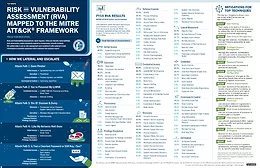
The Cybersecurity and Information Security Agency (CISA) has released an infographic mapping analysis of 44 of its Risk and Vulnerability Assessments (RVAs) conducted in Fiscal Year 2019 to the MITRE Adversarial Tactics, Techniques, and Common Knowledge (ATT&CK) Framework.
Shannon Polson, author of “The Grit Factor: Courage, Resilience and Leadership in the Most Male Dominated Organization in the World” and the founder of The Grit Institute, gave the final keynote today at ICS West.
Presented by the SIA Women in Security Forum, titled, “Leading From Any Seat: Stories from the Cockpit & Lessons from the Grit Project,” featured Polson discussing courage, resilience and leadership, using examples from her personal life as one of the first women to fly the Apache helicopter in the U.S. Army and ideas outlined in her book.
Independent polling firm Schoen Cooperman Research recently conducted a nationwide poll on Americans’ views of facial recognition technology. The survey of 1,000 adults found that most Americans support the use of facial recognition across a wide range of applications with 75% supporting facial recognition technology at airports.
Digital Guardian announced Tim Bandos will become Chief Information Security Officer (CISO). Bandos will bring more than 15 years of experience to the position including his five years as VP of Cybersecurity at Digital Guardian. Prior to joining Digital Guardian, Bandos was Director of Cybersecurity for Dupont where he was responsible for overseeing internal controls, incident response and threat intelligence.
Skyfire Consulting, a public safety UAS consulting group, announced the appointment of Michael Briant as Chief Security Officer (CSO) and Michael Rogers as Director of Public Safety. Both will team up and bring their experience to the Skyfire Academy, as they lead a robust training programs in the industry.
 RSS
RSS