As organizations re-evaluate their office spaces, leveraging security solutions will be critical to addressing three key areas: improving employee health and safety; enhancing business efficiencies; and, proactively solving business challenges.
Now, user experience is at the forefront of the evolution of security technology, with devices being developed that both enhance and simplify the way in which people interact with security solutions. One significant advancement for the security industry has been the development and introduction of frictionless access control technology – a solution that alters and simplifies the overall user experience.
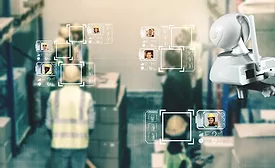
Security and business optimization in logistics calls for a multi-tiered approach – a solution that addresses security while streamlining operations, reducing costs and increasing revenue. So, what is the role of video security systems in logistics and how can these devices support a versatile, flexible approach while generating more revenue?
A proactive approach to risk management capitalizes on video surveillance, physical security, intelligence and cybersecurity coming together to provide actionable data for continued operations.
The truth is, the roles of security workers have become more crucial to public safety than ever, and their voices need to be heard. We must take this time as an opportunity to drive change and improve the livelihood of our forgotten frontline workers.
Whilst there has been much written about the many benefits of the cloud, there is still a slow uptake when it comes to using cloud for physical security applications.
Mark Armstrong, Senior Vice President of Video Solutions at StorMagic, discusses challenges enterprises are facing with their video surveillance solutions, as well as video surveillance trends in the next year.
Zero Trust and SASE have become top of mind for many organizations globally in the past year as business models changed overnight to accommodate a remote workforce, bringing an expanded attack surface.
Steve Grewal, Cohesity Federal CTO and former U.S. Department of Education CISO/CTO/CIO, shares his insights into how organizations can leverage modern data management strategies and technologies to ensure they are prepared to reduce the impact of ransomware attacks while being ready for audit and reporting processes to remain compliant with increasing state-by-state regulations.
 RSS
RSS