Organizations are at risk of cyberattacks, as tensions with Russia rise.
Adopt a high posture when it comes to cybersecurity and protect the organization's most critical assets by following four steps.
Laurie Doran, a former intelligence official and national security leader, has been named Director of the New Jersey Office of Homeland Security and Preparedness.
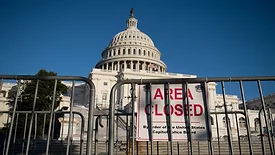
Parliaments, often subject to arson, gunfire, bombings, domestic terrorists, and mobs, are under attack. Recent events, such as the 2021 U.S. Capitol riot, underscore the urgency to recalibrate security measures around legislatures worldwide.
The U.S. Internal Revenue Service (IRS) announced the implementation of mandatory facial recognition in order to access some government services. This may increase cybersecurity and data privacy risks.
State governments can apply for funding through the Small Business Administration's Cybersecurity for Small Business Pilot Program to support small business cybersecurity across the United States.
In Episode 9 of The Cybersecurity and Geopolitical Podcast, Ian Thornton-Trump, Chief Information Security Officer (CISO) at Cyjax, and Gareth Corfield, Security and Legal Correspondent at The Register, review the current conflict between Russia and Ukraine and discuss the ongoing “cyber war” in the region.
The Department of Homeland Security sent a memo warning of a potential Russian cyberattack on U.S. entities as the situation with Ukraine escalates. Cybersecurity experts weigh in on how enterprise security leaders should prepare.
A new security partnership between King’s College and the Defense Academy of the U.K. will deliver academic support to command and staff provision at the Defense Academy and the Royal College of Defense Studies from September 2022.
 RSS
RSS






.webp?height=168&t=1643748762&width=275 "SEC-0221_Podcast-Promo_900x550px (1).jpg")

