In today’s world, global organizations face immense pressure to ensure their business is constantly evolving to meet the changing nature of the world. Business growth is driven by dynamic interactions – employees are increasingly mobile, on the road and working remotely to support their objectives.
Only 72 percent of healthcare providers believe their organization’s disaster plan is comprehensive enough to cover a variety of disaster scenarios inside the organization and across the community.
The Oregon Association of Hospitals and Health Systems has designed a detailed, 172-page toolkit in collaboration with nurses and doctors associations and organized labor.
The International Association of Healthcare Security and Safety (IAHSS) recently released new guidance on how to help healthcare officials address visitor and patient violence in hospitals. Patient violence – whether it is physical or verbal – not only threatens human life and the well-being of hospital staff but also threatens patient safety and creates an unhealthy work environment.
Security breaches have become common place. Daily, we hear cybersecurity breach reports in the media. However, when healthcare institutions are impacted, consumers see this as “more detrimental” than other industry breaches.
A study IBM Security and conducted by Ponemon Institute found that the average cost of a data breach globally is $3.86 million, a 6.4 percent increase from the 2017 report.
Violence perpetrated against employees by patients, their families, and unauthorized visitors – including estranged members of employees’ own families – tops the list of concerns and threats for healthcare security directors.
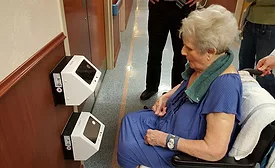
The Princeton Identity IOM Access solution allows staff and residents with normal mental acuity to unlock exterior doors to exit the building by gazing into wall-mounted iris readers positioned near each exit, while restricting residents with dementia from opening the doors and leaving the building unsupervised.
Locations once considered safe havens such as schools, places of worship and healthcare institutions are no longer immune to acts of violence and, in worst case scenarios, active shooter incidents. In a webinar, Connie Packard, Executive Director of Support Services, Deputy Chief Public Safety for Boston Medical Center discussed ways that the external and internal environment can be used to mitigate risk, tools that are available to help, and standards and guidelines aimed at preventing violence.
Nine in 10 emergency physicians responding to a new poll say that in the past month, they have experienced shortages or absences of critical medicines in their emergency departments.
 RSS
RSS