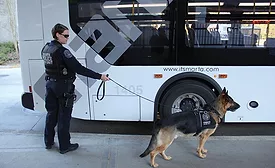
The Transportation Security Administration released its Cybersecurity Roadmap, which will guide efforts to prioritize cybersecurity measures within TSA and across the transportation systems sector.
In 2017, the financial impact of cyberattacks reached $5 billion and the monthly attack rate was 10-times the rate of attacks in 2016. The industrial and personal reliance on the U.S. power grid makes the impact of a successful attack troubling.
The Federal Energy Regulatory Commission (FERC) released a final rule last week approving three new Critical Infrastructure Protection (CIP) standards addressing supply chain risk management for bulk electric systems.
Secretary of Energy Rick Perry announced the launch of the Water Security Grand Challenge, a White House initiated, U.S. Department of Energy (DOE) led framework to advance transformational technology and innovation to meet the global need for safe, secure, and affordable water.
In today’s world, global organizations face immense pressure to ensure their business is constantly evolving to meet the changing nature of the world. Business growth is driven by dynamic interactions – employees are increasingly mobile, on the road and working remotely to support their objectives.
In the last few years, executives overseeing energy, utility and other industrial organizations have begun to worry about the threat of cyberattacks on our nation’s most critical infrastructures. Ten years ago, their main concerns were focused on safety or environmental risks. Back then, operators believed the virtual barricades, or air gaps, between networks and technologies were sufficient enough to defend against malware and cyberattacks.
PG&E has appointed Jon Franke to the role of Vice President of Safety and Health for the company, effective Sept. 1. Franke is currently PG&E’s Vice President of Power Generation.
Traditionally, security personnel begin with their building’s main entrances when planning to secure their facility. While that is an effective start, it is important to consider the entire facility or campus to ensure that all areas are protected.
Metrasens’ customer, a Fortune 100 U.S. technology company, was hosting a large event in a major U.S. city and wanted to enhance security screening effectiveness while maintaining a positive audience experience.