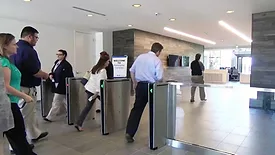
How does Steve Baker, CSO at State Street Corporation, reduce risk, satisfy customers and regulators and provide a safe workplace for employees and visitors?
As CSO, Steve Baker is reponsible for the strategic plans and operations of the Global Security and Investigatives function. How does he guide direction and ensure alignment with the business functions of a successful enterprise?
As companies digitize businesses and automate operations, cyber risks proliferate; here is how the cybersecurity organization can support a secure digital agenda.
Two consistent and related themes in enterprise technology have emerged in recent years, both involving rapid and dramatic change. One is the rise of the digital enterprise across sectors and internationally. The second is the need for IT to react quickly and aggressively develop innovations to meet the enterprise’s digital aspirations.
Nothing beats experience in the field for understanding the various ways a security entrance installation can go wrong. Here are some tales from the road – read on, and discover what not to do when deploying security entrances.
Security organizations may be late adopters of technology to manage their workforces, but once implemented, the early benefits of technological solutions become quite clear to them. They’re waking up to understand that simply placing a security officer at a post is no longer a viable option.
Now that the list of victims of mobile spyware includes household names like Jeff Bezos, many security professionals are well aware that any commercial smartphone can be remotely compromised and essentially turned into a live bug that hears everything the user says and hears.
With the rise of the fourth industrial revolution—Industry 4.0—technology has become an inextricable aspect of business operations in most sectors. RFID (Radio Frequency Identification) has become ubiquitous across a wide range of industries.
 RSS
RSS