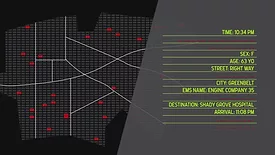
The U.S. Department of Commerce’s National Institute of Standards and Technology (NIST) has launched a crowdsourcing challenge to spur new methods to ensure that important public safety data sets can be de-identified to protect individual privacy. The Differential Privacy Temporal Map Challenge includes a series of contests that will award a total of up to $276,000 for differential privacy solutions for complex data sets that include information on both time and location.
NIST unveiled the final version of its Zero Trust Architecture publication, which gives private sector organizations a road map for deploying the cybersecurity concept across the organization.
Congressman Andy Barr (KY-06) introduced the NIST COVID-19 Cyber-Security Act, which instructs the Director of the National Institute of Standards and Technology (NIST) to produce standards for mitigating and protecting against cyberattacks to American universities researching COVID-19.
A preliminary study by the National Institute of Standards and Technology (NIST) evaluates the performance of facial recognition algorithms on faces partially covered by protective masks.
In an effort to enable public safety-focused entities to tap social media analytics in emergency response, The National Institute of Standards and Technology (NIST)’s Text Retrieval Conference, or TREC, Incident Streams project intends to gain access to Twitter’s Enterprise-Level application programming interface, or API.
The National Institute of Standards and Technology (NIST) is looking for public and private sector experts to take part in an exercise that will evaluate the digital forensics community’s ability to conduct mobile- and computer-based investigations.
The US Government Accountability Office reviewed four federal agencies and found that they did not have policies for coordinating assessments with states and none of them had policies for coordinating assessments with each other.
To bolster the resilience of the Global Positioning System (GPS) and the wide scope of technologies and services that rely on precision timing, the U.S. Department of Commerce’s National Institute of Standards and Technology (NIST) is requesting information from the public about the broad use of positioning, navigation and timing (PNT) services, as well as the cybersecurity risk management approaches used to protect them.
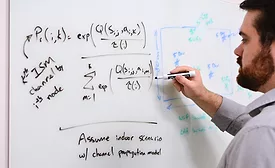
Researchers at NIST have developed a mathematical formula that, computer simulations suggest, could help 5G and other wireless networks select and share communications frequencies about 5,000 times more efficiently than trial-and-error methods.
The National Institute of Standards and Technology (NIST) has evaluated several commercially available contactless fingerprint scanning technologies to compare their performance.