Security Magazine logo
search
cart
facebook twitter linkedin youtube
  • Sign In
  • Create Account
  • Sign Out
  • My Account
Security Magazine logo
  • NEWS
    • Security Newswire
    • Technologies & Solutions
  • MANAGEMENT
    • Leadership Management
    • Enterprise Services
    • Security Education & Training
    • Logical Security
    • Security & Business Resilience
    • Profiles in Excellence
  • PHYSICAL
    • Access Management
    • Fire & Life Safety
    • Identity Management
    • Physical Security
    • Video Surveillance
    • Case Studies (Physical)
  • CYBER
    • Cybersecurity News
    • More
  • BLOG
  • COLUMNS
    • Career Intelligence
    • Cyber Tactics
    • Cybersecurity Education & Training
    • Leadership & Management
    • Security Talk
  • EXCLUSIVES
    • Annual Guarding Report
    • Most Influential People in Security
    • The Security Benchmark Report
    • Top Guard and Security Officer Companies
    • Top Cybersecurity Leaders
    • Women in Security
  • SECTORS
    • Arenas / Stadiums / Leagues / Entertainment
    • Banking/Finance/Insurance
    • Construction, Real Estate, Property Management
    • Education: K-12
    • Education: University
    • Government: Federal, State and Local
    • Hospitality & Casinos
    • Hospitals & Medical Centers
    • Infrastructure:Electric,Gas & Water
    • Ports: Sea, Land, & Air
    • Retail/Restaurants/Convenience
    • Transportation/Logistics/Supply Chain/Distribution/ Warehousing
  • EVENTS
    • Industry Events
    • Webinars
    • Solutions by Sector
    • Security 500 Conference
  • MEDIA
    • Interactive Spotlight
    • Photo Galleries
    • Podcasts
    • Polls
    • Videos
      • Cybersecurity & Geopolitical Discussion
      • Ask Me Anything (AMA) Series
  • MORE
    • Call for Entries
    • Classifieds & Job Listings
    • Newsletter
    • Sponsor Insights
    • Store
    • White Papers
  • EMAG
    • eMagazine
    • This Month's Content
    • Advertise
  • SIGN UP!
CybersecurityManagementSecurity NewswireTechnologies & SolutionsLogical SecurityCybersecurity News

3 ways microsharding technologies can mitigate ransomware

By Bob Lam
ransomware

Image from Pixabay

November 17, 2022

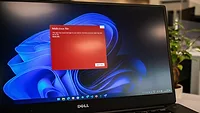
If there’s one threat that keeps the average information technology (IT) security leader awake at night, it’s the threat of ransomware, which continues to plague businesses across the globe. One recent report predicts that by 2031, ransomware will cost the economy around $265 billion each year, with a new attack happening every two seconds.

Even after a ransom has been paid, it’s unlikely a company’s data will be retrieved in its entirety. One industry study noted that only 8% of ransomware victims were able to recover all of their data after paying a ransom, while nearly a third reported that they were unable to recover more than half of their data.

To make matters worse, ransomware operators have embraced an array of insidious tactics to extract payments from their victims, such as double (or even triple) extortion, in which an attacker not only encrypts the victim’s data but then threatens to publicly disclose sensitive data, including user personal identifiable information (PII) or other confidential intellectual property (IP) whose public release could cause reputational damage.

Responding to ransomware

In response to the evolving tactics of bad actors, security professionals are considering a range of cybersecurity strategies to combat ransomware as well. Perhaps the most common way in which companies protect themselves against ransomware is by ensuring that their most sensitive data is encrypted and regularly backed up. However, this strategy is fallible — many ransomware actors use techniques that make data retrieval complicated.

Security professionals can consider strategies other than encryption to protect company data in the event of a ransomware attack. Microsharding is a coordinated, three-step process that consists of shredding, mixing and distributing data across multiple storage repositories. It’s based loosely on the concepts of RAID 5 and traditional sharding — a process used to distribute a single dataset across multiple databases to increase a system’s total storage capacity.

Think of microsharding as putting a document through a shredder, taking the shredded pieces and sending them through a few more times, and then mailing each individual piece of confetti to numerous undisclosed locations. When data is shredded like this, the resulting microshards are too small — as small as just a few bytes per piece — to contain any sensitive data.

Microsharding goes a step further by mixing a company’s sensitive data with poison data; automatically scrubbing the files of identifying information such as file names, file extensions, and other metadata; and then distributing the tiny shards across multiple containers of the user’s choice in multi- and hybrid-cloud environments.

3 ways microsharding protects against ransomware

While there are many ways that microsharding can ensure the integrity of sensitive data in general, it has three features that are particularly well-suited to protecting against a ransomware attack:

  1. There’s no key to lose: One of the common misperceptions about data encryption is that once enterprise data is fully encrypted, it’s safe. Of course, if the credentials of the administrator who owns the decryption key are compromised or if the key is lost, then all bets are off. Moving to a new key or encryption algorithm also requires decrypting and re-encrypting all the data — often a costly and time-consuming exercise. Microsharding allows companies to avoid worrying about key management concerns, since the technology involves no concept of a key.
  2. There’s no sensitive data to exfiltrate: Once sensitive data has been microsharded, it is effectively desensitized. Since unauthorized users can only access an indecipherable fraction of a dataset, companies’ confidential material is protected against the data exfiltration aspect of ransomware in which attackers threaten to publish sensitive or confidential data.
  3. Real-time resilience: Microsharding technology can also help reconstruct affected data whenever it is encrypted by ransomware. This means that real-time ransomware repairs can begin automatically and in a way that is transparent to users. In addition to making data more resilient to bad actors, microsharding also makes data more resilient to outages, network issues, misconfigurations and other unanticipated disruptions.

As long as cybercriminals have the means and incentives to execute ransomware attacks, they will continue to do so. And as security professionals have seen these past few years, targeting sensitive data remains a powerful incentive. By desensitizing sensitive data using technologies like microsharding, businesses can significantly reduce the impact of cyberattacks while also disrupting the business model of these bad actors.

KEYWORDS: cyber security initiatives data breach data protection encryption ransomware

Share This Story

Looking for a reprint of this article?
From high-res PDFs to custom plaques, order your copy today!

Bob Lam is the CEO and Co-Founder of ShardSecure. Prior to founding ShardSecure, Bob was the Co-Founder of Bayshore Networks, a leading Industrial IoT cybersecurity company, and the VP of Business Development at NeoAccel (acquired by VMware) and Pareto Networks (acquired by Aerohive). Bob also served as Managing Director at JP Morgan/Bear Stearns, where he led the cybersecurity practice.

Recommended Content

JOIN TODAY
To unlock your recommendations.

Already have an account? Sign In

  • Cyber tech background

    Security’s Top Cybersecurity Leaders 2026

    Security magazine’s Top Cybersecurity Leaders 2026 award...
    Top Cybersecurity Leaders
  • Iintegration and use of emerging tools

    Future Proof Your Security Career with AI Skills

    AI’s evolution demands security leaders master...
    Security Education & Training
    By: Jerry J. Brennan and Joanne R. Pollock
  • The 2025 Security Benchmark Report

    The 2025 Security Benchmark Report

    The 2025 Security Benchmark Report surveys enterprise...
    The Security Benchmark Report
    By: Rachelle Blair-Frasier
Manage My Account
  • Security Newsletter
  • eMagazine Subscriptions
  • Manage My Preferences
  • Online Registration
  • Mobile App
  • Subscription Customer Service

More Videos

Popular Stories

Man on laptop

Healthcare Executives Face a New Era of Personal Risk

Man walking with briefcase

The Rising Tide of Executive Protection: Corporations Ramp Up Security in an Era of Heightened Threats

Person in red hoodie

When Metal Theft Becomes a Life Safety Crisis

Stadium

Physical Security in Global Arenas: How AI Improves Security at Scale

Stacked books

Safe Learning 101 Program Supports Schools in Strengthening Campus Security

SEC 2026 Benchmark Banner

Events

April 30, 2026

Building a Campus-Wide Culture of Security and Shared Responsibility

In today’s higher education environment, where institutions face evolving and multifaceted incidents, safety must be embedded into the fabric of campus culture. Learn strategies for generating collective buy-in from faculty, staff, students and senior leadership. 

May 7, 2026

Beyond Cameras: Revolutionizing Perimeter Security with LiDAR, AI and Digital Twins

In this webinar, we will explore how LiDAR‑based detection, AI‑powered analytics and digital twins are transforming the future of perimeter protection with 3D detection, real-time situational awareness and unified operational views.

View All Submit An Event

Products

Security Culture: A How-to Guide for Improving Security Culture and Dealing with People Risk in Your Organisation

Security Culture: A How-to Guide for Improving Security Culture and Dealing with People Risk in Your Organisation

See More Products
SEC 2026 Top Cybersecurity Leaders

Related Articles

  • work from home

    3 ways to mitigate insider threats in a distributed workforce

    See More
  • people working at shared desk

    5 ways HR leaders can help organizations mitigate insider risk

    See More
  • parking-lot-freepik

    3 ways video surveillance can boost parking lot security

    See More
×

Sign-up to receive top management & result-driven techniques in the industry.

Join over 20,000+ industry leaders who receive our premium content.

SIGN UP TODAY!
  • RESOURCES
    • Advertise
    • Contact Us
    • Store
    • Want More
  • SIGN UP TODAY
    • Create Account
    • eMagazine
    • Newsletter
    • Customer Service
    • Manage Preferences
  • SERVICES
    • Marketing Services
    • Reprints
    • Market Research
    • List Rental
    • Survey/Respondent Access
  • STAY CONNECTED
    • LinkedIn
    • Facebook
    • YouTube
    • X (Twitter)
  • PRIVACY
    • PRIVACY POLICY
    • TERMS & CONDITIONS
    • DO NOT SELL MY PERSONAL INFORMATION
    • PRIVACY REQUEST
    • ACCESSIBILITY

Copyright ©2026. All Rights Reserved BNP Media, Inc. and BNP Media II, LLC.

Design, CMS, Hosting & Web Development :: ePublishing