Security Magazine logo
search
cart
facebook twitter linkedin youtube
  • Sign In
  • Create Account
  • Sign Out
  • My Account
Security Magazine logo
  • NEWS
    • Security Newswire
    • Technologies & Solutions
  • MANAGEMENT
    • Leadership Management
    • Enterprise Services
    • Security Education & Training
    • Logical Security
    • Security & Business Resilience
    • Profiles in Excellence
  • PHYSICAL
    • Access Management
    • Fire & Life Safety
    • Identity Management
    • Physical Security
    • Video Surveillance
    • Case Studies (Physical)
  • CYBER
    • Cybersecurity News
    • More
  • BLOG
  • COLUMNS
    • Career Intelligence
    • Cyber Tactics
    • Cybersecurity Education & Training
    • Leadership & Management
    • Security Talk
  • EXCLUSIVES
    • Annual Guarding Report
    • Most Influential People in Security
    • The Security Benchmark Report
    • Top Guard and Security Officer Companies
    • Top Cybersecurity Leaders
    • Women in Security
  • SECTORS
    • Arenas / Stadiums / Leagues / Entertainment
    • Banking/Finance/Insurance
    • Construction, Real Estate, Property Management
    • Education: K-12
    • Education: University
    • Government: Federal, State and Local
    • Hospitality & Casinos
    • Hospitals & Medical Centers
    • Infrastructure:Electric,Gas & Water
    • Ports: Sea, Land, & Air
    • Retail/Restaurants/Convenience
    • Transportation/Logistics/Supply Chain/Distribution/ Warehousing
  • EVENTS
    • Industry Events
    • Webinars
    • Solutions by Sector
    • Security 500 Conference
  • MEDIA
    • Interactive Spotlight
    • Photo Galleries
    • Podcasts
    • Polls
    • Videos
      • Cybersecurity & Geopolitical Discussion
      • Ask Me Anything (AMA) Series
  • MORE
    • Call for Entries
    • Classifieds & Job Listings
    • Continuing Education
    • Newsletter
    • Sponsor Insights
    • Store
    • White Papers
  • EMAG
    • eMagazine
    • This Month's Content
    • Advertise
  • SIGN UP!
CybersecurityManagementSecurity Enterprise ServicesSecurity Leadership and ManagementLogical SecuritySecurity & Business ResilienceSecurity Education & TrainingCybersecurity News

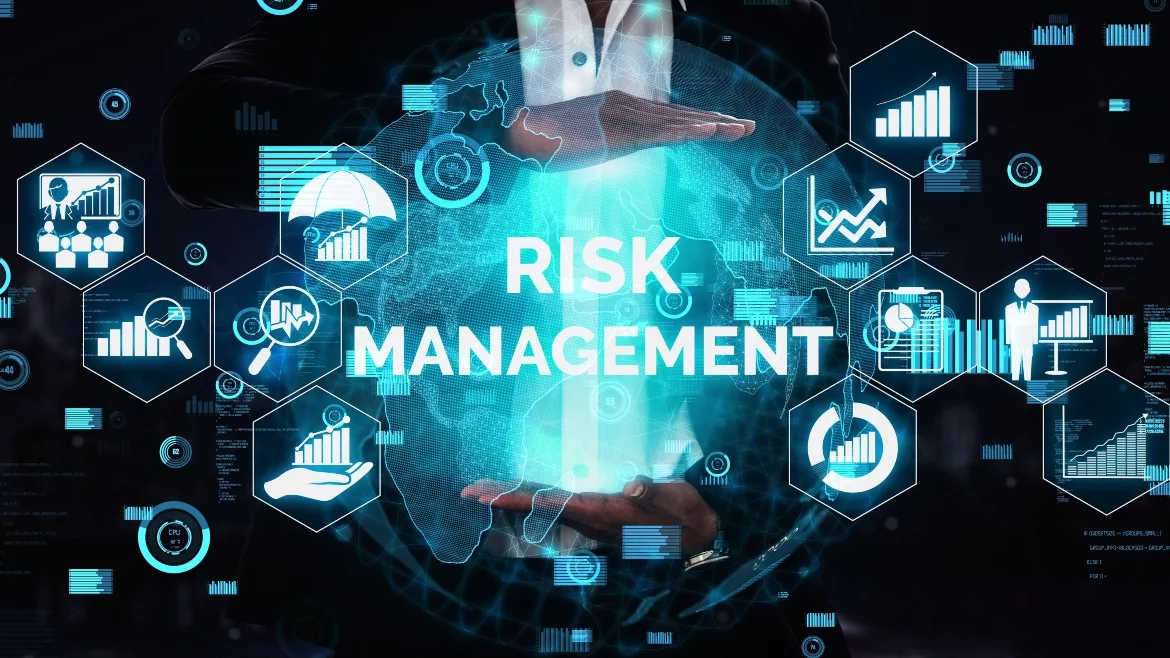
Building a risk management program
By Mike Parkin
risk-management-freepik1170x658.jpg
May 13, 2022

In today’s world, it’s important for every organization to have some form of vulnerability assessment and risk management program. While this can seem daunting, by focusing on some key concepts it’s possible for an organization of any size to develop a strong security posture with a firm grasp of its risk profile. We’ll discuss in this article how to build the technical foundation for a comprehensive security program and, crucially, the tools and processes necessary to develop that foundation into a mature vulnerability assessment and risk management program. 


Build the Foundation


It’s impossible to implement effective security, let alone manage risk, without a clear understanding of the environment. That means, essentially, taking an inventory of hosts, applications, resources, and users.


With the current computing environment, that combination is apt to include assets that reside in the cloud as well as those hosted in an organization’s own data center. Organizations have little control over their remote employees’ devices, who are accessing data on a bring-your-own-device (BYOD) basis, adding another layer of risk. There is also the aspect of software as a service applications (SaaS) that the organization uses. It’s essential to know what data is kept where. With SaaS, in particular, teams must have a clear understanding of who is responsible for the security of the data in contractual terms, so as to allocate resources accordingly. 


Manage the puzzle

Once the environment is scoped, managing it relies on three main components: visibility, control, and timely maintenance.


Whether it is software vulnerabilities, vulnerable configurations, obsolete packages, or a range of other issues, a vulnerability scanner will show the security operations team what’s at risk and let them prioritize their reaction. That said, scanners, external or internal, are not the only option. At the high end, a penetration testing team can probe the environment to a level that vulnerability scanners can’t match. At the low end, establishing a process to monitor public vulnerability feeds and verifying whether newly exposed issues affect the environment can provide a baseline. It may not give as deep a picture scanning, or penetration testing, but the cost in SecOps time is often well worth it.


Protecting the users is a major point and doesn’t always get the attention it deserves. Ultimately, that starts with user education and establishing a culture that enhances a secure environment. Users are often the threat surface that presents the greatest risk, but with proper education and attitude they can become an effective layer of a defense depth strategy.


Another important step to protecting users is adding multi-factor authentication (MFA). In particular, those that require a physical or virtual token tend to be more secure than those that rely on text messaging or email. While MFA does add a minor annoyance to a user’s login, it can drastically reduce the threat posed by compromised accounts and reduce the organization’s overall risk profile.

User endpoints are another area of concern. While the default endpoint protection included in the main desktop operating systems (Windows and MacOS) are quite effective, they are also the defenses every malware writer in the world tests against. That makes investment in an additional layer of endpoint protection worthwhile. 


The last major piece here is a patch management program. This requires base processes that not only manage the patch process, but also the assets themselves. Fortunately, there are multiple tools available that can enhance and automate the process, and a regular patch cycle can have vulnerabilities fixed before they are even developed into exploits.


Ideally, the patch management process includes a change management system that’s able to smoothly accommodate emergency situations where a security hotfix must go in outside the normal window.


Pulling it all together

With the foundation laid, the final step involves communication. Simply assessing risk is not useful if there is no reliable way to organize people to act on it.


Bridging the information security teams, who are responsible for recognizing, analyzing, and mitigating threats to the organization, and the information technology teams, who are responsible for maintaining the organization’s infrastructure, is vital. Whether an organization achieves this with a process or a tool is up to them. But in either case, communication is vital, along with an ability to react across teams. This applies to non-technical teams as well — if folks are receiving phishing emails, security operations should know. 


These mechanisms need to be in place from the executive offices down to the sales or production floor, as reducing risk really is everyone’s responsibility. Moreover, the asset and patch management system needs a mechanism to prioritize patches based on business risk. Unless the IT team has the resources to deploy every single patch that comes their way, they will have to prioritize, and that prioritization needs to be based on the threat to business rather than arbitrary severity scores.


 An Investment 

There is no “one size fits all” solution for risk assessment and management. For example, for a restaurant that doesn’t accept reservations or orders online, a relatively insecure website doesn’t present much business risk. While it may be technically vulnerable, they are not at risk of losing valuable data. 


On the other hand, a stealth startup with sensitive and intellectual property could find a breach catastrophic. For them, strong security measures are a vital investment. The key is to ensure you’re investing in the tools your business needs to remain resilient in the face of a new challenge. 


This article originally ran in Today’s Cybersecurity Leader, a monthly cybersecurity-focused eNewsletter for security end users, brought to you by Security magazine. Subscribe here.

KEYWORDS: cyber security risk assessment risk management threat intelligence

Share This Story

Looking for a reprint of this article?
From high-res PDFs to custom plaques, order your copy today!

Mike Parkin, Senior Technical Engineer, Vulcan Cyber brings over 20 years of experience in cybersecurity as a practitioner doing security operations, forensics, incident response, and tactical support, as well as research and penetration testing. For the last 10 years, he's worked in Cyber Security Technical Marketing, presenting complex technical concepts to a broad audience through videos, live presentations, webinars, and written media.

Recommended Content

JOIN TODAY
To unlock your recommendations.

Already have an account? Sign In

  • Iintegration and use of emerging tools

    Future Proof Your Security Career with AI Skills

    AI’s evolution demands security leaders master...
    Columns
    By: Jerry J. Brennan and Joanne R. Pollock
  • The 2025 Security Benchmark Report

    The 2025 Security Benchmark Report

    The 2025 Security Benchmark Report surveys enterprise...
    The Security Benchmark Report
    By: Rachelle Blair-Frasier
  • The Most Influential People in Security 2025

    Security’s Most Influential People in Security 2025

    Security Magazine’s 2025 Most Influential People in...
    Most Influential People in Security
    By: Security Staff
Manage My Account
  • Security Newsletter
  • eMagazine Subscriptions
  • Manage My Preferences
  • Online Registration
  • Mobile App
  • Subscription Customer Service

More Videos

Sponsored Content

Sponsored Content is a special paid section where industry companies provide high quality, objective, non-commercial content around topics of interest to the Security audience. All Sponsored Content is supplied by the advertising company and any opinions expressed in this article are those of the author and not necessarily reflect the views of Security or its parent company, BNP Media. Interested in participating in our Sponsored Content section? Contact your local rep!

close
  • critical event management
    Sponsored byEverbridge

    Why a Unified View Across IT, Continuity, and Security Makes or Breaks Crisis Response

  • Charlotte Star Room
    Sponsored byAMAROK

    In an Uncertain Economy, Security Is a Necessity - Not an Afterthought

  • Sureview screen
    Sponsored bySureView Systems

    The Evolution of Automation in the Command Center

Popular Stories

Digital, tablet and hands

The 2025 Annual Guarding Report: Unrest Inspires Upgrades in Training, Technology

Cybersecurity trends of 2025

3 Top Cybersecurity Trends from 2025

Red laptop

Security Leaders Discuss SitusAMC Cyberattack

Cybersecurity predictions of 2026

5 Cybersecurity Predictions for 2026

Green code

Logitech Confirms Data Breach, Security Leaders Respond

Top Cybersecurity Leaders

Events

September 18, 2025

Security Under Fire: Insights on Active Shooter Preparedness and Recovery

ON DEMAND: In today’s complex threat environment, active shooter incidents demand swift, coordinated and well-informed responses.

January 14, 2026

Is Your Organization Prepared to Navigate Interconnected Threats in 2026?

The 2026 threat environment will be louder, faster, and more interconnected. The most pressing risks, from global political volatility to emerging tech disruptions, will challenge organizations to act amid ambiguity and protect credibility in an era of accelerating uncertainty.

View All Submit An Event

Products

Security Culture: A How-to Guide for Improving Security Culture and Dealing with People Risk in Your Organisation

Security Culture: A How-to Guide for Improving Security Culture and Dealing with People Risk in Your Organisation

See More Products

Related Articles

  • 5mw Anderson

    5 minutes with Heath Anderson - Building an effective governance, risk management and compliance program

    See More
  • phishing-freepik1170x658v4.jpg

    5 tips for building a positive anti-phishing behavior management program

    See More

Related Products

See More Products
  • school security.jpg

    School Security: How to Build and Strengthen a School Safety Program

  • security culture.webp

    Security Culture: A How-to Guide for Improving Security Culture and Dealing with People Risk in Your Organisation

  • A Leaders Guide Book Cover_Nicholson_29Sept2023.jpg

    A Leader’s Guide to Evaluating an Executive Protection Program

See More Products
×

Sign-up to receive top management & result-driven techniques in the industry.

Join over 20,000+ industry leaders who receive our premium content.

SIGN UP TODAY!
  • RESOURCES
    • Advertise
    • Contact Us
    • Store
    • Want More
  • SIGN UP TODAY
    • Create Account
    • eMagazine
    • Newsletter
    • Customer Service
    • Manage Preferences
  • SERVICES
    • Marketing Services
    • Reprints
    • Market Research
    • List Rental
    • Survey/Respondent Access
  • STAY CONNECTED
    • LinkedIn
    • Facebook
    • YouTube
    • X (Twitter)
  • PRIVACY
    • PRIVACY POLICY
    • TERMS & CONDITIONS
    • DO NOT SELL MY PERSONAL INFORMATION
    • PRIVACY REQUEST
    • ACCESSIBILITY

Copyright ©2025. All Rights Reserved BNP Media.

Design, CMS, Hosting & Web Development :: ePublishing