Security Magazine logo
search
cart
facebook twitter linkedin youtube
  • Sign In
  • Create Account
  • Sign Out
  • My Account
Security Magazine logo
  • NEWS
    • Security Newswire
    • Technologies & Solutions
  • MANAGEMENT
    • Leadership Management
    • Enterprise Services
    • Security Education & Training
    • Logical Security
    • Security & Business Resilience
    • Profiles in Excellence
  • PHYSICAL
    • Access Management
    • Fire & Life Safety
    • Identity Management
    • Physical Security
    • Video Surveillance
    • Case Studies (Physical)
  • CYBER
    • Cybersecurity News
    • More
  • BLOG
  • COLUMNS
    • Career Intelligence
    • Cyber Tactics
    • Cybersecurity Education & Training
    • Leadership & Management
    • Security Talk
  • EXCLUSIVES
    • Annual Guarding Report
    • Most Influential People in Security
    • The Security Benchmark Report
    • Top Guard and Security Officer Companies
    • Top Cybersecurity Leaders
    • Women in Security
  • SECTORS
    • Arenas / Stadiums / Leagues / Entertainment
    • Banking/Finance/Insurance
    • Construction, Real Estate, Property Management
    • Education: K-12
    • Education: University
    • Government: Federal, State and Local
    • Hospitality & Casinos
    • Hospitals & Medical Centers
    • Infrastructure:Electric,Gas & Water
    • Ports: Sea, Land, & Air
    • Retail/Restaurants/Convenience
    • Transportation/Logistics/Supply Chain/Distribution/ Warehousing
  • EVENTS
    • Industry Events
    • Webinars
    • Solutions by Sector
    • Security 500 Conference
  • MEDIA
    • Interactive Spotlight
    • Photo Galleries
    • Podcasts
    • Polls
    • Videos
      • Cybersecurity & Geopolitical Discussion
      • Ask Me Anything (AMA) Series
  • MORE
    • Call for Entries
    • Classifieds & Job Listings
    • Continuing Education
    • Newsletter
    • Sponsor Insights
    • Store
    • White Papers
  • EMAG
    • eMagazine
    • This Month's Content
    • Advertise
  • SIGN UP!

NASA’s Converged Security
April 1, 2005
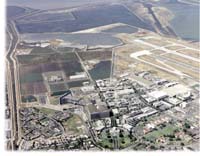
The NASA Ames Research Center, located at Moffett Field in the heart of California’s Silicon Valley, is a leader in information technology research with a focus on supercomputing, networking and intelligent systems. The center conducts critical research and development and provides enabling technologies that support virtually all U.S. space missions. With over $3 billion in capital equipment, 4,000 research personnel and a $775 million annual budget, the center’s economic impact is significant.

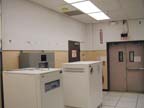
NetBotz deployment at NASA Ames Research Center (NASA ARC). Hydrogen sensors are connected via the NetBotz system to protect NASA ARC’s 40KVA UPS system. The UPS controller is in the foreground, battery container and maintenance bypass switch are against the wall (gray cabinet).

Sprawling campus

The center’s campus is made up of 90 buildings containing more than 6,000 computer systems and approximately 1,000 servers. IT is a critical horizontal function that supports the center’s ability to achieve its mission. With more than 200 computer and server rooms, communication closets, telecommunications platforms and associated dedicated battery rooms, the center owns a complex, mission-critical enterprise environment. The Applied Information Technology Division (AppTech), led by George Alger, assistant division chief, is charged with maintaining IT equipment, services and support to provide safe and reliable IT infrastructure for the 4,500 personnel at the center. In order to achieve this mission, the center must closely monitor the physical location and condition of systems to ensure that they will neither be adversely affected by their environment nor by theft or tampering.

The AppTech team is comprised of just 100 members. In light of this reality, the team is focused on maximizing efficiency. Physically monitoring systems for environmental conditions such as temperature, moisture and human tampering extends beyond the domain covered by traditional IT security and systems management product sets, yet it is critical for mission success for the center. Temperatures at Moffett Field fluctuate from 45 to 90 degrees on a daily basis. Often deployed in non-traditional IT environments, such as closets, systems are prone to overheat and malfunction. The failure of an air conditioning system or a water leak can negatively impact IT functionality.

Beyond environmental concerns, AppTech needs to monitor the use of IT systems to ensure that important components are only moved when authorized and that systems are kept plugged in. More than 1,000 NASA, contractor and visitor personnel move about the campus on a monthly basis. In the course of executing their regular duties, unauthorized personnel have unplugged systems and disconnected systems and networks. The AppTech team is very aware of the danger of IT interference from non-authorized users in a distributed campus and needs to closely monitor its IT assets. Further, the team needs to safeguard NASA’s equipment and intellectual property from theft.

Considering these realities, the AppTech team needed to monitor 360 degrees of IT and physical factors that impact critical IT infrastructure security as well as performance and availability. AppTech requires constant proactive awareness – the team recognizes that identifying a problem early empowers it to take immediate steps to prevent possible catastrophic system failure/damage, loss of data and, importantly, interruption of service to the user base.
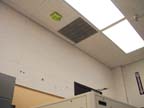
NASA ARC’s battery container is protected by hydrogen detectors connected to the NetBotz system.

Monitoring everything

“It’s imperative that we monitor all critical IT systems and physical environments,” said Alger. “We need to empower our team to understand who has physical access to our distributed systems, what they are doing with the systems, as well as ensure that the environmental characteristics are stable and within band. While business continuity systems, such as back-up batteries, are only needed in emergency circumstances, we need to constantly monitor their status to ensure that they will function when required. Importantly, while we run IT functions on our IP network backbone, we cannot afford to implement a whole new network environment to monitor physical conditions. We require a converged enterprise security approach that functions on the existing IP network. Our focus is on preemptive management. Failure to take a proactive stance can cost hundreds of thousands of dollars in downtime, damaged equipment, and loss of valuable research data.”

AppTech installed 10 NetBotz WallBotz and RackBotz appliances from Austin, Tex., and a NetBotz 500 monitoring appliance. The sensors in the systems provide instant warnings about fluctuations in air quality, temperature and power levels. If levels fluctuate, day or night, the sensors send an alert over NASA’s installed IP network, telephone line or cellular network to appropriate personnel, giving them time to act before services are impacted or equipment damaged. In addition to sensors that monitor the environment, the NetBotz systems include digital cameras that provide physical security surveillance capabilities.

Such appliances leverage the center’s existing IT infrastructure to provide a monitoring solution to protect critical assets from threats like extreme temperature changes, human error and/or sabotage, power spikes, and other harmful environmental elements.

“NetBotz is extremely easy to deploy and easy to use,” said Alger. “You simply configure the appliances and plug-and-play. Technical support has been exceptional. And, the solution is very scalable, so we can add more sensors and other equipment as our requirements dictate. We started with a pilot program in 2002 and are expanding the NetBotz deployment campus wide.”
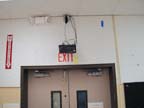
Multiple hydrogen detectors are cross-connected between two NetBotz systems. If the levels fluctuate, day or night, NetBotz sends an alert to personnel over the IP network, telephone line or cellular network.

Results

In the last 22 months, the NetBotz monitors have alerted AppTech of several previously undetectable negative environmental changes and power outages, mitigating thousands of dollars in damages and preventing network and systems downtime. The monitors have also alerted staff to unauthorized individuals entering secure areas.

“The solution has cut our response time in half,” said Alger. “The systems have made the IT staff more efficient. Rather than spending time babysitting rooms, the team is empowered to concentrate on strategic management issues.”

Surge protection, too

There is another environment and systems integrity concern according to Security magazine research: power surges.

John Chappie of Diversified Technology Group, Inc. (DITEK), Largo, Fla., said today’s integrators are caught between a “rock and a hard place” when it comes to including surge suppression. Most people mistakenly believe that equipment losses are caused by “direct” lightning strikes. While it’s true that nothing can stop a direct lightning strike, direct hits only account for approximately two percent of all equipment losses. Ninety-eight percent of equipment losses and downtime can be eliminated with secondary surge suppression.

Surge suppressors should be installed on all conductors feeding into electronic equipment, i.e., AC power and low voltage circuits. Surge suppression should be “external” to the equipment for better protection and ease of replacement. Security, life safety and environmental monitoring systems are useless if components are compromised by preventable surge events.

“Surge suppression is an investment, not an expense,” explained Chappie.

Share This Story

Looking for a reprint of this article?
From high-res PDFs to custom plaques, order your copy today!

Recommended Content

JOIN TODAY
To unlock your recommendations.

Already have an account? Sign In

  • Iintegration and use of emerging tools

    Future Proof Your Security Career with AI Skills

    AI’s evolution demands security leaders master...
    Security Leadership and Management
    By: Jerry J. Brennan and Joanne R. Pollock
  • The 2025 Security Benchmark Report

    The 2025 Security Benchmark Report

    The 2025 Security Benchmark Report surveys enterprise...
    The Security Benchmark Report
    By: Rachelle Blair-Frasier
  • The Most Influential People in Security 2025

    Security’s Most Influential People in Security 2025

    Security Magazine’s 2025 Most Influential People in...
    Most Influential People in Security
    By: Security Staff
Manage My Account
  • Security Newsletter
  • eMagazine Subscriptions
  • Manage My Preferences
  • Online Registration
  • Mobile App
  • Subscription Customer Service

More Videos

Sponsored Content

Sponsored Content is a special paid section where industry companies provide high quality, objective, non-commercial content around topics of interest to the Security audience. All Sponsored Content is supplied by the advertising company and any opinions expressed in this article are those of the author and not necessarily reflect the views of Security or its parent company, BNP Media. Interested in participating in our Sponsored Content section? Contact your local rep!

close
  • critical event management
    Sponsored byEverbridge

    Why a Unified View Across IT, Continuity, and Security Makes or Breaks Crisis Response

  • Charlotte Star Room
    Sponsored byAMAROK

    In an Uncertain Economy, Security Is a Necessity - Not an Afterthought

  • Sureview screen
    Sponsored bySureView Systems

    The Evolution of Automation in the Command Center

Popular Stories

Red laptop

Security Leaders Discuss SitusAMC Cyberattack

Cybersecurity trends of 2025

3 Top Cybersecurity Trends from 2025

Cybersecurity predictions of 2026

5 Cybersecurity Predictions for 2026

Green code

Logitech Confirms Data Breach, Security Leaders Respond

Water faucet and cup

High Water Mark: CISA Shares Foundations for Effective Cybersecurity and Risk Management

Top Cybersecurity Leaders

Events

September 18, 2025

Security Under Fire: Insights on Active Shooter Preparedness and Recovery

ON DEMAND: In today’s complex threat environment, active shooter incidents demand swift, coordinated and well-informed responses.

January 14, 2026

Is Your Organization Prepared to Navigate Interconnected Threats in 2026?

The 2026 threat environment will be louder, faster, and more interconnected. The most pressing risks, from global political volatility to emerging tech disruptions, will challenge organizations to act amid ambiguity and protect credibility in an era of accelerating uncertainty.

View All Submit An Event

Products

Security Culture: A How-to Guide for Improving Security Culture and Dealing with People Risk in Your Organisation

Security Culture: A How-to Guide for Improving Security Culture and Dealing with People Risk in Your Organisation

See More Products

Related Articles

  • Aronson Security Group Launches Converged Security Services

    See More
  • Aronson Security Group Launches Converged Security Services

    See More
  • Aronson Security Group Launches Converged Security Services

    See More

Related Products

See More Products
  • Hospitality Security: Managing Security in Today's Hotel, Lodging, Entertainment, and Tourism Environment

  • 9780367259044.jpg

    Understanding Homeland Security: Foundations of Security Policy

  • security culture.webp

    Security Culture: A How-to Guide for Improving Security Culture and Dealing with People Risk in Your Organisation

See More Products
×

Sign-up to receive top management & result-driven techniques in the industry.

Join over 20,000+ industry leaders who receive our premium content.

SIGN UP TODAY!
  • RESOURCES
    • Advertise
    • Contact Us
    • Store
    • Want More
  • SIGN UP TODAY
    • Create Account
    • eMagazine
    • Newsletter
    • Customer Service
    • Manage Preferences
  • SERVICES
    • Marketing Services
    • Reprints
    • Market Research
    • List Rental
    • Survey/Respondent Access
  • STAY CONNECTED
    • LinkedIn
    • Facebook
    • YouTube
    • X (Twitter)
  • PRIVACY
    • PRIVACY POLICY
    • TERMS & CONDITIONS
    • DO NOT SELL MY PERSONAL INFORMATION
    • PRIVACY REQUEST
    • ACCESSIBILITY

Copyright ©2025. All Rights Reserved BNP Media.

Design, CMS, Hosting & Web Development :: ePublishing