Security Magazine logo
search
cart
facebook twitter linkedin youtube
  • Sign In
  • Create Account
  • Sign Out
  • My Account
Security Magazine logo
  • NEWS
    • Security Newswire
    • Technologies & Solutions
  • MANAGEMENT
    • Leadership Management
    • Enterprise Services
    • Security Education & Training
    • Logical Security
    • Security & Business Resilience
    • Profiles in Excellence
  • PHYSICAL
    • Access Management
    • Fire & Life Safety
    • Identity Management
    • Physical Security
    • Video Surveillance
    • Case Studies (Physical)
  • CYBER
    • Cybersecurity News
    • More
  • BLOG
  • COLUMNS
    • Career Intelligence
    • Cyber Tactics
    • Cybersecurity Education & Training
    • Leadership & Management
    • Security Talk
  • EXCLUSIVES
    • Annual Guarding Report
    • Most Influential People in Security
    • The Security Benchmark Report
    • Top Guard and Security Officer Companies
    • Top Cybersecurity Leaders
    • Women in Security
  • SECTORS
    • Arenas / Stadiums / Leagues / Entertainment
    • Banking/Finance/Insurance
    • Construction, Real Estate, Property Management
    • Education: K-12
    • Education: University
    • Government: Federal, State and Local
    • Hospitality & Casinos
    • Hospitals & Medical Centers
    • Infrastructure:Electric,Gas & Water
    • Ports: Sea, Land, & Air
    • Retail/Restaurants/Convenience
    • Transportation/Logistics/Supply Chain/Distribution/ Warehousing
  • EVENTS
    • Industry Events
    • Webinars
    • Solutions by Sector
    • Security 500 Conference
  • MEDIA
    • Interactive Spotlight
    • Photo Galleries
    • Podcasts
    • Polls
    • Videos
      • Cybersecurity & Geopolitical Discussion
      • Ask Me Anything (AMA) Series
  • MORE
    • Call for Entries
    • Classifieds & Job Listings
    • Newsletter
    • Sponsor Insights
    • Store
    • White Papers
  • EMAG
    • eMagazine
    • This Month's Content
    • Advertise
  • SIGN UP!
CybersecurityManagementSecurity Leadership and ManagementLogical Security

5 key elements of cyber simulation exercises to boost cyber resilience

By Steve Durbin
Vertical green numbers on black screen

Image via Unsplash

June 7, 2024

There are two main objectives that organizations typically focus on while reducing cyber risk. First, reducing the frequency of cyber incidents materializing, which usually comprises traditional cybersecurity measures and risk mitigation activities. Second, reducing financial loss and other impacts to the organization when they occur, which is where cyber resilience comes in. In achieving both these objectives, cyber simulation exercises play a central role because people have a major role to play in preventing, detecting, responding and remediating cyber incidents.

In certain high-risk environments, organizations may find it impractical to solely prioritize prevention and detection. In such cases, it is beneficial to shift focus towards building resilience, including response, containment and recovery of incidents. Equipping all stakeholders in the organization to handle these challenging situations should be a priority, and allocating time efforts, and resources towards this strategy is advisable. Now, let's delve into the key elements required to design simulation exercises aimed at enhancing cyber resilience.

1. Preparedness

The element of preparedness is similar to the French culinary concept of “mise en place,” which describes the notion of being well prepared in advance for a hostile and dynamic work environment: the setup, the ingredients, the tools needed for cooking. This can also apply to cyber exercises — understanding the organization's systems, processes, security approaches, and vulnerabilities; designing realistic scenarios based on specific security concerns (i.e., ransomware, supply chain attacks, DDoS, advanced persistent threats) and measuring how various stakeholders respond and react to different situations.

2. Relevance

The scenarios and tests being conducted must be relevant and contextual for the audience that is participating and must be tailored to the organizational objectives. For example, while dealing with the security team, simulations should be more focused on individuals that are operating a SOC (security operations center) or security analysts responsible for managing endpoints and cloud environments. Ensure that the exercise aligns with the organization's culture, technology, and security expectations. The exercise should be designed in a way that supports the organization's technology and security strategies, ultimately meeting the desired objectives by the end of the exercise.

3. Immersion

Simulation exercises must be immersive enough so that participants believe they are dealing with a real-life incident. To create a scenario that’s more realistic, facilitators can seek participation from key internal and external stakeholders. Internal stakeholders are basically employees while external stakeholders can include customers, suppliers, business partners and insurers.  

4. Challengingness

“Challengingness" is meant to express the quality or degree of something that is challenging. Simulation exercises should be engaging, intellectually stimulating and competitive. One way to achieve this is by implementing the exercises as dynamic games using custom applications. External stakeholders, such as actors playing the roles of media or government representatives, can provide real-time feedback to participants. The idea is to challenge the audience, pushing them to test their quick-thinking, decision-making, communication, delegation, stakeholder management, incident coordination and other skills needed for an effective cyber response. 

5. Responsiveness

There’s a famous quote, "No battle plan ever survives first contact with the enemy." It means that regardless of how much preparation is done, or how well documented a processes or the playbooks are, security leaders are never quite know for sure whether people will perform exactly how they’d expect them to, particularly when dealing with a lot of uncertainty. Security leaders need to test and test regularly; they need to test with various audiences and test how the audience responds even to the most unlikely or adverse cyber conditions. They also need to look at how the organization transitions from response to containment, all the way through recovery and resumption.

Cyber simulation isn’t just resilience, it’s also cyber assurance                 

It’s important to appreciate and understand that a cyber simulation exercise is just one of many assurance activities to perform within an organization to infer how ready an organization is for a major cyber incident. Just like conducting a security audit, a controls gap analysis, a business continuity test, pen testing, red team, blue team, purple team testing etc. a cyber simulation exercise is also complementary to other assurance activities. Again, the results of other assurance activities will influence and shape how these cyber simulation exercises should be designed and how they should be run for the respective audiences. When looking at the observations and findings from these exercises, it’s often very clear that there are several implications for organizations, both in their ability to respond to a major cyber incident as well as long term risk implications.

Instead of waiting for a crisis to strike and then scrambling or panicking, it is advisable that organizations adopt a process of preparation and improvement. Working with an outside partner that is independent of office dynamics and workplace politics may be the best option. Cyber simulation exercises are about future-proofing cyber resilience, serving as an assurance activity to assess an organization's readiness for cyber incidents.                          

KEYWORDS: cyber resilience cyber risk cyber risk mitigation risk management security resilience

Share This Story

Looking for a reprint of this article?
From high-res PDFs to custom plaques, order your copy today!


Steve durbin ceo isf
Steve Durbin is CEO at the Information Security Forum (ISF). His main areas of focus include strategy, information technology, cybersecurity and the emerging security threat landscape across both the corporate and personal environments. Previously, he was senior vice president at Gartner.

Recommended Content

JOIN TODAY
To unlock your recommendations.

Already have an account? Sign In

  • Cyber tech background

    Security’s Top Cybersecurity Leaders 2026

    Security magazine’s Top Cybersecurity Leaders 2026 award...
    Top Cybersecurity Leaders
  • Iintegration and use of emerging tools

    Future Proof Your Security Career with AI Skills

    AI’s evolution demands security leaders master...
    Security Education & Training
    By: Jerry J. Brennan and Joanne R. Pollock
  • The 2025 Security Benchmark Report

    The 2025 Security Benchmark Report

    The 2025 Security Benchmark Report surveys enterprise...
    The Security Benchmark Report
    By: Rachelle Blair-Frasier
Manage My Account
  • Security Newsletter
  • eMagazine Subscriptions
  • Manage My Preferences
  • Online Registration
  • Mobile App
  • Subscription Customer Service

More Videos

Sponsored Content

Sponsored Content is a special paid section where industry companies provide high quality, objective, non-commercial content around topics of interest to the Security audience. All Sponsored Content is supplied by the advertising company and any opinions expressed in this article are those of the author and not necessarily reflect the views of Security or its parent company, BNP Media. Interested in participating in our Sponsored Content section? Contact your local rep!

close
  • critical event management
    Sponsored byEverbridge

    Why a Unified View Across IT, Continuity, and Security Makes or Breaks Crisis Response

Popular Stories

World Cup trophy beside goal

World Cup Safety and Security Is About More than Just Crime

Woman in suit

Can the Industry Do More for Women in Security?

Art museum

Object-Specific Protection: The Non-Negotiable Foundation of Art and Asset Security

NYPD car

Explosives Thrown in Attempted Terrorist Attack Near NYC Mayor’s Home

American flag

Security Leaders Discuss Trump’s Cyber Strategy for America

SEC 2026 Benchmark Banner

Events

April 8, 2026

The Future of Executive Protection: Layering Technology, Intelligence, and Response

Digital threats to executives and other high-profile employees are evolving faster than most corporate protection programs. Learn why modern executive protection programs require data-driven, intelligence-led strategies to keep pace with the magnitude of today’s threats.

April 15, 2026

How AI is Closing the Decision Gap in Leading GSOCs

Learn how modern security teams are evolving from alert-driven workflows to outcome-driven operations and how AI is enabling faster, more confident decisions at every stage of the incident response lifecycle.

View All Submit An Event

Products

Security Culture: A How-to Guide for Improving Security Culture and Dealing with People Risk in Your Organisation

Security Culture: A How-to Guide for Improving Security Culture and Dealing with People Risk in Your Organisation

See More Products
SEC 2026 Top Cybersecurity Leaders

Related Articles

  • reputation-enews

    Cyber Resilience is Crucial to Maintaining Brand Reputation

    See More
  • Business meeting

    5 commitments CISOs can make to boost cyber resilience

    See More
  • Cyber lock

    Building cyber resilience through cyber tabletop exercises

    See More

Related Products

See More Products
  • 9780367339456.jpg.jpg.jpg

    Cyber Strategy: Risk-Driven Security and Resiliency

  • 1119490936.jpg

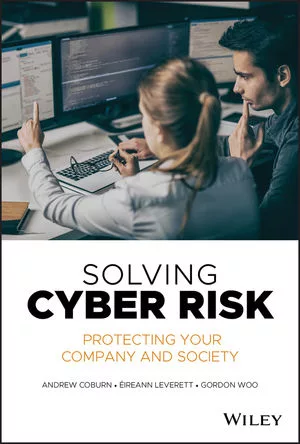
    Solving Cyber Risk: Protecting Your Company and Society

  • 9780367221942.jpg

    From Visual Surveillance to Internet of Things: Technology and Applications

See More Products
×

Sign-up to receive top management & result-driven techniques in the industry.

Join over 20,000+ industry leaders who receive our premium content.

SIGN UP TODAY!
  • RESOURCES
    • Advertise
    • Contact Us
    • Store
    • Want More
  • SIGN UP TODAY
    • Create Account
    • eMagazine
    • Newsletter
    • Customer Service
    • Manage Preferences
  • SERVICES
    • Marketing Services
    • Reprints
    • Market Research
    • List Rental
    • Survey/Respondent Access
  • STAY CONNECTED
    • LinkedIn
    • Facebook
    • YouTube
    • X (Twitter)
  • PRIVACY
    • PRIVACY POLICY
    • TERMS & CONDITIONS
    • DO NOT SELL MY PERSONAL INFORMATION
    • PRIVACY REQUEST
    • ACCESSIBILITY

Copyright ©2026. All Rights Reserved BNP Media, Inc. and BNP Media II, LLC.

Design, CMS, Hosting & Web Development :: ePublishing