Governor Andrew M. Cuomo announced more than $17 million in federal funding has been awarded to 178 nonprofit organizations facing an increased risk of terrorism to strengthen the security of their facilities as well as enhance their overall preparedness.
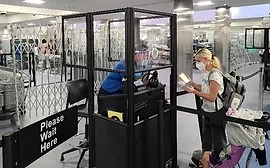
The Transportation Security Administration (TSA) has completed installation of new acrylic barriers at security checkpoints throughout Las Vegas McCarran International Airport (LAS) in the agency’s ongoing efforts to prevent the spread of COVID-19.
The shortage of skilled information security practitioners continues to grow around the globe. Based on 200 IT executives and contributors who primarily serve in information or IT security roles, this new research found that in the United States, for organizations with at least 500 employees, the average number of open positions enterprises are trying to fill is 1,324. For the largest percentage of respondents in this survey, that number increased between 1 percent and 25 percent over the last year, although that increase is higher for large enterprises.
The Cybersecurity and Infrastructure Security Agency (CISA) released its strategy to ensure the security and resilience of fifth generation (5G) technology in the U.S.
Brian Harrell, appointed by the President of the United States in December 2018 to serve as the Department of Homeland Security’s Assistant Secretary for Infrastructure Protection, resigned his post last week and is headed to the private sector.
SAI Global has released results from a business continuity benchmarking study. ‘Addressing the COVID-19 gap: How Business Continuity professionals can propel business forward’ provides the results of a pre-COVID survey and a March 2020 follow up.
According to IDC, by 2025 there will be 41.6 billion Internet of Things (IoT) devices, generating a massive 79 zettabytes (ZB) of data. To put that into perspective, in 2006, IDC estimated that the total amount of electronic data created and stored was a mere 0.18 ZB. This growing amount of data represents a vast and exponentially increasing attack surface, which poses a huge opportunity for cybercriminals and a seemingly insurmountable task for those responsible for protecting and securing it. This task is only made more difficult by the lack of regulation and security measures being built into IoT devices at present. As IoT looks to become a foundational aspect of our everyday lives, it’s vital we, as consumers, understand the threats posed to our devices and the data they store.
The Transportation Security Administration (TSA) announced the new members of the Aviation Security Advisory Committee (ASAC), which includes the appointment of four new members, the reappointment of 15 members, and the full list of other committee members serving their term.