COVID-19 has posed a wide variety of problems to businesses of all kinds, from hospitals and grocery stores to cannabis dispensaries and schools. While security technology has always been an important investment for businesses to make, during the pandemic, the use of security technology has become more vital than ever, and has provided businesses with solutions to some of their pandemic problems.
COVID-19 has helped business owners realize that their security systems have a far larger function and versatility than strictly traditional loss prevention. While many have traditionally viewed them as ways to prevent theft, such as shoplifting, or protect their employees and buildings, business owners are now being exposed to the true capabilities of their security systems.
The organizers of the first ever International Security Week (ISWeek), an event for security, counter-terrorism, cybersecurity and disaster response, that will run from 30 November 30, 2020 to December 3, 2020, announced the agenda.
The British Interactive Media Association (BIMA) recently revealed that tech workers are five times more likely to suffer from a mental health problem than the wider population.
Nominet’s latest CISO Stress Report has also revealed that almost nine in ten (88%) chief information security officers (CISOs) consider themselves under moderate to high stress levels. The same report revealed that CISOs lose on average $35 000 a year in unpaid overtime, while increased stress levels have resulted in a 26-month tenure on average.
Shred-it announced the release of its 10th Anniversary Edition Data Protection Report (formerly known as “The Security Tracker: State of the Industry Report”), which outlines data security risks threatening U.S. enterprises and small businesses. The findings are based on a survey conducted by Ipsos, shedding light on trends in data protection practices and the risks American businesses, organizations, and consumers face related to keeping their data secure.
Any apparent election interference from countries like Iran and Russia is typically met with partisan posturing. But while politicians are busy debating which candidate might benefit, there’s a good chance that someone, somewhere, is trying the same thing again right now.
Foreign interference like the recent incident announced by the U.S. Director of National Intelligence John Ratcliffe is more common than ever because no online data is completely safe from hackers, and digital data is valuable for what it reveals.
Hall County, Ga. confirmed it experienced a network outage as a result of a ransomware attack. The cyberattack impacted critical systems within the Hall County Government networks, including phone services. While some applications are disabled as the County works to resolve this incident, business continuity measures have been implemented.
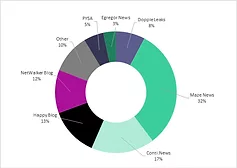
Digital Shadows released its quarterly research report focusing on the latest trends in ransomware. Unfortunately, for vulnerable organizations everywhere, Digital Shadows Photon Research team found that ransomware as a market and community on the dark web has expanded since Q2.
During a press conference on election security at FBI Headquarters with FBI Director Christopher Wray, Director of National Intelligence John Ratcliffe confirmed that some voter registration information has been obtained by Iran, and separately, by Russia.
A new global study by the Economist Intelligence Unit and TransUnion has overwhelmingly found the key to whether or not companies go out of business hinges on providing consumers friction-right digital transactions. Nearly 85% of global executives surveyed as part of the study said they believe smooth digital transactions are “essential to business survival” rather than merely a competitive edge.
Defending against insider threats is one of the biggest challenges an organization can face, and the COVID-19 pandemic has only made detection more challenging as remote employees continue to use virtual private networks (VPNs) to access sensitive company files and information. Here, we talk to Carolyn Crandall, Chief Deception Officer at Attivo Networks, to discuss how security teams can use deception technology to detect and prevent insider threat attacks.