WhiteHat Security, a San Jose, Calif.-based provider of application security, announced the launch of AppSec Stats Flash, a monthly podcast and statistics report aimed at providing a more accurate view of the current state of application security.
Kroll, a division of Duff & Phelps, announced the hiring of three seasoned cyber experts in North America: John (Jack) Bennett, a managing director in the San Francisco office; Steve Bergman, a managing director in the Washington D.C. office; and John deCraen, an associate managing director in the Dallas office.
Just as you would imagine based on its name, Zero Trust requires authentication of each touchpoint connecting to an organization’s network, aiming to transform it into an impenetrable fortress. Regardless of its benefits, even Zero Trust has its limitations and can create friction unnecessarily, which could have a lasting effect on employee productivity and an overextension of security resources. Are there any alternatives? Is there another remedy that can provide a similar level of security as Zero Trust without the friction? Zero Trust 2.0 is the answer.
We talk to Alan Duric, co-founder and CTO/COO of Wire, a secure collaboration platform, about the various threats facing enterprises today, as well as how organizations can protect their employees and assets, and why organizations (and vendors) need to make a fundamental change to how they operate by implementing better security, technology, and approaches to build a security-first infrastructure.
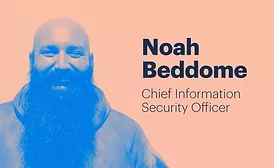
Noah Beddome will join Opendoor as Chief Information Security Officer (CISO). Beddome will be responsible for protecting the data and technology infrastructure that is core to Opendoor business. He will oversee Opendoor’s information security program and IT, and will help to maintain trust with customers by ensuring the integrity of data systems.
Symantec's Threat Hunter Team, a group of security experts, have uncovered an additional piece of malware used in the SolarWinds attacks which was used against a select number of victims that were of interest to the attackers.
According to Symantec, the malware, Raindrop is a loader which delivers a payload of Cobalt Strike. Raindrop is very similar to the already documented Teardrop tool, but there are some key differences between the two.
Radware's new 2020-2021 State of Web Application Security Report revealed that global organizations are struggling to maintain consistent application security across multiple platforms, and they are also losing visibility with the emergence of new architectures and the adoption of Application Program Interfaces (APIs).
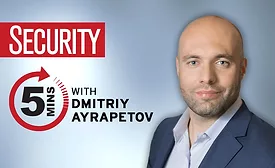
In September 2020, a ransomware attack forced 6,000 elementary students to shutdown learning at the Newhall School District. Newhall isn't alone. In addition, Harford Public School, Miami Dade County, Haywood County School district in North Carolina are others that experienced similar circumstances. With ransomware surging nearly 110% and no end in sight for remote learning, the environment is ripe for cyberattacks to escalate. To get some insight, we spoke to Dmitriy Ayrapetov, Vice President of Platform Architecture at SonicWall.
In legal professions, safeguarding documents and paperwork is an essential office task. These papers may contain important, private information about a company’s operations, or they may include other privileged information shared by clients concerning their cases. In an increasingly digital world, the lock and key of the filing cabinet are no longer enough to guarantee document security. How can your practice better protect the digital files it stores? Take a moment to consider these six tips for implementing better security surrounding these important documents.