Security Magazine logo
search
cart
facebook twitter linkedin youtube
  • Sign In
  • Create Account
  • Sign Out
  • My Account
Security Magazine logo
  • NEWS
    • Security Newswire
    • Technologies & Solutions
  • MANAGEMENT
    • Leadership Management
    • Enterprise Services
    • Security Education & Training
    • Logical Security
    • Security & Business Resilience
    • Profiles in Excellence
  • PHYSICAL
    • Access Management
    • Fire & Life Safety
    • Identity Management
    • Physical Security
    • Video Surveillance
    • Case Studies (Physical)
  • CYBER
    • Cybersecurity News
    • More
  • BLOG
  • COLUMNS
    • Career Intelligence
    • Cyber Tactics
    • Cybersecurity Education & Training
    • Leadership & Management
    • Security Talk
  • EXCLUSIVES
    • Annual Guarding Report
    • Most Influential People in Security
    • The Security Benchmark Report
    • Top Guard and Security Officer Companies
    • Top Cybersecurity Leaders
    • Women in Security
  • SECTORS
    • Arenas / Stadiums / Leagues / Entertainment
    • Banking/Finance/Insurance
    • Construction, Real Estate, Property Management
    • Education: K-12
    • Education: University
    • Government: Federal, State and Local
    • Hospitality & Casinos
    • Hospitals & Medical Centers
    • Infrastructure:Electric,Gas & Water
    • Ports: Sea, Land, & Air
    • Retail/Restaurants/Convenience
    • Transportation/Logistics/Supply Chain/Distribution/ Warehousing
  • EVENTS
    • Industry Events
    • Webinars
    • Solutions by Sector
    • Security 500 Conference
  • MEDIA
    • Interactive Spotlight
    • Photo Galleries
    • Podcasts
    • Polls
    • Videos
      • Cybersecurity & Geopolitical Discussion
      • Ask Me Anything (AMA) Series
  • MORE
    • Call for Entries
    • Classifieds & Job Listings
    • Newsletter
    • Sponsor Insights
    • Store
    • White Papers
  • EMAG
    • eMagazine
    • This Month's Content
    • Advertise
  • SIGN UP!
CybersecuritySecurity NewswireCybersecurity News

Carnegie Mellon Researchers Use Mobile Users Behavior to Predict Exposure to Malicious Websites

smartphone1-900px.jpg
February 25, 2019

A new study from Carnegie Mellon University's CyLab takes a proactive approach to determine when exposure to malicious websites can occur.

"Most traditional security defenses are reactive, and warn users only after or at the time they've visited a malicious website," said Mahmood Sharif, a Ph.D. student in CMU's Department of Electrical and Computer Engineering. "We wanted to figure out: are there hints about a user's behavior that could tell us when something bad is going to happen before it happens?"

Sharif presented the study at the ACM Conference on Computer and Communications Security in Toronto.

The team evaluated three months' worth of web traffic generated by more than 20,000 mobile device users in 2017. The data was obtained with users' consent with the help of collaborators from the research arm of KDDI, a large Japanese cellular provider.

In their analysis, a website was marked as "malicious" if it appeared on the Google Safe Browsing blacklist, which contains a constantly updated list of unsafe websites and web resources, such as phishing or deceptive sites and sites that host malware.

"Out of all the users that we observed, about 11 percent were exposed to malicious websites," Sharif said. "But out of the many browsing sessions, only 1 out of 1,000 sessions were exposed, on average. "The researchers then combed through the data in search of behavioral differences between users who had been exposed versus users who hadn't. They found, for example, that exposed users visited pages with more ads and browsed the web more at night than unexposed users.

Based on their findings, they identified three feature types that could help predict whether a user would be exposed or not: contextual features (e.g. number of links clicked, session length, time of day, etc.); past behavior (e.g. average links clicked per session, whether the user had been exposed in the past or not, etc.); and self-reported behaviors reported via a survey (e.g. whether the user runs anti-virus software, whether the user has had previous online security incidents, etc.). The team tested the predictive system, and found it can accurately predict exposure seconds before it occurs.

"Our system was even able to detect malicious web pages before they had been added to blacklists," Sharif said. "Now we can use the predictions to proactively protect users, thus adding a complementary line of defense to the existing reactive defenses."

Other authors on the study include Institute for Software Research and Engineering and Public Policy professor Nicolas Christin, and KDDI researchers Jumpei Urakawa, Ayumu Kubota and Akira Yamada.


KEYWORDS: cyber security cybersecurity malware mobile security

Share This Story

Looking for a reprint of this article?
From high-res PDFs to custom plaques, order your copy today!

Recommended Content

JOIN TODAY
To unlock your recommendations.

Already have an account? Sign In

  • Cyber tech background

    Security’s Top Cybersecurity Leaders 2026

    Security magazine’s Top Cybersecurity Leaders 2026 award...
    Cybersecurity
  • Iintegration and use of emerging tools

    Future Proof Your Security Career with AI Skills

    AI’s evolution demands security leaders master...
    Security Education & Training
    By: Jerry J. Brennan and Joanne R. Pollock
  • The 2025 Security Benchmark Report

    The 2025 Security Benchmark Report

    The 2025 Security Benchmark Report surveys enterprise...
    The Security Benchmark Report
    By: Rachelle Blair-Frasier
Manage My Account
  • Security Newsletter
  • eMagazine Subscriptions
  • Manage My Preferences
  • Online Registration
  • Mobile App
  • Subscription Customer Service

More Videos

Sponsored Content

Sponsored Content is a special paid section where industry companies provide high quality, objective, non-commercial content around topics of interest to the Security audience. All Sponsored Content is supplied by the advertising company and any opinions expressed in this article are those of the author and not necessarily reflect the views of Security or its parent company, BNP Media. Interested in participating in our Sponsored Content section? Contact your local rep!

close
  • Northland Controls sponsored content
    Sponsored byNorthland Controls

    The Execution Gap: Why Great Security Design Doesn't Always Deliver Great Security

Popular Stories

Man in suit looking out window at city

Why GSOCs and Protective Intelligence Are the Cornerstone of Executive Protection

Photograph of apartment complex patios

Enhancing Residential Building Security

5 Minutes with Johnson

Can Organizations Trust Their Own AI?

Open filing cabinet

The Inside Job: Corporate Espionage Never Went Away

Person working on laptop

When Cyber Meets Physical: Rethinking Data Management for a New Threat Landscape

Events

September 10, 2026

So, You Have an Emergency Management Plan… Now What?

LIVE: September 10, 2026 at 2 PM EDT Turning an emergency management plan into an actionable program that prepares staff, students, and partners to respond effectively is a challenge. Learn to move beyond compliance and build a resilient school safety program.
September 22, 2026

How to Detect, Verify, and Respond to AI-Driven Disinformation

LIVE: September 22, 2026 at 2 PM EDT Identify emerging threats, validate information with confidence, and coordinate an effective response across your organization. Learn how to build the people, processes, and technology needed to improve speed-to-truth.

View All Submit An Event

Products

Security Culture: A How-to Guide for Improving Security Culture and Dealing with People Risk in Your Organisation

Security Culture: A How-to Guide for Improving Security Culture and Dealing with People Risk in Your Organisation

See More Products

Related Articles

  • carnegie app

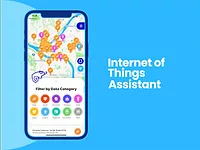
    Carnegie Mellon’s updated IoT Privacy Assistant app allows users to maintain privacy

    See More
  • rolls-purdue

    Purdue researchers join Rolls-Royce, Carnegie Mellon network to create cyber-resilient systems

    See More
  • phishing

    Phishing campaigns and malicious websites impersonating the Trump campaign

    See More

Related Products

See More Products
  • 9780367221942.jpg

    From Visual Surveillance to Internet of Things: Technology and Applications

  • school security.jpg

    School Security: How to Build and Strengthen a School Safety Program

  • physical security.webp

    Physical Security Assessment Handbook An Insider’s Guide to Securing a Business

See More Products
×

Sign-up to receive top management & result-driven techniques in the industry.

Join over 20,000+ industry leaders who receive our premium content.

SIGN UP TODAY!
  • RESOURCES
    • Advertise
    • Contact Us
    • Store
    • Want More
  • SIGN UP TODAY
    • Create Account
    • eMagazine
    • Newsletter
    • Customer Service
    • Manage Preferences
  • SERVICES
    • Marketing Services
    • Reprints
    • Market Research
    • List Rental
    • Survey/Respondent Access
  • STAY CONNECTED
    • LinkedIn
    • Facebook
    • YouTube
    • X (Twitter)
  • PRIVACY
    • PRIVACY POLICY
    • TERMS & CONDITIONS
    • DO NOT SELL MY PERSONAL INFORMATION
    • PRIVACY REQUEST
    • ACCESSIBILITY

Copyright ©2026. All Rights Reserved BNP Media, Inc. and BNP Media II, LLC.

Design, CMS, Hosting & Web Development :: ePublishing