Proposing a Digital Forensics Grange
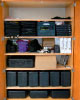
This computer
forensic equipment closet shows how much a large investigation organization
needs. Sharing this type of equipment could prove to be affordable for a
collective of organizations.
Many civilian and law enforcement companies or agencies cannot afford the expense of tools needed to conduct investigations. Advancing technology necessitates constant modernization and upgrades to the software/hardware tool systems. Computer forensic tool makers have stated that each piece of investigative hardware and software that is released for tool kits needs to be developed, tested and vetted by both engineers and lawyers for use in investigations that go into court. The developers of computer forensic tools outlay significant cash/assets for many of their developments and upgrades. These costs may/may not be recoverable.
If the continuing costs to tool developers are too great to offset the outlays for the production of a given line of products, their chances for profit dissipates, as does their likelihood of being able stay in business. The fact is, these products are needed by private enterprises and criminal justice systems. There needs to be some type of new model proposed that would allow tool makers to recover costs, but that helps keep tools affordable. The police agencies and private investigators that work in the public and private sectors need to be able to afford the tools for the investigation of PDAs and cell phones.
Declining PDA, Laptop Forensic Work
Today, more private investigators said that they are declining various digital forensic work because the needed and required tools are very expensive and have short lifespan, due to the increasing and changing variety of digital devices available on the market each year. Commensurate changes that need to be made in the forensic tool manufacturers to accommodate/address the new file systems, operating systems and connectivity demands also contribute to short lifespan of forensic tools. Many municipal law enforcement personnel will tell you that their departments cannot justify expensive tools with a short lifespan that may or may not work with seized devices in lawful investigations.Large Cash/Asset Investments Required
Owners and high-level managers in computer forensic tool-making companies will tell you that their margins of profit are small because they must (constantly) purchase each and every cell phone, digital camera and PDA that is released into the market. Then they must create and test a software blocker that keeps any changes from being made to the device(s) in question.The makers of such tools may incur additional expenses by being subpoenaed to court to discuss the reliability of their tools as well as their product’s method of data collection. The tool manufacturer’s personnel such as the engineer and counsel’s time away from the office for testifying in court can create significant expenses to the developer. These expenses are usually passed on to the consumer.
The Regional Computer Forensic Laboratories (RCFL) is a great resource to municipal law enforcement agencies that are able to enlist the service by discussing cases and devices. The RCFL is an FBI organization. If the priority of the law enforcement case investigation is high enough, the RCFL may be able to accelerate a timely response. However, given the amount of high-level crime and the limited resources of the RCFL, a long wait for help in the investigation may be expected.
Dr. Eamon Doherty remembers the Parsippany, N.J. Grange and how poor farmers, beekeepers and orchard managers purchased equipment individually but shared it collectively in a legal relationship called a grange. Doherty has discussed the idea of a digital equipment grange with municipal and county law enforcement officers as well as private investigators and corporate security. All were very receptive to the idea but said some unique legal arrangement needed to be made between public and private agencies for sharing equipment and licensing purposes.
The Digital Collective or Digital Grange
In world history classes, discussions are made about how the command economies of the eastern nations had permitted individuals or communities to form legal relationships, known as collectives, so that agrarian communities could obtain and share equipment that was too expensive for persons to purchase individually. Perhaps the concept of the collective or grange that has been an idea common to mankind throughout history could be applied with regard to computer forensic equipment in the United States.Perhaps a “digital grange” could be established where public entities such as law enforcement and private entities such as private investigators and corporate security could store and borrow computer forensic hardware, software and various tools as needed. This would be a type of lending library for such entities.
There is a book called “Day of Empire,” by Amy Chua, [1], and it says that all great empires have had two things in common. They all have a rich diversity of people from which to draw talent, and do not persecute people because of their differences. The second is that they are open to new ideas, test their feasibility and apply them if useful. Perhaps a leader in computer forensics can draw from the rich diversity of people in his or her company and then test those ideas with the legal community. These ideas may come from various disciplines, cultures or economic systems. Then if an idea is feasible, it may be applied to modern technological problems where resources are limited.
Perhaps the digital grange may be one way for a confederation of parties to afford and share equipment. The probability that they will all need the same equipment at the same time seems low, but such demands could be taken into account in the construction of the confederation. If a priority system is proffered and agreed to and it is constructed to meet the foreseeable needs of the organizational members, it may become a practical solution for each party/member, giving the participants access to the vast array of equipment and tools needed for their work.
References
- Chua, A., (2007) “Day of Empire: How Hyperpowers Rise to Global Dominance–and Why They Fall”
Looking for a reprint of this article?
From high-res PDFs to custom plaques, order your copy today!