Cybercriminals can take advantage of human weaknesses in one place and use them in other places where they can get financial or other gains. Email addresses, real names, real addresses, phone numbers, date of birth, etc., all are valuable information for cybercriminals. They can build their database with this personal information and use them in future attacks. This is why practicing good cybersecurity habits as users and as administrators is critical for all of us for all systems we use.
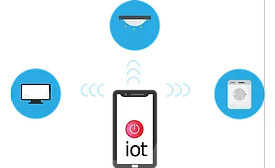
In spite of the fact that mobile apps live on IoT-enabled devices, collect user data, and continuously loop communication between Internet, cloud services and companies (even when not “in use”), there is a limited view that they are different entities altogether. We see this particularly when it comes to security – or lack-there-of – regarding security standards in place to continuously protect users from detrimental application hacks.
In 2021, as enterprise security leaders look to better understand and tackle their organization’s risks as it relates to the COVID-19 pandemic, following this model can be helpful: designate a dedicated response team; analyze how risks have changed and what new types of risks there are; consider the appetite for taking risks and prioritize them. Here's how.
Most bot mitigation solutions rely on rules and risk scores, which use information from the past, even when paired with advanced machine learning or AI capabilities. Since bot operators are continually inventing new ways to evade detection, using historical data fails to detect and stop bots never seen before. As a result, retailers and e-commerce companies can’t keep up with the evolving nature of bot operators’ techniques, tools, and tactics. This is evidenced by the record volume of “Grinch” bots that we saw over the holidays.
Loss prevention and safety/risk employees can benefit from occupancy analytics, especially during the current health crisis. But beyond the pandemic, employees in operations, marketing, and merchandising can benefit considerably by learning all about the foot traffic in their stores.
Adoption of Push-to-Talk over Cellular and Wi-Fi networks is growing in the security market due to the wide area coverage, low cost, the bandwidth to accommodate voice and video communications, and integration with dispatching applications. This article reviews the different types of Push to Talk network deployments, how they work, the devices used, and the benefits to users. The types of Push-to-Talk networks include Push to Talk over Cellular (PoC), Push-to-Talk over Wi-Fi, and unified PoC, Wi-Fi and LMR radio networks.
Often, the touch-free conversation is tied with the need for mobile access solutions. While the two approaches are not interchangeable, both are ideal choices to reduce hand-to-door contact in high traffic public areas such as office lobbies and entry ways, healthcare facilities, restaurants, schools, and restrooms. When combined, they offer contactless, barrier-free and user-friendly access that assure secure entry, minimize high frequency touchpoints, and reduce the spread of germs.
With no one size fits all solution, there have always been different ways to tackle the plethora of security threats. However, the increasing use of drones, or unmanned aerial vehicles (UAVs) as they are often called, is changing that. Fully automated drones can be operated by security agents, with no pilot certification, and are directly integrated into existing security networks and processes. But aren’t they expensive? And won’t the technology turn out to be just a passing trend?
According to Kroll, a Division of Duff & Phelps, ransomware was the most observed threat in 2020, accounting for over one-third of all cases as of September 1, 2020. Notably, Kroll found that Ryuk and Sodinokibi, perennially the most observed variants in Kroll’s cases, were joined by Maze as the top three ransomware variants so far in 2020. To get some insight on ransomware trends in 2021, as well as how cybercriminals execute this type of attack, we spoke to Wade Lance, Field CTO of Illusive Networks.
 RSS
RSS