Security Magazine logo
search
cart
facebook twitter linkedin youtube
  • Sign In
  • Create Account
  • Sign Out
  • My Account
Security Magazine logo
  • NEWS
    • Security Newswire
    • Technologies & Solutions
  • MANAGEMENT
    • Leadership Management
    • Enterprise Services
    • Security Education & Training
    • Logical Security
    • Security & Business Resilience
    • Profiles in Excellence
  • PHYSICAL
    • Access Management
    • Fire & Life Safety
    • Identity Management
    • Physical Security
    • Video Surveillance
    • Case Studies (Physical)
  • CYBER
    • Cybersecurity News
    • More
  • BLOG
  • COLUMNS
    • Career Intelligence
    • Cyber Tactics
    • Cybersecurity Education & Training
    • Leadership & Management
    • Security Talk
  • EXCLUSIVES
    • Annual Guarding Report
    • Most Influential People in Security
    • The Security Benchmark Report
    • Top Guard and Security Officer Companies
    • Top Cybersecurity Leaders
    • Women in Security
  • SECTORS
    • Arenas / Stadiums / Leagues / Entertainment
    • Banking/Finance/Insurance
    • Construction, Real Estate, Property Management
    • Education: K-12
    • Education: University
    • Government: Federal, State and Local
    • Hospitality & Casinos
    • Hospitals & Medical Centers
    • Infrastructure:Electric,Gas & Water
    • Ports: Sea, Land, & Air
    • Retail/Restaurants/Convenience
    • Transportation/Logistics/Supply Chain/Distribution/ Warehousing
  • EVENTS
    • Industry Events
    • Webinars
    • Solutions by Sector
    • Security 500 Conference
  • MEDIA
    • Interactive Spotlight
    • Photo Galleries
    • Podcasts
    • Polls
    • Videos
      • Cybersecurity & Geopolitical Discussion
      • Ask Me Anything (AMA) Series
  • MORE
    • Call for Entries
    • Classifieds & Job Listings
    • Newsletter
    • Sponsor Insights
    • Store
    • White Papers
  • EMAG
    • eMagazine
    • This Month's Content
    • Advertise
  • SIGN UP!
Security Newswire

Supreme Court Says Employers Can Read Employee Text Messages

June 19, 2010

A California police department did not violate the constitutional privacy rights of an employee when it audited the text messages on a pager the city had issued him, the Supreme Court unanimously ruled this week.
 
The Supreme Court Decision: Ontario v. Quon, puts government employees on notice that electronic communications on devices provided to them may not be subject to the Fourth Amendment’s protection against unreasonable searches, as long as their employers have “a legitimate work-related purpose” for inspecting the communications.
 
“Cellphone and text message communications are so pervasive that some persons may consider them to be essential means or necessary instruments for self-expression, even self-identification,” Justice Kennedy said. “On the other hand, the ubiquity of those devices has made them generally affordable, so one could counter that employees who need cellphones or similar devices for personal matters can purchase and pay for their own.”
The decision did not address the privacy rights of people employed by private companies.
 
The case, City of Ontario v. Quon, No. 08-1332, involved a member of the police special-weapons team in Ontario, Calif. The officer, Sgt. Jeff Quon, used a pager issued to him by the Police Department to send and receive messages that were, in the trial judge’s words, “to say the least, sexually explicit in nature.” A city policy on computer, Internet and e-mail use made clear that the city had the right to monitor such communications. The policy allowed “light personal communications” but said “users should have no expectation of privacy or confidentiality.” Sergeant Quon signed a statement agreeing to the policy. But the policy did not explicitly apply to text messages, and Justice Kennedy suggested that e-mail messages sent through the city’s servers might be treated differently from pager messages sent via an outside company.
 
The Police Department’s audit of pager messages, Justice Kennedy wrote, “was not nearly as intrusive as a search of his personal e-mail account or pager, or a wiretap on his home phone line, would have been.”
 
Sergeant Quon had argued that an informal policy instituted by a police lieutenant overrode the formal one, even if the formal one did apply to pager messages. The lieutenant for a time indicated that the pagers could be used for personal messages so long as the employees responsible paid for charges beyond a 25,000-character limit. The lieutenant eventually changed his mind, and the department’s internal affairs divisions audited the messages Sergeant Quon had sent during work hours for two months.
 
Sergeant Quon and a second officer, and the sergeant’s wife and mistress, sued the department, saying their Fourth Amendment rights were violated. The Supreme Court has said that public employers have wide latitude to search their employees’ offices and files. But it has also said that the Fourth Amendment has a role to play in affording the employees some privacy rights. In Sergeant Quon’s case, a jury found that the city had a good work-related reason to audit the messages — to see if the character limit made sense as a business matter. Given that jury finding, the trial judge ruled that the search had not violated the Fourth Amendment.
 
The United States Court of Appeals for the Ninth Circuit, in San Francisco, reversed the decision, saying that there would have been less intrusive ways to conduct the audit. For instance, it said, Sergeant Quon could have been given notice of the change in the informal policy, or been allowed to audit himself. Justice Kennedy assumed, without deciding, that Sergeant Quon had a reasonable expectation of privacy. Even so, he said, the city’s search was not unduly intrusive. The city, he wrote, “had a legitimate interest in ensuring that employees were not being forced to pay out of their own pockets for work-related expenses, or on the other hand that the city was not paying for extensive personal communications.”

Share This Story

Looking for a reprint of this article?
From high-res PDFs to custom plaques, order your copy today!

Recommended Content

JOIN TODAY
To unlock your recommendations.

Already have an account? Sign In

  • Cyber tech background

    Security’s Top Cybersecurity Leaders 2026

    Security magazine’s Top Cybersecurity Leaders 2026 award...
    Security Leadership and Management
  • Iintegration and use of emerging tools

    Future Proof Your Security Career with AI Skills

    AI’s evolution demands security leaders master...
    Security Leadership and Management
    By: Jerry J. Brennan and Joanne R. Pollock
  • The 2025 Security Benchmark Report

    The 2025 Security Benchmark Report

    The 2025 Security Benchmark Report surveys enterprise...
    The Security Benchmark Report
    By: Rachelle Blair-Frasier
Manage My Account
  • Security Newsletter
  • eMagazine Subscriptions
  • Manage My Preferences
  • Online Registration
  • Mobile App
  • Subscription Customer Service

More Videos

Sponsored Content

Sponsored Content is a special paid section where industry companies provide high quality, objective, non-commercial content around topics of interest to the Security audience. All Sponsored Content is supplied by the advertising company and any opinions expressed in this article are those of the author and not necessarily reflect the views of Security or its parent company, BNP Media. Interested in participating in our Sponsored Content section? Contact your local rep!

close
  • critical event management
    Sponsored byEverbridge

    Why a Unified View Across IT, Continuity, and Security Makes or Breaks Crisis Response

Popular Stories

Pixelated brain

Critical Thinking Erosion: A Hidden Threat to Security Career Resilience

Red block among white blocks

Plenty of Associations, But Not Enough Association

Person on iPhone

The Olympics Are Going Mobile — Your Security Strategy Has to Follow

Phone showing hearts and flirty emojis

Valentine’s Day 2026: Inside the Industrial-Scale Romance Scam Economy

Red and blue pawns with thought bubbles

Implementing Meaningful De-Escalation Training in Your Security Program

SEC 2026 Benchmark Banner

Events

April 8, 2026

The Future of Executive Protection: Layering Technology, Intelligence, and Response

Digital threats to executives and other high-profile employees are evolving faster than most corporate protection programs. Learn why modern executive protection programs require data-driven, intelligence-led strategies to keep pace with the magnitude of today’s threats.

View All Submit An Event

Products

Security Culture: A How-to Guide for Improving Security Culture and Dealing with People Risk in Your Organisation

Security Culture: A How-to Guide for Improving Security Culture and Dealing with People Risk in Your Organisation

See More Products
SEC 2026 Top Cybersecurity Leaders

Related Articles

  • Supreme Court Upholds NASA Employee Background Checks

    See More
  • Supreme Court to Hear Public Employees' Privacy Case

    See More
  • Education - Security Magazine

    Connecticut Supreme Court Rules Sandy Hook Families Can Sue Gun Manufacturer

    See More

Related Products

See More Products
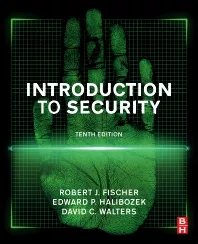
  • into to sec.jpg

    Introduction to Security, 10th Edition

See More Products
×

Sign-up to receive top management & result-driven techniques in the industry.

Join over 20,000+ industry leaders who receive our premium content.

SIGN UP TODAY!
  • RESOURCES
    • Advertise
    • Contact Us
    • Store
    • Want More
  • SIGN UP TODAY
    • Create Account
    • eMagazine
    • Newsletter
    • Customer Service
    • Manage Preferences
  • SERVICES
    • Marketing Services
    • Reprints
    • Market Research
    • List Rental
    • Survey/Respondent Access
  • STAY CONNECTED
    • LinkedIn
    • Facebook
    • YouTube
    • X (Twitter)
  • PRIVACY
    • PRIVACY POLICY
    • TERMS & CONDITIONS
    • DO NOT SELL MY PERSONAL INFORMATION
    • PRIVACY REQUEST
    • ACCESSIBILITY

Copyright ©2026. All Rights Reserved BNP Media.

Design, CMS, Hosting & Web Development :: ePublishing