Drive in with Analytics & Lenses
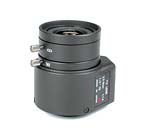
And many of those report digital video intelligence and better varifocal and zoom lens are essential elements of the new designs.
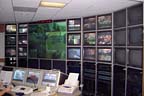
And Great Britain, it turns out, is a pioneer of security video in public places, including what the British call car parks.
One example: the Sedgemoor District Council in Somerset has just upgraded its security video monitoring system to include a more flexible display system with real-time viewing using the FusionPro MultiViewer from Zandar Technologies of Dublin, Ireland. The system monitors 80 cameras covering those car parks as well as public areas, streets, schools, shopping centers and pubs.
Double video duty
With analysis software, security cameras can also pull double duty.In a parking lot, garage applications, the cameras can automatically count vehicles and report on traffic patterns. The system can also alert to vehicles in places where they are not allowed or types of vehicles prohibited from entering a lot or garage.
The demands of video in parking lots and garages also call for demanding camera lenses. Glenn Wolk, known in the industry as “Mr. Varifocal” and president of Tekstar Optical Inc., Melville, N.Y., recently shared this good advice.
When security professionals choose a varifocal or zoom lens for a project, they often decide based on its minimum aperture rating. But simply looking at that number won’t tell you enough about that lens to make the best decision.
According to Wolk, many people don’t consider the variation of the aperture across the range of the lens. For instance, a minimum aperture rating on a lens (f1.2, f1.4, etc.) is a mathematical formula that compares the length of the lens to the diameter. The lower the f-number, the faster the aperture and the brighter the image. In theory, a lower number would indicate a better lens. But that isn’t always the case, since that light quality can only be achieved at the wide angle.
That minimum aperture rating is based on what can be seen through the lens when it is at its widest angle – in other words, when the most light is coming into the lens. For example, a 3.5~8 varifocal achieves an f1.4 aperture rating closest to 3.5 millimeters. In reality, nobody leaves a varifocal at its widest setting, which is why it’s important to know a varifocal’s rating through the entire range. Adjusting the focal length from 3.5 toward 8 millimeters allows less light into the lens, causing the scene to darken – and the f-number to increase
This is helpful advice, but just knowing the aperture rating through the range is not enough. Don’t assume that a lens with an f1.2 rating will always provide a more superior image than an f1.4 lens.
When light passes through the lens, it actually passes through numerous coated elements, which alter light transmittance through the optical path. The light level of different lenses varies depending on the number and type of coatings manufacturers use for their elements. Because every company uses their own proprietary coatings, one manufacturer’s varifocals will perform differently than another’s under the same circumstances.
Says Wolk, these are just two of the reasons why you can’t simply rely on the numbers game when evaluating lenses. All the numbers in the world are no substitute for A-B comparisons, so testing various varifocals under the same conditions is always the best way to decide on your optical workhorse.
Highway needs, too
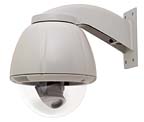
Of course, it’s a short drive from a parking lot to a highway.For example, GE’s FiberDome camera housing includes an integrated fiber optics module that converts an analog video signal into 8-bit digital video and transmits RS-485-/RS-422 data. Video and data are transmitted across a single fiber optic connection. Both the camera’s pan/tilt/zoom unit and the transmitter module get power from the same power supply, which is purchased separately.
The FiberDome can be used with an existing fiber optic network. Applications include sprawling campuses with parking lots and garages as well as highways. Customers choose from single mode and multimode options offering electrical immunity benefits.
A Status Monitoring and Reliability Test System, commonly called SMARTS, is part of every FiberDome and helps diagnose any connection problems. It’s built into the fiber optic module and eliminates the need to use auxiliary testing equipment.
Looking for a reprint of this article?
From high-res PDFs to custom plaques, order your copy today!