Art Indiscretions

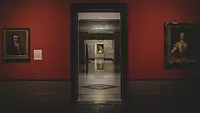
Few people know much about the art world or what really takes place when a world-class work of art is stolen. The media generally only deals with the act of the theft, but not all the possible scenarios and how the art world reacts to a major loss. In the new novel The Many Indiscretions of Arty Boyle, author Gerard Shirar, who served as the Director of Security for the Museum of Fine Arts, Boston, uses his intimate knowledge of the inner workings of the art world and law enforcement, centered on the world of high-stakes art theft, forgery and murder.
Excerpt from The Many Indiscretions of Arty Boyle By Gerard Shirar:
Arty Boyle had gone into hiding in Worcester, where he hid out in the condominium of a business associate and friend. His problem was how to avoid prison. He had planned for this day and he had a solution. He would arrange the theft of an important work of art from a major museum. He was aware of the worldwide interest the theft of a major work of art generated and had marveled at the pressure that public opinion could exert on the authorities in an effort to obtain its return.
MAKING A DEAL
His plan called for his assistance in obtaining the return of the art he would arrange to be stolen in exchange for a suspended sentence on his Farnsworth conviction. The plan was to act as a middleman between the alleged thieves who were asking for ransom and the authorities. It was important to make sure the theft took place in a way that would allow him to plausibly deny his involvement and thus permit the authorities to deal with him. He had reasoned that if a museum owned the object other museums might pressure it to refuse a ransom demand, the basis of the objection being that museums in general were vulnerable to theft and that giving into such a demand would open the floodgates to thieves making similar ransom demands. Therefore, the decision to cooperate with a ransom demand, he reasoned, must be purely a business decision, devoid of other considerations.The owners also must be in a position to pressure the politicians and law enforcement authorities at the highest levels into cooperating. Critical to his plan was the theft of a major work of art that incorporated all these elements.
Arty had worked out the details of such a plan long ago. The object he had selected was a Rembrandt painting on permanent exhibition at the Essex Art Institute. The painting was owned by the Laine Family Trust, administrated by the Law Offices of French, Thomas and Finnigan of Boston. The law firm was extremely influential in legal and political circles, and had a fiduciary obligation to the beneficiaries of the Trust to preserve the Trust’s assets. While the painting was undoubtedly insured, a Rembrandt painting was likely to continue to increase in value, and it would not be in the best interest of the beneficiaries of the Trust to settle for its present day insured value. He also had reasoned that the theft had to be accomplished in a dramatic manner in order to gain the immediate attention of the news media. Wide publicity was required in order to create the necessary pressure for the painting’s return and to keep the story in the press as his plan unfolded. The painting would be taken from the Art Institute in broad daylight while the Institute was open to the public. The thieves would enter the Institute, take the painting from the gallery wall, and exit the Institute with guns drawn.
Arty had maintained contact with Mary Agnes since becoming a fugitive.
When he felt it was safe to do so, during one of their phone calls Arty asked Mary Agnes to meet him at a Kentucky Fried Chicken restaurant in Shrewsbury, just outside of Worcester. On the phone, he had assured her that he was innocent of the Farnsworth theft and had been falsely convicted. Arty told Mary Agnes he doubted that an appellate court would reverse his conviction and so he faced the possibility of jail time for something he had not done. At the restaurant, Arty outlined his plan and asked for her help. While she expressed misgivings at first, in the end she agreed to help. Arty gave Mary Agnes Paul Murphy’s telephone number and asked her to contact Murphy and arrange a meeting with him.
When Murphy contacted him, Arty arranged to meet him at a Friendly’s Restaurant in Worcester.
Arty was sitting alone in a booth at the back of the restaurant when Murphy arrived.
“Hey,” Murphy said, “how you doing?”
“Fine,” said Arty. “Not great, but fine.” Listen, I’ve got a job for you—it’s a little risky, but I think you can pull it off.”
Looking for a reprint of this article?
From high-res PDFs to custom plaques, order your copy today!