Twitter, RSS and Facebook logos

  Connect with Security Magazine!
     Follow us on Twitter and Facebook or subscribe to our newsletters or RSS feeds.

Is Biometrics for Everyone?
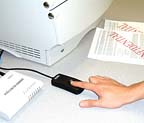
Convergence of physical and logical security will drive biometrics and smart cards. Some fingerprint solutions ensure confidential and secure documents are viewed only by those authorized to do so when they emerge from the printer. Photo courtesy of SecurePrint through PRNewsFoto
Industry expert Kim Rahfaldt of Torrance, Calif.-based AMAG Technologies makes a good point. Just a few years ago, she tells me, companies fantasized about securing their buildings with fingerprint or hand geometry solutions, only to quickly abandon the idea once they saw the price tag. Today, biometric technology has become an affordable solution, and for companies who need to modify their security levels often, combining smart cards and biometrics has provided a long awaited answer for many security management challenges.

When combined with smart cards, fingerprint biometrics provides a second and even a third level of security when a swipe, PIN and fingerprint are necessary to secure a building or sensitive area.

You can start with a card and then add one at a time – a single finger, then a second, and finally the addition of a PIN as well, pointed out AMAG’s Adam Shane. “That is the beauty of biometrics; it allows you to ratchet security another notch that doesn’t exist without it,” said Bioscrypt’s John Cassise.

As the technology continues to find its place in security markets, companies and end users looking to apply it should look for the realization of certain current trends and goals.

Convergence

Physical and logical access controls are converging, often using biometrics to offers a powerful and cost effective solution. Tying enrollment into a single process, regardless of where it happens allows end users to apply single identities across their enterprises. Using biometrics further enhances that convergence. Such convergence can, for example, allow IT to set a rule that those who didn’t enter though the front door cannot log on to their PCs. Or, conversely, automatically log off an occupant’s computer as that person exits the building.

Biometrics also provides an excellent opportunity to thwart identity theft. “We see that with us depending so much on our identity and it coming under increased vulnerability, that fingerprint biometrics gives us back our security,” said Cassise.

The reasoning is simple: Identity thieves have a much harder time stealing an approved person’s physical features than an access device or card. Biometric technology provides an accurate option to not only access a building, but access a secure network, and authenticate a purchase. “We believe that fingerprint biometrics will be a part of everyone’s everyday life,” said Cassise.

Biometrics X2

As the acceptance of biometrics grows, the variety of biometric systems used will expand. Niche markets may find value in the less popular technology such as iris, and end users can implement a second biometric technology to add another layer of security.

“Just as a single biometric combined with smart card and/or PIN increases the level of security and was a catalyst in adoption of the technology, the implementation of multiple biometrics in a single device will again raise the bar,” commented Shane. “Such systems could provide protection against attacks using counterfeit biometrics such as the ‘gummy fingerprint’ many people have heard about.”

Such redundancy of biometric systems is a much more feasible option now that it doesn’t cost an arm and a leg to use an eye, a finger or any other appendage as access identification.

You must register or login in order to post comments.

Multimedia

Videos

Image Galleries

Stanley Customer Appreciation Event at ASIS 2011

Customers enjoyed the annual Stanley customer appreciation event during ASIS 2011 in Orlando.

Podcasts

The New Age of Video Surveillance
In this podcast, Bill Lawrence, director of Service Solutions and Platforms for ADT Security Services, explains the growing interest in video surveillance by both government agencies as well as businesses of every stripe. He discusses what any organization should consider before investing heavily in the technology. Lawrence is a 25-year veteran of both the information technology and physical security industries, with extensive experience in network video surveillance and physical security convergence.
More Podcasts

Your Time

On a daily basis, how much work time do you estimate that you spend addressing an emergency or crisis within your organization?
See Poll Results Poll Archive

THE SECURITY STORE

comptiahighriseproductphoto
CompTIA Security+ Certification Study Guide
CompTIA's Security+ certification is a globally-recognized, vendor neutral exam that has helped over 60,000 IT professionals reach further and higher in their careers. The current Security+ exam (SY0-201) focuses more on being able to deal with security issues rather than just identifying them.
More Products

Clear Seas Research

Clear Seas ResearchWith access to over one million professionals and more than 60 industry-specific publications,Clear Seas Research offers relevant insights from those who know your industry best. Let us customize a market research solution that exceeds your marketing goals.

Vertical Sector Focus: Critical Infrastructures

criticalhomepagethumbFrom terrorism to vandalism, it’s preparedness, response, training and partnerships. Learn about some of the critical security issues facing this sector.

Visit the Critical Infrastructure page to read more.  

STAY CONNECTED

facebooklogo twitterlogo  linkedinlogo  YouTube icon