Doing More With Less
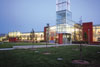
Metropolitan Community College created a multi-level security solution that combined remote and physical access control technologies, with on-site video surveillance that can be managed by a centralized software solution.
With the economy forcing everyone to curb spending, “doing more with less” unfortunately has become the rallying cry for American businesses. Perhaps no one is more aware of this than today’s security executive, remote facility manager or small business, especially when it comes to necessary technology investments like security systems. While cash may be hard to come by to equip a a remote facility or chain store with a standard four-door access control system, the consequences of leaving property unprotected are much more troublesome.
New advances in remote access control management, however, may hold the keys to helping a business reduce operating costs while providing more bang for security dollars. And the outsourcing model can be scaled up and down to suit ever-changing needs.
According to John Smith, channel marketing manager, access systems for Honeywell, remote-managed access control is emerging as a service that can enable you to lessen upfront equipment costs, streamline overall security operations and make your own staffs more efficient. This service removes the traditional access control management from a local site and can allow a business to hand over certain monitoring and system upkeep responsibilities to their dealers.
In a sense, he says, this is similar to functions that central monitoring stations provide for larger businesses. But remote-managed access control differs from a full-blown central station in that end users tend to work more closely with the dealers managing the services. The businesses can also retain many convenient features commonly associated with locally managed systems, such as managing credentials and accessing data via Web browser without the hassle and responsibility of managing the full system.
As a newer service, remote-managed access control naturally has a way to go before it becomes widely adopted, Smith says. And some of you may initially feel hesitant to give up control of your locally managed systems. But for myriad business reasons, remote-managed services will undoubtedly become a more attractive option.
Local Versus Managed
Many end users may not be aware of the total costs associated with locally managed access control, observes Smith. The most visible cost is the money spent on physical equipment such as cards, door readers, PCs, software and installation. More costs, though, come into play after the equipment is installed. These include the time staff spends handling operating system issues, virus scanning, software updates, employee training and other general system maintenance tasks. None of these are typically figured into the upfront expenses.Additionally, there are productivity challenges. Many operations or remote facilities of larger enterprises, for instance, don’t have a dedicated security staffer whose sole job is to manage the access control system. In most cases, it’s an office manager, general manager, HR or even a receptionist who maintains the system in addition to his/her standard duties. Time spent adding and deleting cards, running reports and troubleshooting equals lost productivity.
To put this into context, consider how many hours a typical small business spends on access control each week. The figure varies, but say for instance that the person responsible for managing the system spends at least three hours of his/her 40-work week; that’s nearly 10 percent of their time.
Another factor to consider when weighing a locally versus remote-managed solution is employee turnover, says Smith. If the person charged with managing or operating the system is terminated or abruptly leaves, the business is left to scramble to quickly train another staffer – an often time consuming, cumbersome and costly process.
These are examples of the types of business scenarios that remote-managed access control addresses. By outsourcing to take over certain, non-critical responsibilities, several management headaches can be eliminated.
Among the remote services the software enables, says Smith: adding and deleting access cards; creating customized reports on an hourly, daily, weekly or monthly basis; and receiving detailed reports via email and Web-enabled devices. As with most value-added services afforded to everyday consumers, convenience is the main driver – being able to simply make a phone call to a dealer and immediately have a new employee added to the company badge list, for example, is a huge time saver.
Additionally, since the server can be managed at an outsourced facility via a secured encrypted network line, no onsite server may be needed. This in turn means security, remote managers or other employees don’t need to spend time in training, learning how to properly operate the system, troubleshoot software issues and update virus protection measures, among other critical tasks. On the flip side, technicians aren’t required to pay a site visit if the end user wants additional services. Instead, the service can be added or subtracted or change based on what security, the business or policy needs.
Integrating Technologies
And then there’s the challenge of combining remote managed and physical access control that will fit into an existing security infrastructure.For example, Metropolitan Community College (MCC) of Omaha, Neb. is a full-service public community college. Its 2007-2008 enrollments were more than 50,000 students and it hosts a faculty, staff and continuing education members of more than 1,800 professionals. MCC offers more than 125 one-year and two-year educational programs at its seven locations.
MCC wanted to create a multi-level security solution that combined remote and physical access control technologies, with on-site video surveillance that could be easily managed by a centralized software solution. The entire solution also need to fit into MCC’s existing security infrastructure and to create a visual application that could be observed and studied.
MCC created a solution to both provide a more secure work environment for its Fremont Data Center and introduced a teaching opportunity for its students and facility.
It installed a card reader from Control Services to secure a laboratory door and an IrisAccess reader to secure the data center entry door. The security system and two video surveillance cameras are connected through a management network solution from Milestone Systems. This combination of integrated technologies has provided MCC with a security solution that allows for future growth and expansion.
MCC intends to use its working data center and the supporting technologies as a teaching environment for students and faculty. IT students both work and learn data center operations and techniques. The students also observe the installations and workings of the security and access control equipment to better understand how to secure important facilities using remote and access control security technologies.
Evaluating a Potential Remote-Managed Setup
Remote access control is more accepted as some companies look for ways to manage their security networks from mobile and open access locations. Consider these key factors when evaluating a potential remote-managed setup:1. Research software to ensure the technology selected is non proprietary. This will allow room to easily and cost-effectively change sources in the future if needed, or move back to a locally managed system if desired.
2. Ask about measures for backing up data in the event of a system crash.
3. Inquire about certification, including manufacturer training, and the ability to manager your system effectively.
It’s also important to note that the functionality offered by remote-managed access control is not as critical as functionality offered by a central station. It’s still not the dealer’s role to coordinate with first responders during emergencies or handle similarly critical functions. At most, service personnel who manage the remote services are typically asked to add or delete credentials, run reports and perhaps open a door remotely. These are not services considered high priorities, but they do have great value for end users who don’t have the resources to do it all themselves.
By not having to incur the additional costs associated with managing an in-house system, personnel – ranging from enterprise security executives and facility managers to human resource directors – may be able to afford more security up front versus a more traditional method.
Looking for a reprint of this article?
From high-res PDFs to custom plaques, order your copy today!