Carwash Cleans Up Crime
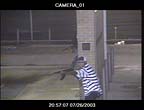
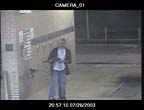
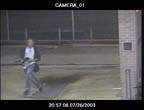
On July 26, 2003, three men armed with an AK-47, a .45-caliber handgun and a 9mm handgun ambushed two innocent victims at the TCL Car Wash on 1901 Louisiana Avenue in New Orleans, all because the victims drove the wrong car. The police described the attack as a case of mistaken identity. The assailants were presumably looking for someone in the same make and color of car in what was believed to be a drug-related incident.
Arrests made
The police caught all three assailants based on the recorded digital images that the car wash owner provided to them. The images were of such high quality that investigators could see one gunman biting his lip as he opened fire on the two victims. Several cars and homes were also peppered with bullet holes, increasing the collateral damage.Fortunately, both shooting victims survived the attack. One of them even returned to the car wash to thank the owner for putting in such a high-quality security video system
“At the time of the incident,” said Mark Georgieff, owner of TCL Car Wash and three other car washes in New Orleans, “the city council was trying to close up all car washes in the city at 8 p.m. because of the high crime rate. Since this happened, the lady that was pushing the council to pass the ordinance has backed off, and the city hasn’t tried to close me up since then.”
Georgieff added that since he hasn’t had to close up during night hours, the cameras have actually saved him hundreds of thousands in revenue among his four car washes. “About 25 percent of my business occurs between the hours of 7 p.m. till daybreak,” he said. “If I had to shut down at 8 p.m., I would have lost a lot of money.”
Lyle Barrios of Professional Sound and Security in New Orleans installed much of the equipment initially, but now Georgieff said he has developed enough installation expertise to install his own cabling, cameras and digital recorders over a secure network.
“All four car washes were brand-new construction,” said Georgieff, “so we cabled for the security system right from the beginning with coax cabling.”
He chose Napco Security Group (Amityville, N.Y.) for the alarm system, IEI (Canton, Mass.) LS Series for access control, Pelco (Clovis, Calif.) pan/tilt/zoom (PTZ) and fixed cameras with several Rainbow (Irvine, Calif.) bullet cameras for security video surveillance and Dedicated Micros (Chantilly, Va.) for digital video multiplex recorders (DVMRs) for recording.
Georgieff wanted a digital recorder because he wasn’t happy with videotape. “You don’t record on VCR tapes. It takes too long to review the tapes. With the digital, you can click through the times with the joy stick, looking at it hour by hour or going straight to the time when you think something happened.”
He chose Dedicated Micros because it was one of the first companies to come out with a digital recorder, and it offered more options than other companies. The Dedicated Micros Digital Sprite DVMRs that he installed have 320 gigabytes of internal image storage capacity. He also bought two BX2s, each of which providing 1.2 Terabytes of internal storage and built-in CD recorders. This gave him the ability to record at almost real-time or for up to four months at standard record rate.

Concentrate on memory
“My advice is don’t skimp on the hard drive,” said Georgieff. “I want to catch everything, and for that you have to go with the biggest hard drives.”In earlier installations, Georgieff had to run all of the alarm wires from the alarm system to the PTZ dome camera and then hook it up to the DVMR. He only had to run cable for power, telemetry and coax, all of it controlled by a remote keyboard.
“I bought a couple of keyboards from another company at $1000 each,” said Georgieff. “They are just lying there in a closet. You can buy a $400 keyboard from Dedicated Micros and you can do everything from it, including event search, zoom and record.”
He cabled each of the four car washes to support 16 cameras, including one covert camera that is installed in the change machine, which allows him to get a face shot of each customer.
Georgieff drives between his locations all day long. His system allows him to view his locations from any site (including his two laundermats), as well as from his home office. At night, he logs on to his network using the company’s network viewer, which enables him to watch employees to see if they are working, taking long breaks or not paying attention to customers.
“I call and remind them that I am watching,” said Georgieff. “If I have a manager that I can’t track down, I can look for them at whatever location they say they are going to be.” If someone bangs on a vacuum or change machine, an alarm activates the security video system and the PTZ cameras are auto-directed to focus in on and record the event. He then posts the pictures of the customers who vandalize equipment or cause messes in the area over the change machine to warn them not to come back.
“It lets the customer know that if you even beat on our equipment, we’ll know about it,” said Georgieff. “You don’t have to be trying to steal anything. I’ve saved thousands since I’ve put the pictures above the change machines. All my customers have stopped the graffiti and making messes. I’ve also got peace of mind knowing that whatever happens, I’ll have pictures of it.”
Georgieff has also caught employees stealing from the till. He recorded one employee stealing money from four different cameras. Several law enforcement agencies, along with the city, have spoken with Georgieff regarding his installation, including the Louisiana State Police.
The City of New Orleans also gave Georgieff the Crime Fighter of the Year Award for 2003, based on his capture of high quality video of the shooting that helped police quickly arrest the attackers.
“The mayor nominated me for it,” said Georgieff. “I was the only citizen at the police station that got an award.”
Looking for a reprint of this article?
From high-res PDFs to custom plaques, order your copy today!