National ID Debate: Tech Advances, Public Concern?
A Pew survey of Americans after the terrorism attacks shows that about 70 percent of citizens feel a national ID card is needed. Congress and even the Bush Administration have different thoughts. A separate dialog, especially attractive within the security industry, centers on the need for a higher-level security card for frequent air travelers.
What follows is an open letter to President Bush from Stephen Hunt, CEO of Datastrip Inc., who proposes another tech approach. The letter has been edited for style and space limitations.
Dear Mr. President:
The White House has made it clear that it will not pursue a national identification card system, despite terrorists using fraudulent IDs to gain unlawful entry into our country. We understand the fear of Big Brother looking down upon us from a single database. However, there is a way to provide citizens with increased protection without compromising our privacy.
Through effective background checking and the combined use of biometrics and two-dimensional (2D) bar code technology, we can ensure positive identification of individuals without on-line access to a national ID database. 2D high-capacity bar codes were developed specifically to store considerable amounts of machine-readable information in a relatively small printed space. Information stored in a 2D bar code creates a portable database. When an individual presents an ID card to a security officer, or similar individual, the cardholder's biometrics (fingerprint, facial geometry, etc.) is captured and compared to the encoded information stored within the 2D code printed on the ID card.
Use of this technology ensures that the individual carrying the ID card is in fact the same person to which the ID card was issued. Criminals or terrorists would be hard pressed to replace the victim's encoded information with their own because this type of system can utilize multiple encryption methods to further protect biometrics and other identity information.
The advantages of an integrated, biometric/2D bar code ID system are:
- it does not require on-line access to a national database every time a U.S. citizen's ID is checked
- it protects the citizen's privacy and
- it can be implemented now.
- what you know-such as a PIN number, mother's maiden name or pet's name
- what you have such as your credit card or driver's license, and
- who you are such as your fingerprint, facial characteristic or iris.
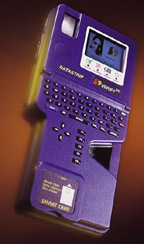
Permission Vs. ID
The driver's license has become our most widely accepted form of identification, but it was never designed to be a secure document.Mr. President, we don't have to give up privacy to protect ourselves against terrorists. We don't have to make a choice between privacy and security to protect ourselves from identity theft and Big Brother.
However, Mr. President, what we do need is a practical and executable national system that ensures both our citizen's security and privacy. Through advancements in integrated biometrics and 2D bar code technology, that system can be implemented today!
Looking for a reprint of this article?
From high-res PDFs to custom plaques, order your copy today!