Terrorism and New Biometrics Technologies
Implementing biometrics-based technologies has increased in recent years and is helping to protect the nation and multi-national enterprises by keeping people and assets more secure. New, lightweight, multimodal devices help make distinguishing between an insurgent and a civilian in a war environment easier.
Two such technologies,
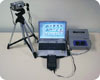
a laptop-based system deployed as the Biometric Automated Toolset (BAT), and
the Handheld Interagency Identity Detection Equipment (HIIDE), capture
fingerprint, iris and facial data. The BAT collects this biometric data and
stores it on a central server in a secure network. Currently, there are over 1,000 active BATs in Iraq.
The HIIDE, similar in size to a large camera, connects directly
to the BAT and matches inputs against a biometric watch list of up to 10,000
individuals. The HIIDE is a shock-resistant collection and identification
device. Able to capture fingerprint, iris and facial images, almost 7,000 of
these devices have been deployed in
Iraq and Afghanistan thus far.

IDENTIFYNG THOSE ON THE WATCH LIST
Interagency communication and compatibility greatly increase the capabilities of biometrics in the fight against terrorism. In 2004, the Department of Defense (DoD) created a centralized biometric database called the Automated Biometric Identification System (ABIS). This collection and storage system is compatible with the system used by the FBI so that matches may be made between the two databases. Known enemy biometric matches are flagged for further action and analysis.
Biometrics standards conformance testing of these tactical devices is conducted by the Biometrics Task Force (BTF). The BTF’s mission is to lead DoD activities to program, integrate and synchronize biometric technologies and capabilities. The BTF also operates and maintains the DoD’s authoritative biometric database to support the National Security Strategy. By creating and sustaining a biometric database, DoD not only has records of some known threats, but can help identify those threats in active operations.
A 2004 bombing in Mosul, Iraq, resulted in a need for a system to more securely monitor and grant access to only authorized individuals. The Biometric Identification System for Access (BISA) was developed and has since been used by analysts to issue more than 220,000 military base access cards and permanently bar more than 800 individuals from having access. This smartcard-based system has increased base and checkpoint security with the use of biometrics-enabled badges and employee screening.
MAKING A DIFFERENCE
Biometric technologies, especially those that can easily be used on the battlefield, are making a difference in the current fight against terrorism by protecting both the warfighter and the homeland. Ongoing assessment and evaluation of biometric equipment will help enhance effectiveness and efficiency of those technologies.
Looking for a reprint of this article?
From high-res PDFs to custom plaques, order your copy today!