Security Ties to Terror Alerts
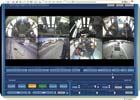
A transportation security video command center displays eight-camera views.
Publicly distributed as well as highly classified advisories from the U.S. Department of Homeland Security early last month warned domestic law enforcement and transportation security executives of “several suspicious incidents” in which people were videotaping transit facilities in European locations, which the public advisories did not identify.
The advisories, more frequently released but never too specific, stated that the incidents were “indications of continued terrorist interest in mass transit…as targets and potentially useful insight into terrorist surveillance techniques.”
Ironically, it seems that the transit security video captured images of people capturing images of transit infrastructure.
Recent, tragic incidents in London and Madrid, tied to terrorists or sympathizers, underline vulnerabilities of urban transit, freight and long-distance passenger rail carriers.
And such expanded concerns, as well as more typical passenger safety issues and potential litigation costs, now motivate many municipal transit companies to install or upgrade their security video strategies, and especially leading edge in-vehicle video surveillance.
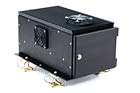
A Transportation Video Surveillance System can include mobile storage for the capture of security images.
Mobile storage
Recent advances in digital recording, for example, have made that business tool an extremely reliable mobile storage alternative to removable hard drives. In three recreations of last year’s London and Spain bombings, video and event data was accessible from digital video recordings each time, but not always from other types of data storage, according to Andy McKennan of A4S Security Inc., Loveland, Colo.In addition to video images and audio, other data are being recorded on modern mobile systems. GPS time is used to synchronize the system clock and to record synchronized events from different vehicles, along with exact vehicle locations at any given moment. Discrete signal information, such as acceleration, turn signals, braking, door and wheelchair lift operations, can also be recorded and stored in the mobile system.
Pre-configured event flags, such as vehicle impact or driver-activated incident buttons, can tell the system to mark, clip and protect the incident’s data stream, along with pre- and post-event data. All this tagged digitized information will be available to the backend video server once the vehicle returns to the yard or station. Some agencies are even using the latest wireless technology to automatically upload incident data without having to send anyone to the vehicle to retrieve the digital tape or removable hard drive.
When an incident does occur, the captured data streams need to be quickly accessed and reviewed by a video review system. A video command center takes the multiple data streams of video, audio, discrete signals, GPS, etc., and displays them in a logical view to the system operator. The operator can quickly scroll to a certain time and save a portion of the tagged event using slider bars and buttons familiar to every computer user.
Any of the existing cameras on the system can be selected, and the operator can then zoom and pan as needed. The image quality can also be manipulated, using the brightness, contrast and saturation slider bars, and the video clip can be stored or copied to DVD for rapid distribution. It should be noted that the original data, which may be needed later as evidence, is not altered. Sometimes a single snapshot, perhaps a passenger’s face, is required and this, too, is just a one-click task.
A stabbing incident on a trolley in Cleveland was recently captured by such a security video system and the high quality video assisted police in swiftly apprehending a suspect. More advances are coming, especially in the field of backend data storage due to the demands of high-resolution video. As mobile surveillance capabilities continue to expand, user agencies can expect an ever-increasing ability to improve public safety and decrease litigation. V
Looking for a reprint of this article?
From high-res PDFs to custom plaques, order your copy today!