Twitter, RSS and Facebook logos

  Connect with Security Magazine!
     Follow us on Twitter and Facebook or subscribe to our newsletters or RSS feeds.

Security 500 in Depth: the Biggest and Best
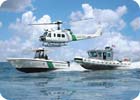
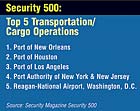

So why is transportation and cargo security among the top category ranking in the Security 500?

An article appeared in the online al Qaeda journal, Al-Ansar. Entitled “A Lesson in War,” its author wrote the following words: “Aborting the American economy is not an unattainable dream.” The statement, as vague as it is threatening, is a serious warning.

According to Jack Jarmon of Rutgers University, 80-90 percent of world trade is sea-born. Maritime trade, therefore, may be the single, most exposed link in the transportation system. Among world governments and global corporations the maritime trade transport system is a major source of concern. Particularly serious is the matter of container transport. The uniformity, velocity and anonymity of containerized traffic offer terrorists ample opportunity to inflict catastrophic damage to the commercial infrastructure.

Fortunately, an important trait of the system is the fact that 70 percent of the containers shipped to the U.S. come through only a few major port operators. The entire network is concentrated in a handful of extreme pressure points. In an attempt to turn this reality into an advantage, the U.S. government has instituted a number of programs. The U.S. Customs and Border Protection agency (CBP) has initiated a layered approach to securing the supply chain while facilitating trade.

CBP uses a pattern of programs to screen, select and inspect ocean-going cargo containers. As a primary tool of this strategy, CBP employs an Automated Targeting System (ATS) to automatically flag the highest risk shipments. ATS is a rules-based computer system, which sorts and screens each ship’s electronic records to determine cargo risk status. Because most importing companies are legitimate, CBP simply sorts shipments into one of two categories: trusted or untrusted.

Another tier in this layered approach to supply chain security is the Container Security Initiative (CSI) program. Under this program, the largest world ports host CSI teams of customs agents, which identify and inspect high-risk containers bound for the U.S. before they load onto vessels.

Complementing CSI is the Customs-Trade Partnership Against Terrorism, or C-TPAT Program. This is a joint government-business initiative. The aim of C-TPAT is to build a collaborative effort with the owners of the supply chain. Importers, carriers, brokers, warehouse operators and manufacturers are requested to conduct a security audit of their operations.

Yet, the material elements for the defense of the sea-born supply chain are in place. New regimes and regulatory frameworks, for the most part, need not be reinvented. The required technology, too, is available. Radio frequency identification, biometrics and computer security technologies are already benefiting from the demand for security goods and services. What seems to be missing is the sense of urgency and a willingness to reconsider previous notions about national security, contends Jarmon.

Links

You must register or login in order to post comments.

Multimedia

Videos

Image Galleries

Stanley Customer Appreciation Event at ASIS 2011

Customers enjoyed the annual Stanley customer appreciation event during ASIS 2011 in Orlando.

Podcasts

The New Age of Video Surveillance
In this podcast, Bill Lawrence, director of Service Solutions and Platforms for ADT Security Services, explains the growing interest in video surveillance by both government agencies as well as businesses of every stripe. He discusses what any organization should consider before investing heavily in the technology. Lawrence is a 25-year veteran of both the information technology and physical security industries, with extensive experience in network video surveillance and physical security convergence.
More Podcasts

Your Time

On a daily basis, how much work time do you estimate that you spend addressing an emergency or crisis within your organization?
See Poll Results Poll Archive

THE SECURITY STORE

comptiahighriseproductphoto
CompTIA Security+ Certification Study Guide
CompTIA's Security+ certification is a globally-recognized, vendor neutral exam that has helped over 60,000 IT professionals reach further and higher in their careers. The current Security+ exam (SY0-201) focuses more on being able to deal with security issues rather than just identifying them.
More Products

Clear Seas Research

Clear Seas ResearchWith access to over one million professionals and more than 60 industry-specific publications,Clear Seas Research offers relevant insights from those who know your industry best. Let us customize a market research solution that exceeds your marketing goals.

Vertical Sector Focus: Critical Infrastructures

criticalhomepagethumbFrom terrorism to vandalism, it’s preparedness, response, training and partnerships. Learn about some of the critical security issues facing this sector.

Visit the Critical Infrastructure page to read more.  

STAY CONNECTED

facebooklogo twitterlogo  linkedinlogo  YouTube icon