A Most Complex Fence Indeed


There’s a battle on the Peace Bridge between the U.S. and Canada. There’s a battle along the U.S. and Mexico border, too.
Same battleground, of course, but much different in many ways.
Up north, and on both sides of the border, citizens, business executives, elected officials, elk, moose – just about everything that walks or talks – are shaking in their snowshoes about a next U.S. Homeland Security step. Sooner or later (or never if U.S. Sen. Charles Schumer gets his way), people crossing the border one way or the other must have a valid passport.
Most folks in the United States (80 percent) as well as most folks in the Upper U.S. (92 percent) don’t have a passport. Critics have a kind of a point when suggesting economic harm and disruption with little anti-terror payback.
The border between the U.S. and Mexico is another story; but, when all is said and done, there is little terror concern at play here either: It’s illegal immigration and crime. The passport thing is a throw-away compared to the fences, sensors, motion detectors, patrols, walls, security video, vigilantes, rattlesnakes, heat and locked trucks that reduce illegal traffic one way or another.
There is no one answer, although ultimately it may come from Washington.

Video Viability
But it seems security video is one answer that works.
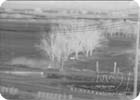
For example, earlier this year, while upgrading and performing maintenance on a thermal security camera on the border, Night Vision Systems Manager of Homeland Security Business Development John Love spotted something that caught his eye. On a pitch-black night, he noticed a few white spots pop up on the screen of the thermal imaging display. It was exactly what he suspected and what the camera is designed to pick up -- illegal aliens crossing the border right before his eyes in what they thought was total darkness.
Armed with thermal vision, law enforcement was called to the scene where the suspicious characters were hiding in the thick brush of a tree-lined ditch. It was obvious they were patiently awaiting a scheduled pick up at the nearby road. The camera caught the activity like it was daytime, up until the suspects were detained for processing.

Score one for security video technology.
Will it be enough? Of course not. But such interventions, thanks to video, do add up -- combined with other hard and soft tech, law enforcement, economic and political solutions.
Which allows me to climb into the “Way-Back machine” and fall back into my Vietnam days in the military police. One effort – beyond those B-1 bombers – to stem the traffic along the Ho Chi Ming trail was to lay high tech (at that time) sensors and detectors, monitor motion and take action upon alarm. Would have wireless IP video made more of a difference back then? Who knows.
However, there is no doubt that today security technologies developed to fight terrorists as well as commercial tech in use or emerging are playing a more significant and rather effective role in a growingly complex homeland security environment.
There’s also no doubt that business enterprises – big to small – also will gain from what we learn along the border.
Looking for a reprint of this article?
From high-res PDFs to custom plaques, order your copy today!