New Hospital Regs
Regs Plus Door Needs
At the same time, the healthcare facility was looking into a new physical security system, as it considered all the traditional card access control technologies and methods."Part of our customer base are doctors," says Gary Voss, facilities safety director at the Shannon Medical Center. "A lot of them don't wear name tags. We could hand out proximity cards to everybody or we could look at a different route."
Ener-Tel, San Angelo, Texas, was originally brought in on the information systems side. "The original application we had for the hospital was to try to solve the problem hospitals are having with the new government mandates (HIPAA) and how to meet the requirements with technology," says Mike Dismore of Ener-Tel. "One of the answers is through biometrics. At the same time we learned they were looking at installing card readers."
Fingerprint Biometrics Solution
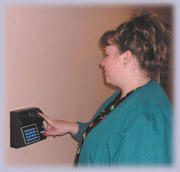
Ener-Tel suggested using Identix (Los Gatos, Calif.) fingerprint readers for all the applications. It was an idea the hospital liked for several reasons."They like that they don't have to have a card that can be handed off to someone else," says James Bird of Ener-Tel. "They don't have to administer passwords. In most cases you always have your finger with you. You won't be forgetting it or giving it to someone else."
With door readers installed and enrollment proceeding, the next step is dealing with the HIPAA requirements. "The hospital has some very specific needs," Dismore says. "It's to the point where we've brought some of the brain trust from Identix and the hospital's IS department together to hash out what's needed." Once it's complete, however, the system has applications beyond this installation. "Every hospital around the nation faces the same problem," Dismore says.
Answering government regulations and initiatives with biometric solutions is also a global happening.
It's obvious that by enacting strict privacy legislation, such as laws that guarantee confidentiality of health insurance records, governments intend to hold companies accountable for all personal information they retain.
Covering Specific Areas
And that means strong growth in biometrics as a method to control entrance into facilities and specific areas within those facilities such as the computer room, the records room and the telecommunications room. Biometrics also can prove useful as a method of identifying authorized personnel into computer networks, databases andFor example, new analysis by consulting firm Frost & Sullivan indicates the total market generated $66 million in 2000 and is expected to reach $900 million by 2006. As the demand for privacy safeguards grows, the biometrics segments, which can offer high levels of protection against information and identity fraud, are expected to show impressive gains.
Also driving biometrics growth: "The emergence of new standards could demolish a long-standing obstacle to industry growth," says Frost & Sullivan.
Nevertheless, there still remains work to do on standards.
Looking for a reprint of this article?
From high-res PDFs to custom plaques, order your copy today!