Government News
On the Special Section Cover
Private security officers are essential first responders. Photo courtesy: The Wackenhut Corporation, Palm Beach Gardens, Fla. The firm provides high-end armed and unarmed security personnel and paramilitary protective forces to public and private clients as well as consulting, investigation and training services. More information at www.wackenhut.com.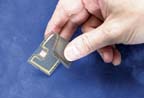
Contactless Smart Card Tech
The United States has taken a strong leadership position in adopting new payment and identification applications that use secure contactless smart chip technology, according to Randy Vanderhoof, executive director of the Smart Card Alliance, Princeton Junction, N.J. Strong security features have also attracted the U.S. federal government, which will use the same secure contactless technology chosen by the payments industry in the new electronic passport for enhanced travel security.
German Passport
The Bundesdruckerei GmbH, on behalf of the German Ministry of Interior, has selected Royal Philips Electronics (San Jose, Calif.) contactless smart card chip for use in that country’s smart passports. Driven by the United States’ visa waiver program, which requires visitors to the country to present a machine-readable passport when visiting the country for less than 90 days, governments around the world are implementing smart passports.Government Security Convergence
As vice president of ADT Federal Systems Division, Paul Brisgone has seen a lot of developments and advances. “Our mission sets us apart from other systems integrators; we are totally dedicated to federal product engineering, maintenance and consulting. We have one of the largest GSA schedules.”The division also handles state and local government, defense contractor, school and infrastructure assignments. “We partner with numerous agencies within the federal government.” In an exclusive Security magazine interview, Brisgone identified intelligent video as one important government security trend. “That’s especially true for waterfronts, ports and airports. Intelligence built into security technology cuts down on response time.”
In another project, ADT is using RFID tagging in general aviation airport applications to match a pilot with a plane.
More generally, in May, ADT was awarded a “blanket purchase agreement” from the U.S. Department of Defense for the sale of fixed and portable radio frequency identification readers and antennas as the department moves forward with its initiative to use RFID for logistic identification, tracking, locating and monitoring of commodities and assets.
Homeland security is a government motivator. Brisgone sees “better (homeland) funds flowing than in the last two years.”
Looking for a reprint of this article?
From high-res PDFs to custom plaques, order your copy today!